


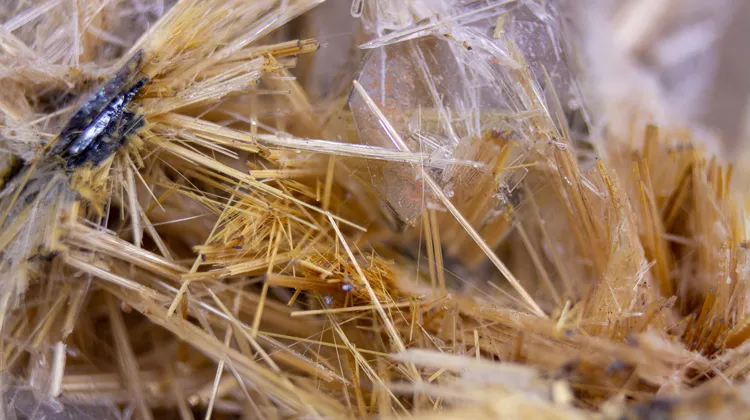
Rutile is one of the most valuable titanium-bearing minerals and an important raw material for producing titanium dioxide pigments, titanium metal, welding electrodes, and advanced ceramic products. Depending on the type of deposit, rutile can be recovered from hard-rock ores or heavy mineral sand deposits through a combination of crushing, grinding, gravity separation, magnetic separation, and flotation. Understanding the characteristics of rutile and selecting the appropriate beneficiation process are essential for achieving high recovery rates and producing high-grade concentrates.
What Is Rutile?
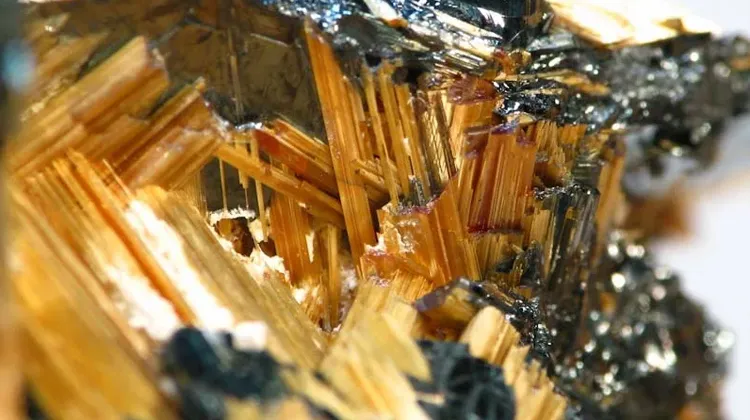
Rutile is a naturally occurring titanium dioxide (TiO₂) mineral and is widely recognized as the highest-grade natural source of titanium. Compared with other titanium minerals, such as ilmenite, rutile contains a significantly higher concentration of titanium dioxide, making it more attractive for downstream processing and industrial applications.
The name “rutile” comes from the Latin word rutilus, meaning “reddish” or “glowing red,” which refers to the red coloration often observed in some rutile crystals. Although rutile can appear in red or reddish-brown forms, it is also commonly found in black, golden-yellow, or dark metallic colors depending on its impurities and geological environment.
Because of its high titanium content and excellent physical properties, rutile plays a critical role in industries ranging from aerospace and automotive manufacturing to chemical processing and advanced materials production.
Mineral Properties of Rutile
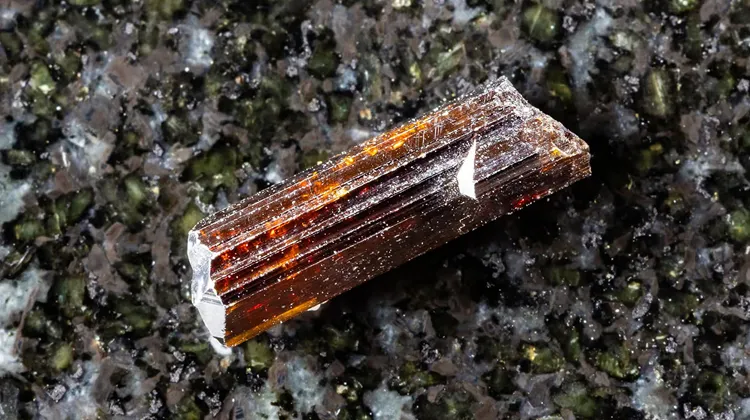
Rutile belongs to the oxide mineral group and crystallizes in the tetragonal crystal system. It is known for its exceptional stability under harsh operating conditions, which contributes to its industrial value.
| Property | Description |
|---|---|
| Chemical Formula | TiO₂ |
| Crystal System | Tetragonal |
| Color | Red, reddish-brown, black, golden-yellow |
| Hardness | 6–6.5 Mohs |
| Specific Gravity | 4.2–5.6 |
| Streak | Light brown |
| Transparency | Transparent to opaque |
| Luster | Adamantine to metallic |
| Magnetic Property | Non-magnetic |
One of the most important characteristics of rutile is its resistance to heat, corrosion, and chemical attack. These properties allow titanium-based products derived from rutile to perform reliably in high-temperature, high-pressure, and corrosive environments.
Where Is Rutile Found?

Commercial rutile deposits are distributed across several regions of the world. Some of the largest and most economically important deposits are located in Sierra Leone, Australia, Russia, the United States, Sweden, South Africa, India, and Mozambique.
Rutile resources are generally divided into two main categories:
Hard-Rock Rutile Deposits
Hard-rock rutile deposits are commonly associated with metamorphic rocks such as eclogites and high-grade metamorphic formations. In these deposits, rutile is often closely associated with garnet, pyroxene, amphibole, quartz, and feldspar.
Because rutile particles are embedded within the host rock, mineral liberation is required before separation can take place.
Heavy Mineral Sand Deposits
Heavy mineral sand deposits are formed through long-term weathering, erosion, and sedimentary concentration processes. These deposits contain valuable heavy minerals including rutile, ilmenite, zircon, monazite, and magnetite.
Compared with hard-rock deposits, heavy mineral sands are generally easier and less expensive to process because the valuable minerals are already partially liberated by natural weathering processes.
Rutile Processing Flow Chart
The ideal rutile beneficiation process depends largely on the ore type, mineral composition, particle size distribution, and concentrate specifications required by the final customer.
In most cases, rutile processing involves several stages, including:
- Crushing
- Grinding
- Desliming
- Gravity Separation
- Magnetic Separation
- Flotation
- Dewatering
Each stage contributes to increasing the titanium dioxide grade while reducing unwanted impurities.
Processing Rutile from Hard-Rock Deposits
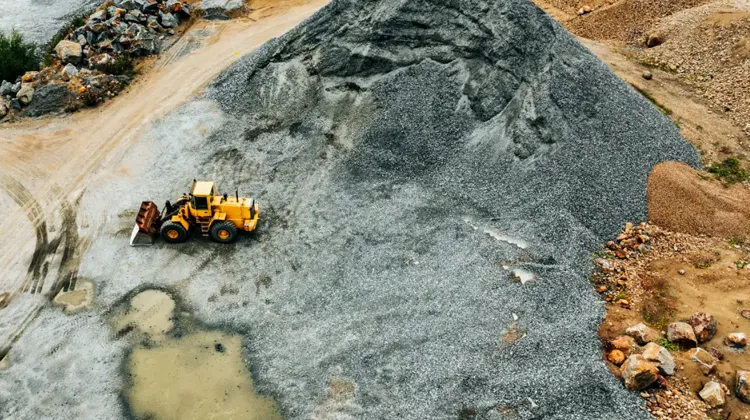
Eclogite-hosted rutile deposits represent a typical hard-rock rutile resource. These ores often contain rutile together with garnet, pyroxene, amphibole, and small amounts of sulfide minerals.
Because the valuable minerals are tightly intergrown with gangue minerals, a carefully designed beneficiation flowsheet is required.
Step 1: Crushing
The first stage of processing involves reducing the size of the run-of-mine ore.
A vibrating feeder is used to ensure a consistent feed rate, while a jaw crusher performs primary crushing. Depending on the required product size, secondary crushing equipment may also be installed.
The objective of crushing is not simply to reduce particle size but to prepare the material for efficient grinding and mineral liberation.
Step 2: Grinding
After crushing, the ore is ground to release rutile particles from the surrounding gangue minerals.
Several grinding technologies may be used, including ball mills, Raymond mills, ultrafine grinding mills, and vertical roller mills. The choice of equipment depends on the ore characteristics and target particle size.
Proper grinding is critical because insufficient liberation can lead to rutile losses, while excessive grinding may create large quantities of ultrafine particles that are difficult to recover.
Step 3: Magnetic Separation
Rutile itself is essentially non-magnetic, whereas associated minerals such as ilmenite and certain iron-bearing minerals exhibit magnetic properties.
By taking advantage of these differences, magnetic separators can effectively remove unwanted magnetic minerals from the ore stream. This step improves concentrate quality and reduces the load on downstream separation processes.
Both dry magnetic separators and wet high-intensity magnetic separators are commonly used depending on the material characteristics.
Step 4: Gravity Separation
Gravity separation is one of the most effective methods for recovering rutile because of its relatively high specific gravity.
Equipment such as shaking tables and spiral concentrators can separate rutile from lighter gangue minerals, including pyroxene and silicate materials. Since gravity separation requires little or no chemical reagents, it is often considered a cost-effective and environmentally friendly beneficiation method.
Step 5: Flotation Separation
When rutile occurs in fine particle sizes, flotation becomes an important recovery method.
During flotation, specialized reagents are added to selectively attach rutile particles to air bubbles, allowing them to be recovered from the slurry. This process is particularly useful for recovering fine-grained rutile that cannot be efficiently separated by gravity methods alone.
Flotation can also help remove sulfides and other impurities, further increasing the titanium dioxide content of the final concentrate.
Typical Processing Results
A well-designed hard-rock rutile processing plant can produce a rutile concentrate containing approximately 90% TiO₂. In some operations, valuable by-products such as garnet and pyroxene concentrates can also be recovered, with concentrate purities reaching up to 88%.
Recovering these by-products not only improves resource utilization but also increases the overall profitability of the mining operation.
Processing Rutile from Heavy Mineral Sands
Heavy mineral sand deposits are among the world’s most important sources of rutile production. Sierra Leone, for example, hosts some of the largest rutile-rich heavy mineral sand deposits currently in operation.
The processing flowsheet for heavy mineral sands differs from that used for hard-rock ores because the valuable minerals are already largely liberated.
Step 1: Desliming
The raw sand often contains clay, silt, and fine mud that can interfere with mineral separation.
A trommel screen or similar screening equipment is typically used to remove oversized material and a significant portion of the slimes. Desliming improves the efficiency of downstream concentration processes and reduces equipment wear.
Step 2: Gravity Separation
Following desliming, gravity separation is used to concentrate heavy minerals.
Shaking tables and spiral concentrators separate high-density minerals such as rutile, zircon, and ilmenite from lighter materials including quartz sand. This stage significantly upgrades the heavy mineral content before further processing.
Step 3: Magnetic Separation
The heavy mineral concentrate is then subjected to magnetic separation.
Low-intensity magnetic separators remove strongly magnetic minerals such as magnetite, while high-intensity magnetic separators further separate minerals based on their magnetic susceptibility.
Through a combination of weak and strong magnetic separation, rutile can be effectively concentrated while reducing contamination from ilmenite and other associated minerals.
The resulting rutile concentrate is suitable for use in titanium dioxide production and other industrial applications.
Main Equipment Used in a Rutile Beneficiation Plant
The equipment configuration of a rutile processing plant varies according to the deposit type and production capacity. However, most plants include a combination of crushing, grinding, classification, separation, and dewatering equipment.
Common equipment includes jaw crushers, ball mills, vertical mills, hydrocyclones, shaking tables, spiral concentrators, magnetic separators, flotation machines, thickeners, filter presses, and drying systems.
Selecting the right equipment is critical because plant performance depends not only on the ore characteristics but also on the efficiency of each processing stage.
Applications of Rutile Concentrate
The primary use of rutile concentrate is the production of titanium dioxide pigments. Titanium dioxide is valued for its brightness, opacity, and durability and is widely used in paints, coatings, plastics, paper products, cosmetics, and toothpaste.
Rutile is also a key raw material for producing titanium sponge, which serves as the foundation for titanium alloys used in aerospace components, medical implants, marine equipment, and chemical processing systems.
In addition, rutile is used in welding electrodes, refractory materials, and advanced ceramics because of its excellent thermal stability and resistance to chemical attack.
How to Improve Rutile Recovery
Improving rutile recovery requires a thorough understanding of ore characteristics and process optimization.
One of the most important factors is achieving adequate mineral liberation during grinding. If rutile remains locked within gangue minerals, separation efficiency will be significantly reduced.
Combining multiple beneficiation methods often produces better results than relying on a single process. For example, gravity separation may recover coarse rutile particles efficiently, while flotation can recover finer particles that would otherwise be lost.
Regular monitoring of particle size distribution, slurry density, reagent dosage, and equipment performance can also help maintain stable production and maximize recovery rates.
Frequently Asked Questions About Rutile Processing
What is rutile mainly used for?
Rutile is primarily used to produce titanium dioxide pigments, titanium metal, welding electrodes, and high-performance ceramic materials. Titanium dioxide pigments are widely used in paints, plastics, paper, cosmetics, and many consumer products.
What is the titanium dioxide content of rutile?
Natural rutile typically contains between 90% and 96% titanium dioxide, making it one of the richest natural titanium minerals available for industrial processing.
What is the difference between rutile and ilmenite?
Both minerals are important titanium sources, but rutile generally contains much higher titanium dioxide content than ilmenite. As a result, rutile usually requires less upgrading before entering downstream production processes.
Which beneficiation method is best for rutile ore?
There is no single beneficiation method suitable for all rutile deposits. The optimal process depends on the ore type, mineral composition, and particle size distribution. In many cases, a combination of gravity separation, magnetic separation, and flotation delivers the best results.
Can rutile be recovered from beach sand deposits?
Yes. Many commercial rutile operations recover the mineral from heavy mineral sand deposits. These deposits are commonly processed through desliming, gravity separation, magnetic separation, and sometimes electrostatic separation.
What equipment is required for a rutile processing plant?
A typical plant may include jaw crushers, grinding mills, hydrocyclones, shaking tables, magnetic separators, flotation machines, thickeners, and drying equipment. The final equipment selection depends on the ore characteristics and production targets.
Is rutile processing environmentally friendly?
Modern rutile beneficiation plants can minimize environmental impacts by optimizing water recycling systems, reducing reagent consumption, and using energy-efficient equipment. Gravity separation methods are particularly attractive because they often require few chemical additives.
Conclusion
Rutile is one of the world’s most valuable titanium minerals and an essential raw material for numerous industrial applications. Whether recovered from hard-rock deposits or heavy mineral sands, successful beneficiation depends on selecting the appropriate combination of crushing, grinding, gravity separation, magnetic separation, and flotation technologies.
By understanding the characteristics of the ore and implementing an optimized processing flowsheet, producers can achieve high-grade rutile concentrates, improve resource utilization, and maximize the economic value of their mining projects.


 English
  Russian
  Arabic
  Vietnamese
  Spanish
  French
  Portuguese
  Japanese
  Chinese