



Grate Discharge Ball Mill
- Capacity: 5–200 T/H
- Motor Power: 50–500 kW
- Feed Size: ≤ 25 mm
- Output Fineness: 50–300 μm (adjustable)
- Grinding Media: Steel balls, alloy balls, or other media types
- Application: Grate discharge ball mills are widely used in mineral processing, cement grinding, and chemical production, especially for processes that require high throughput and efficient material discharge.
What is a Grate Discharge Ball Mill?
A grate discharge ball mill is a high-efficiency grinding mill designed with a special discharge grate at the end of the cylinder. This perforated grate allows fine particles and slurry to pass through quickly while keeping coarse material inside for continued grinding. By accelerating material discharge and maintaining a lower slurry level inside the mill, the design reduces over-grinding, increases energy efficiency, and significantly boosts processing capacity.
Compared with overflow ball mills, grate discharge models deliver faster pulp transport, higher throughput, and better control over final particle size. Because of these advantages, they are widely used in large mineral processing plants, metal ore beneficiation, cement production, and other industries requiring high productivity and controlled grinding performance.
Working Principle of the Grate Discharge Ball Mill
The working principle of a grate discharge ball mill is built around a low pulp level, high discharge rate, and forced material evacuation. During operation, the mill shell rotates slowly under the drive of the motor, allowing steel grinding media and raw material to interact through impact and abrasion. This continuous action reduces the feed material to the desired particle size while maintaining a consistently low slurry level inside the mill, which is essential for efficient discharge.
Once the particles reach the required fineness, they move toward the discharge end where a grate plate system is installed. These grate plates function as a screening barrier, allowing only properly ground material to pass through their uniformly distributed apertures, while oversize particles are retained inside the mill for further grinding. After passing through the grate, the slurry enters the pulp lifter chamber, where lifters scoop the pulp and transport it efficiently out of the mill—creating a true “forced discharge” mechanism.
This design significantly accelerates the internal material flow rate, minimizes over-grinding, and enhances overall grinding efficiency. By maintaining a lower pulp level and reducing internal resistance, grate discharge ball mills typically provide higher throughput, faster circulation, and improved energy performance. These characteristics make them particularly suitable for large-scale mineral processing applications requiring medium to coarse product sizes.
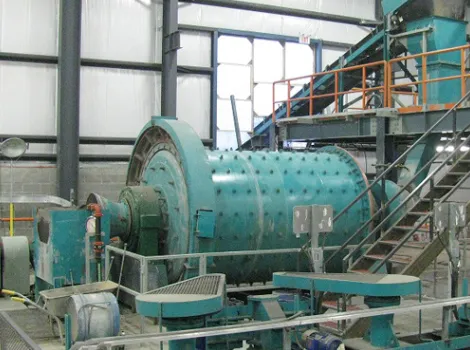
- Advantages of Grate Discharge Ball Mill
When you need a ball mill that delivers higher capacity, faster discharge, and improved energy efficiency, a grate ball mill is the superior choice. Its unique grate structure helps you boost throughput, achieve better particle control, and maintain stable performance in wet grinding and mineral processing applications.
Higher Processing Capacity
The forced-discharge design accelerates the internal material flow, significantly increasing the mill’s throughput compared with overflow ball mills—making it ideal for large-scale mineral processing.
Reduced Over-Grinding
The grate plate system prevents excessive slurry accumulation and ensures that qualified particles exit the mill in time. This minimizes over-grinding and improves overall grinding efficiency.
Better Control of Final Particle Size
Since coarse material is automatically retained for further grinding while fine material is efficiently discharged, the grate discharge mill provides more stable and predictable product size distribution.
Improved Energy Efficiency
Lower pulp level inside the mill reduces internal resistance and unnecessary media consumption. The result is lower energy use for the same grinding output.
Enhanced Pulp Transport and Circulation
With the help of pulp lifters, the slurry is quickly removed from the mill, improving internal circulation and maintaining a consistent grinding environment.
Suitable for Medium to Coarse Grinding
The unique discharge structure makes the grate discharge ball mill especially effective for operations requiring higher material throughput and medium-coarse product sizes, particularly in metal ore beneficiation.
Stable Operation and Longer Component Life
Efficient discharge reduces the load on liners and grinding media. Combined with optimized grate plate design, it helps extend the service life of internal components.

Related Products




Yes. The grate plates are wear parts and require periodic inspection and replacement, which adds to maintenance considerations compared to the simpler discharge end of an overflow mill. However, the increased production output often far outweighs the additional maintenance cost.
Our grate design incorporates strategically sized and shaped apertures (slots), along with reinforced pulp lifters. This ensures a smooth, uninterrupted flow of material. Proper mill operation (maintaining correct feed density and avoiding oversize material) is also key to preventing clogging.
Absolutely. The price varies based on model, size, capacity, and configuration. Please contact our sales team with your specific production requirements (desired capacity, feed and product size, material to be ground) for a precise and competitive quotation.
The lifespan depends heavily on the abrasiveness of the processed material. It can range from a few months to over a year. We use high manganese steel or other advanced wear-resistant alloys to manufacture our grate plates, ensuring maximum service life under demanding conditions.
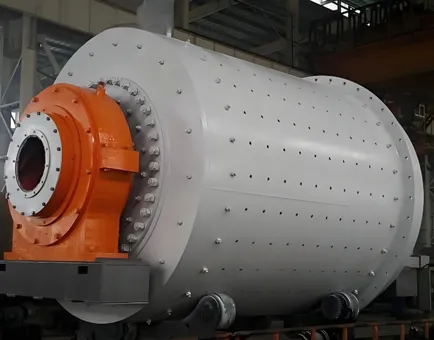
The grate discharge ball mill has a well-organized structure, intuitive operation, and easily accessible key components, making daily operation and maintenance straightforward.
 English
  Russian
  Arabic
  Vietnamese
  Spanish
  French
  Portuguese
  Japanese
  Chinese