



1. Origin and Discovery of Nickel
Nickel, a silvery-white metal with the chemical symbol Ni, has a fascinating history that dates back to the 17th century. Its name originates from the German word “Kupfernickel”, which literally means “Old Nick’s copper” or “false copper.” German miners gave it this name because when they tried to extract copper from a reddish ore, they found that it contained no copper. Moreover, the ore often contained arsenic, which caused miners to suffer poisoning and illnesses. Due to these mysterious and dangerous effects, the metal was associated with mischief and the devil, giving rise to the nickname “Devil’s Metal.”
The metal was first scientifically identified in 1751 by the Swedish chemist Axel Fredrik Cronstedt. While studying the ore known as “kupfernickel,” Cronstedt successfully isolated pure nickel and recognized it as a new element distinct from copper. This discovery marked a turning point in metallurgy, as nickel would later become a critical material in stainless steel production, industrial alloys, and modern lithium-ion batteries.
Historical Context
17th Century Germany: Miners searching for copper frequently encountered nickel-containing ores in regions such as Saxony. Their repeated failures to extract copper from these ores gave rise to legends and superstition surrounding the metal.
Arsenic Toxicity: Early miners suffered from arsenic poisoning when handling nickel ores, reinforcing the perception that the metal was dangerous.
Scientific Breakthrough: Cronstedt’s experiments not only purified nickel but also distinguished it chemically from copper, laying the foundation for modern nickel metallurgy.
Why This Matters for Modern Industries
Understanding the origin and discovery of nickel is more than a historical curiosity. It highlights:
The rarity and value of nickel ores, which remain concentrated in certain geographic regions today.
The need for careful processing, as raw nickel ores historically posed health risks due to toxic impurities.
The long-standing industrial significance of nickel, from early metallurgy to today’s electric vehicle batteries.
2. Physical and Chemical Properties of Nickel
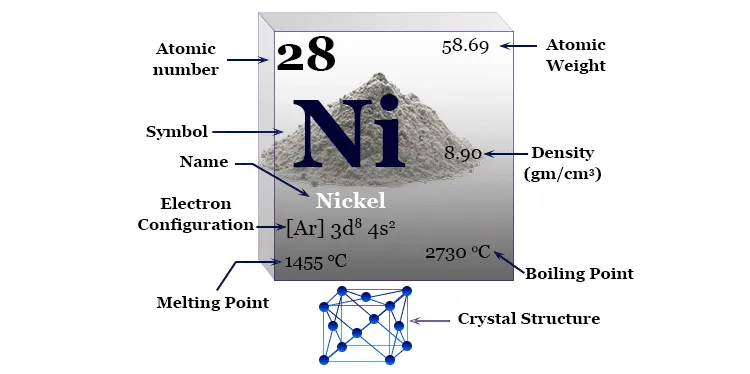
Nickel (Ni) is a silver-white metal renowned for its exceptional combination of physical and chemical properties, which make it indispensable in modern industry, especially in batteries, stainless steel, aerospace, and chemical catalysts. Understanding these properties helps explain why nickel is critical in high-nickel lithium-ion batteries and other advanced applications.
2.1 Physical Properties
High Melting and Boiling Points
Melting point: 1453°C (2647°F)
Boiling point: 2913°C (5275°F)
These high-temperature thresholds make nickel suitable for high-performance alloys used in aerospace, turbines, and industrial machinery.
Density and Hardness
Density: ~8.9 g/cm³
Mohs hardness: 4–4.5
Nickel’s high density and moderate hardness provide mechanical strength for alloying in steel and battery casings.
Magnetism
Nickel is ferromagnetic at room temperature, one of only four metals with this property.
This magnetic property is exploited in electric motors, sensors, and electromagnetic devices.
Malleability and Ductility
Nickel can be rolled, drawn, or hammered into thin sheets or wires.
Its ductility makes it ideal for electroplating, coinage, and alloy formation.
Appearance and Luster
Silver-white metallic luster
Maintains shine due to resistance to tarnishing
2.2 Chemical Properties
Corrosion and Oxidation Resistance
Nickel forms a thin protective oxide layer in air, making it extremely resistant to corrosion, rust, and chemical attack.
This property is key for stainless steel production, plating, and battery cathodes.
Catalytic Activity
Nickel acts as a catalyst in hydrogenation reactions and chemical synthesis.
Widely used in industrial chemical processes, including fertilizers, hydrogen fuel cells, and refining.
Electroplating Capability
Nickel can be electroplated or chemically plated onto surfaces to prevent corrosion, improve wear resistance, and enhance aesthetics.
Reactivity
Nickel reacts slowly with acids, oxidizing agents, and halogens at high temperatures, making it stable under most industrial conditions.
This stability is crucial for high-nickel battery cathodes, which must resist chemical degradation during charge-discharge cycles.
Recyclability
Nickel is highly recyclable, with roughly 68% of nickel worldwide coming from recycled products.
This contributes to sustainable battery production and reduces dependency on mining.
2.3 Why These Properties Matter in Batteries
Nickel’s physical and chemical properties make it irreplaceable in lithium-ion batteries:
High energy density: Ni-rich cathodes store more charge per unit weight.
Corrosion resistance: Ensures battery longevity and stability.
Magnetic and conductive properties: Aid in electrical efficiency.
Recyclable: Supports sustainable battery production and EV supply chains.
2.4 Summary Table: Key Properties of Nickel
| Property | Value / Description | Industrial Significance |
|---|---|---|
| Melting Point | 1453°C | High-temperature alloys |
| Boiling Point | 2913°C | Turbine and aerospace metals |
| Density | 8.9 g/cm³ | Structural strength |
| Hardness | 4–4.5 Mohs | Alloy durability |
| Magnetism | Ferromagnetic at room temp | Motors, sensors |
| Corrosion Resistance | Forms protective oxide layer | Stainless steel, batteries |
| Catalytic Activity | Hydrogenation, chemical synthesis | Industrial chemistry |
| Electroplating | Can coat metals | Anti-corrosion, decorative |
| Recyclability | ~68% recycled globally | Sustainable battery production |
3. Nickel in Batteries and Why It’s Called the “Devil’s Metal”
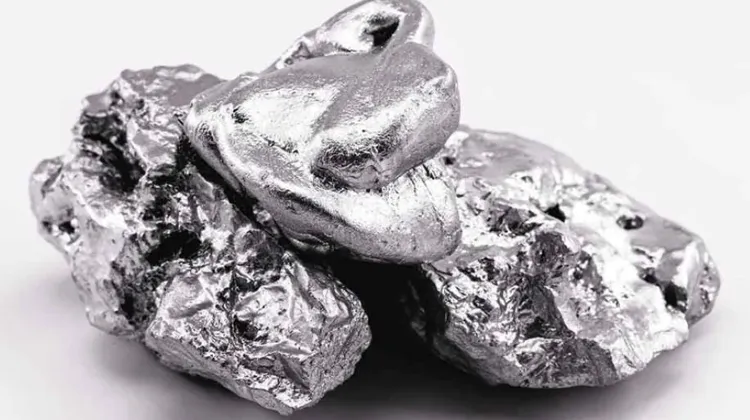
Nickel has earned the nickname “Devil’s Metal” because of its high performance potential, processing complexity, price volatility, and associated safety risks. In the modern battery industry, nickel is a critical component of lithium-ion batteries, particularly in high-nickel cathodes like NCM (Nickel-Cobalt-Manganese) and NCA (Nickel-Cobalt-Aluminum) batteries, which power most electric vehicles (EVs) and energy storage systems.
3.1 The Role of Nickel in Lithium-Ion Batteries
Nickel is primarily used in the cathode material of lithium-ion batteries. Its inclusion offers several key advantages:
High Energy Density
Increasing nickel content allows batteries to store more energy per unit weight.
This directly improves electric vehicle range and portable device battery life.
High-nickel cathodes, such as NCM811 (80% Ni, 10% Co, 10% Mn), are widely adopted for long-range EVs.
Reduced Cobalt Dependency
Cobalt is expensive and has supply chain and ethical sourcing issues.
By increasing nickel content, battery manufacturers can reduce cobalt usage, lowering costs and improving sustainability.
Improved Cycle Life and Stability
Nickel enhances the specific capacity and helps maintain stable performance over hundreds to thousands of charge cycles.
Proper thermal management is essential, as high-nickel batteries are more prone to thermal runaway if mismanaged.
3.2 Why Nickel Is Called the “Devil’s Metal”
The nickname “Devil’s Metal” reflects the challenges and risks associated with nickel, particularly in battery production:
Price Volatility
Nickel prices are highly sensitive to EV demand, mining output, and geopolitical factors.
Sudden price spikes can impact battery production costs and supply chain stability.
Processing and Purification Challenges
Battery-grade nickel requires extremely high purity (>99.5%), which is difficult and costly to achieve.
Both sulfide and laterite ores must undergo complex refining, including high-pressure acid leaching (HPAL) for laterite ores.
Safety Risks in Batteries
High-nickel batteries increase thermal sensitivity, making battery management systems (BMS) and cooling technologies essential.
Improper handling or overcharging can lead to thermal runaway, fires, or explosions, reinforcing the “Devil’s Metal” reputation.
Environmental Concerns
Mining and refining nickel can generate tailings, arsenic, and greenhouse gas emissions.
Sustainable practices, recycling, and “green nickel” initiatives are becoming critical for environmentally responsible battery production.
3.3 The Global Importance of Nickel for Batteries
EV Market Demand: Nickel demand is skyrocketing due to the electric vehicle revolution, with high-nickel cathodes expected to dominate future battery chemistries.
Battery-Grade Nickel (Class 1 Nickel): Essential for nickel sulfate production, which is the primary raw material for cathodes.
Recycling: With EV adoption increasing, nickel recovery from spent batteries is becoming a key source of sustainable supply.
3.4 Summary Table: Nickel in Batteries
| Aspect | Detail | Industrial Significance |
|---|---|---|
| Cathode Role | High-nickel NCM/NCA | High energy density, reduces cobalt |
| Energy Density | Increased by high nickel content | Longer EV range, better battery performance |
| Cycle Life | Stable over hundreds of cycles | Durable EV and portable device batteries |
| Price & Supply | Volatile global nickel prices | Supply chain risk for battery manufacturers |
| Safety | High thermal sensitivity | Requires BMS and cooling management |
| Environmental Impact | Mining and refining emissions | Push for recycled and green nickel |
3.5 Takeaways
Nickel’s critical role in high-performance lithium-ion batteries makes it both indispensable and challenging, earning it the nickname “Devil’s Metal”. While it boosts energy density and reduces cobalt dependence, it introduces price, safety, and environmental risks that battery manufacturers must manage.
4. EV Market Driving Nickel Demand
The rapid growth of the electric vehicle (EV) market is the primary driver behind the surging global demand for nickel. As lithium-ion batteries—especially high-nickel cathode batteries (NCM and NCA)—become the industry standard, nickel has emerged as a critical raw material for energy storage, mobility, and sustainable transport.
4.1 Nickel as a Core Battery Material
Nickel’s key role in batteries is to increase energy density while reducing reliance on cobalt:
High-Nickel Cathodes: NCM811 (80% Ni, 10% Co, 10% Mn) and NCA (Nickel-Cobalt-Aluminum) batteries allow EVs to achieve longer ranges with lighter battery packs.
Energy Storage Applications: Beyond EVs, nickel-rich batteries are increasingly used in grid-scale energy storage for renewable energy integration.
Battery Cost Optimization: Reducing cobalt through higher nickel content lowers production costs, making EVs more affordable for consumers.
4.2 Market Demand and Forecasts
The global EV revolution is placing unprecedented demand on nickel:
Current Usage: In 2025, approximately 35% of global nickel production is expected to go into lithium-ion batteries.
Future Forecast: By 2040, battery usage may account for up to 40–50% of total nickel consumption, driven by EV adoption, renewable energy storage, and portable electronics.
High-Nickel Adoption Trend: Battery manufacturers are transitioning from NCM622 (60% Ni) to NCM811 (80% Ni) to meet longer-range EV requirements.
4.3 Supply Chain Challenges
While nickel demand is growing, several supply-side challenges affect EV battery manufacturers:
Geographical Concentration: Major nickel producers include Indonesia, Philippines, Russia, Australia, and Canada, making supply vulnerable to geopolitical factors.
High-Grade Nickel Scarcity: Battery-grade Class 1 nickel (≥99.98% purity) primarily comes from sulfide ores, which are limited and depleting.
Extraction Complexity: Laterite ores (e.g., limonite and saprolite) require high-pressure acid leaching (HPAL) to produce battery-grade nickel, which is costly and energy-intensive.
Price Volatility: Sudden spikes in nickel prices can significantly impact EV battery costs, sometimes causing production delays or redesigns.
4.4 Role of Recycling and Sustainable Nickel
To address supply constraints and environmental concerns:
Battery Recycling: End-of-life EV batteries are increasingly used as a source of recycled nickel, reducing the need for virgin mining.
Sustainable Nickel Production: “Green nickel” initiatives aim to produce low-carbon nickel via renewable energy-powered HPAL and efficient electrolysis.
Circular Economy: Recycled nickel contributes to a sustainable battery supply chain, meeting regulatory and consumer demands for eco-friendly materials.
4.5 Summary Table: EV Market Nickel Demand
| Aspect | Detail | Implication for EV Industry |
|---|---|---|
| Battery Adoption | High-nickel NCM/NCA cathodes | Longer EV range, lower cobalt use |
| Market Forecast | 40–50% of nickel used in batteries by 2040 | Strong global demand growth |
| Supply Constraints | Geographic concentration, Class 1 scarcity | Risk of price spikes and supply shortages |
| Processing Challenges | Laterite HPAL & sulfide refining | High production cost, technical complexity |
| Sustainability | Recycling & green nickel | Reduces environmental footprint and secures supply |
4.6 Key Takeaways
The EV market is driving unprecedented nickel demand, positioning nickel as a critical material for the energy transition. High-nickel battery adoption improves EV range and lowers cobalt reliance, but supply chain risks, processing challenges, and sustainability concerns require careful planning. Recycling and low-carbon nickel production are increasingly central to meeting future EV and energy storage demands.
5. Class 1 Nickel and Its Importance

Class 1 nickel refers to high-purity nickel with a chemical purity of 99.8% or higher, making it the most valuable form of nickel for industrial applications, particularly in electric vehicle (EV) batteries, high-performance alloys, and nickel sulfate production. Its unique characteristics differentiate it from Class 2 nickel, which is less pure and typically used for stainless steel and general alloy production.
5.1 Definition and Classification
Class 1 Nickel: ≥99.8% pure; suitable for battery-grade applications.
Class 2 Nickel: Lower purity (<99.8%); used for industrial alloys, stainless steel, and plating.
Battery-Grade Nickel: Derived almost exclusively from Class 1 nickel to produce nickel sulfate (NiSO₄), which is the key active material for high-nickel lithium-ion cathodes like NCM811 and NCA.
5.2 Importance in EV Batteries
High Energy Density
Nickel-rich cathodes require high-purity nickel to achieve maximum energy density, essential for long-range EVs.
Increasing the nickel ratio in cathodes (e.g., from NCM622 to NCM811) improves battery capacity while reducing cobalt content.
Consistency and Reliability
Impurities in nickel can lead to electrochemical instability, capacity loss, and reduced battery life.
Class 1 nickel ensures stable charge-discharge performance and reduces risks of internal short circuits.
Supply Chain Criticality
EV manufacturers rely on consistent, high-quality Class 1 nickel supply to meet production targets.
Any shortage or price volatility of Class 1 nickel can directly impact EV battery manufacturing costs and delivery timelines.
5.3 Sources of Class 1 Nickel
Sulfide Nickel Ores
Traditionally the primary source of Class 1 nickel.
Typically found in South Africa, Russia, Canada, and Australia.
Pros: High-quality, easier to process.
Cons: Reserves are depleting, limiting long-term supply.
Laterite Nickel Ores (Red-Bed / Limonite & Saprolite Types)
Found primarily in Indonesia, Philippines, and New Caledonia.
Extraction requires High-Pressure Acid Leaching (HPAL) or other hydrometallurgical methods.
Pros: Abundant reserves.
Cons: Higher energy use and production cost.
5.4 Challenges in Producing Class 1 Nickel
High Production Costs: Purifying nickel to ≥99.8% is energy-intensive and capital-intensive.
Environmental Concerns: Both sulfide and laterite processing produce waste materials, greenhouse gases, and tailings, requiring stringent environmental management.
Supply Security: Geographic concentration of high-purity nickel sources makes the supply chain vulnerable to political instability, trade restrictions, and export bans.
5.5 Future Trends
Increasing Use of Laterite HPAL Nickel: To supplement depleting sulfide ore supplies.
Battery Recycling: Recovering Class 1 nickel from end-of-life EV batteries reduces dependency on mining.
Green and Low-Carbon Nickel Production: Initiatives are emerging to produce Class 1 nickel with lower environmental footprint, supporting sustainable EV battery supply.
5.6 Summary Table: Class 1 Nickel for EV Batteries
| Feature | Details | Significance |
|---|---|---|
| Purity | ≥99.8% | Essential for battery-grade nickel sulfate |
| Main Sources | Sulfide ores, laterite ores | Determines supply security and production cost |
| Key Applications | NCM/NCA cathodes, high-performance alloys | Energy-dense EV batteries |
| Production Challenges | Energy-intensive, costly, environmental impact | Supply chain risk management |
| Sustainability | Recycling and green production | Reduces mining dependency, eco-friendly |
Key Takeaways
Class 1 nickel is the most critical raw material for modern high-performance lithium-ion batteries. Its high purity ensures energy density, cycle stability, and safety, making it indispensable for long-range EVs and sustainable energy storage. The combination of limited high-quality ore, high processing complexity, and environmental challenges gives Class 1 nickel strategic importance in the global battery supply chain.
6. Nickel Ore Types and Global Distribution
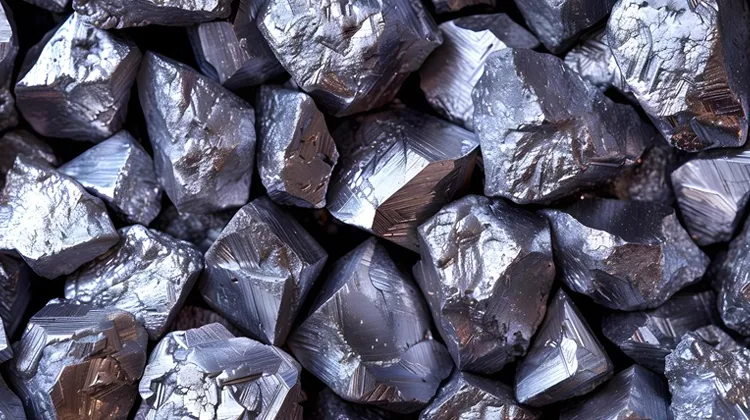
Nickel is primarily extracted from two major types of ores: sulfide ores and laterite ores (oxide ores). Each type has distinct geological characteristics, processing methods, and geographic distributions, which significantly impact the global nickel supply chain, battery production, and EV industry growth. Understanding these differences is critical for investors, manufacturers, and battery producers.
6.1 Sulfide Nickel Ores
Characteristics:
Rich in nickel sulfides (NiS), often containing minor amounts of cobalt, copper, and platinum-group metals.
Typically high-grade, with nickel content ranging from 1–3%.
Easier to refine into Class 1 nickel, suitable for battery-grade applications.
Processing:
Extracted via conventional mining (underground or open-pit).
Refined using pyrometallurgical processes, including smelting and electrorefining, to achieve high-purity nickel (>99.8%).
Major Sulfide Deposits & Producers:
Russia: Norilsk Nickel (largest sulfide producer)
Canada: Sudbury Basin
South Africa: Bushveld Complex
Australia: Mount Keith, Kambalda
Industrial Significance: Sulfide ores supply the majority of Class 1 nickel, critical for lithium-ion batteries, aerospace alloys, and specialty chemicals.
6.2 Laterite Nickel Ores
Characteristics:
Oxide-rich ores formed by tropical weathering of ultramafic rocks.
Composed mainly of limonite (FeO(OH)·nH₂O) and saprolite (Mg,Fe silicates).
Nickel content is generally lower than sulfide ores (1–2%), but deposits are vast and abundant.
Processing:
Requires hydrometallurgical methods, including High-Pressure Acid Leaching (HPAL) or ammonia-based extraction to produce battery-grade nickel.
More energy-intensive and costly than sulfide ore processing.
Major Laterite Deposits & Producers:
Indonesia: Largest global supplier; rich laterite deposits processed via HPAL
Philippines: Significant limonite and saprolite ores
New Caledonia: High-quality saprolite nickel
Brazil & Cuba: Smaller but strategic deposits
Industrial Significance: Laterite ores are the future source of high-purity nickel, particularly as sulfide reserves decline, making them critical for sustainable EV battery supply.
6.3 Comparison of Sulfide vs Laterite Ores
| Feature | Sulfide Nickel Ore | Laterite Nickel Ore |
|---|---|---|
| Nickel Content | 1–3% | 1–2% |
| Purity | High (Class 1 suitable) | Medium, requires HPAL |
| Extraction Method | Pyrometallurgical (smelting, refining) | Hydrometallurgical (HPAL) |
| Major Producers | Russia, Canada, South Africa, Australia | Indonesia, Philippines, New Caledonia |
| Cost | Lower for battery-grade nickel | Higher energy and capital costs |
| Environmental Impact | Moderate, smelting emissions | Higher, acid leaching and tailings |
6.4 Global Nickel Production and Supply Chain
Top Producers:
Indonesia – dominates laterite nickel supply for batteries
Philippines – major limonite and saprolite ores
Russia – sulfide ores from Norilsk
Australia & Canada – mix of sulfide and laterite ores
Emerging Sources: Deep-sea nickel mining and recycling from end-of-life batteries could supplement traditional mining.
Supply Implications: Geographic concentration means nickel price volatility can directly affect EV battery manufacturing costs, highlighting the strategic importance of diversified nickel sourcing.
6.5 Key Takeaways
Sulfide ores: High-purity, easier to refine, historically the main source of Class 1 nickel.
Laterite ores: Abundant, require advanced processing (HPAL), increasingly critical as sulfide reserves decline.
Geographic concentration: Indonesia, Philippines, Russia, Canada, and Australia dominate nickel production, impacting supply security.
Future trends: Recycling, green nickel, and deep-sea mining will play a bigger role in meeting EV battery demand.
7. Challenges and Trends of High-Nickel Batteries
High-nickel lithium-ion batteries, such as NCM811 (Nickel-Cobalt-Manganese) and NCA (Nickel-Cobalt-Aluminum), are rapidly becoming the standard for electric vehicles (EVs) and energy storage systems. These batteries offer higher energy density, longer driving range, and lower cobalt content, but they also come with significant technical, economic, and environmental challenges. Understanding these factors is crucial for battery manufacturers, EV producers, and investors.
7.1 Technical Challenges of High-Nickel Batteries
Thermal Stability and Safety
High-nickel cathodes are more thermally sensitive than low-nickel alternatives.
Risk of thermal runaway increases if the battery is overcharged, poorly managed, or exposed to extreme temperatures.
Advanced Battery Management Systems (BMS) and cooling solutions are essential to ensure safety.
Cycle Life and Degradation
High-nickel batteries tend to experience faster capacity fading due to structural changes in the cathode during repeated charge-discharge cycles.
Protective coatings and electrolyte additives are used to extend battery life.
Electrochemical Instability
Impurities in nickel or poor manufacturing can lead to internal short circuits, dendrite formation, and reduced efficiency.
Maintaining ultra-high purity (Class 1 nickel) is critical for consistent performance.
7.2 Economic and Supply Challenges
Nickel Price Volatility
High-nickel batteries require battery-grade Class 1 nickel, which is limited and expensive.
Price fluctuations directly affect EV battery costs and can lead to temporary supply shortages.
Limited High-Grade Nickel Resources
Sulfide ores are depleting, and laterite ores require energy-intensive HPAL processing.
Geographic concentration of nickel production in Indonesia, Philippines, Russia, and Canada adds geopolitical risk.
Manufacturing Costs
High-nickel cathodes are more difficult to produce, requiring advanced technologies and tight quality control.
7.3 Environmental Challenges
Mining and Processing Impacts
Nickel extraction, especially from laterite ores, produces tailings, greenhouse gas emissions, and chemical waste.
Environmental regulations in producer countries can affect production capacity and cost.
Battery End-of-Life
Without proper recycling, high-nickel batteries can contribute to metal pollution and waste management challenges.
7.4 Industry Trends and Solutions
Increasing Nickel Recycling
Recovered nickel from spent EV batteries is becoming a major source of Class 1 nickel.
Recycling reduces dependency on mining and mitigates supply chain risk.
Green and Low-Carbon Nickel Production
Initiatives to produce nickel with renewable energy-powered HPAL are emerging.
“Green nickel” supports sustainable EV production and carbon-neutral battery initiatives.
Technological Innovations
Advanced cathode coatings, electrolyte additives, and high-precision manufacturing improve thermal stability, cycle life, and safety.
R&D in solid-state batteries may reduce nickel dependency in the long term while enhancing safety.
Market Adaptation
Battery manufacturers are gradually shifting from NCM622 (60% Ni) to NCM811 (80% Ni) to meet EV range expectations.
Multi-sourcing and strategic stockpiling of Class 1 nickel mitigate supply risk.
7.5 Summary Table: Challenges and Trends of High-Nickel Batteries
| Aspect | Challenges | Industry Trends / Solutions |
|---|---|---|
| Safety | Thermal runaway, sensitivity | Advanced BMS, cooling systems |
| Performance | Capacity fade, structural degradation | Cathode coatings, electrolyte additives |
| Supply Chain | Nickel price volatility, geographic concentration | Multi-sourcing, stockpiling, recycling |
| Cost | HPAL processing, battery-grade Class 1 nickel | Efficient processing, green nickel initiatives |
| Environment | Mining emissions, battery waste | Recycling, sustainable nickel production |
| Market | Transition from NCM622 to NCM811 | Long-range EV adoption, high-nickel cathodes |
7.6 Key Takeaways
High-nickel batteries are critical for next-generation EVs and energy storage, but they pose technical, economic, and environmental challenges. Innovations in battery management, recycling, green nickel production, and cathode technology are addressing these issues, enabling the mass adoption of high-energy-density EV batteries.
8. Summary
Nickel is called the “Devil’s Metal” due to its high energy density, processing complexity, safety risks, and price volatility. It remains indispensable in modern lithium-ion batteries, especially for electric vehicles, while facing resource constraints, environmental challenges, and supply chain pressures.
With the EV market growing and nickel recycling technologies advancing, nickel will continue to hold a central role in the battery industry.


 English
  Russian
  Arabic
  Vietnamese
  Spanish
  French
  Portuguese
  Japanese
  Chinese