


Antimony is one of the most strategic yet underestimated industrial minerals in the world. From ancient cosmetics to modern batteries and flame retardants, this metalloid plays a vital role in global industries.
For mining machinery manufacturers, crushing plant suppliers, grinding mill producers, and cement equipment exporters, understanding antimony ore mining and processing can open new international market opportunities.
1. What Is Antimony?
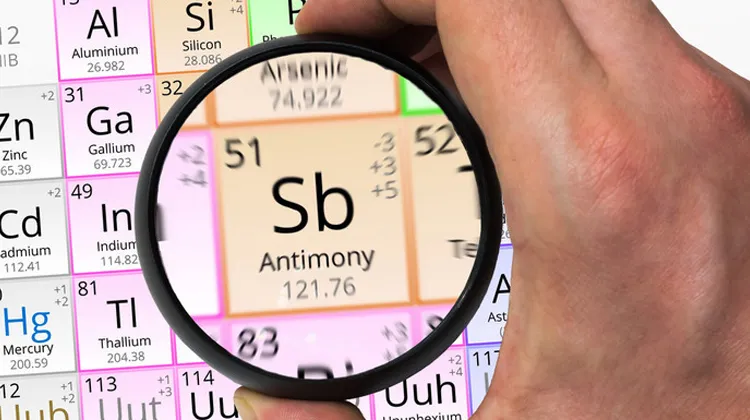
Antimony is a chemical element with the atomic number 51 and the symbol Sb. It belongs to the nitrogen group (Group 15) of the periodic table and is classified as a metalloid element, meaning it exhibits properties of both metals and non-metals.
Often described as a brittle, silvery-white industrial metal, antimony rarely occurs in its pure form in nature. Instead, it is mainly found in sulfide ores such as stibnite (Sb₂S₃), which is the primary commercial source of antimony worldwide.
Basic Chemical and Physical Properties of Antimony
Understanding the properties of antimony helps explain why it is widely used in alloys, flame retardants, and semiconductor materials.
Atomic number: 51
Chemical symbol: Sb
Atomic weight: 121.76
Element category: Metalloid
Crystal structure: Rhombohedral
Mohs hardness: 3
Color: Silvery-white with metallic luster
Melting point: 630.6°C
Antimony is brittle and can be easily crushed into powder, which makes it suitable for alloy production but unsuitable for structural applications in pure form.
Compared to highly conductive metals like copper or aluminum, antimony has relatively low electrical and thermal conductivity. However, its unique semi-metallic behavior makes it valuable in electronic and semiconductor industries.
Antimony Meaning and Origin of the Name
The word “antimony” is believed to originate from the Greek words:
anti (not)
monos (alone)
This reflects the fact that antimony rarely exists as a native element and typically forms compounds with sulfur, oxygen, and metals.
The chemical symbol Sb comes from the Latin word stibium, which refers to stibnite, the natural antimony sulfide mineral historically used as cosmetic pigment in ancient Egypt and the Middle East.
Why Is Antimony Considered a Critical Mineral?
Antimony is classified as a critical mineral in many countries, including the United States and members of the European Union. This designation is based on:
Limited global production regions
High supply concentration
Strategic importance in defense and energy sectors
Essential role in flame retardants and battery technologies
Because of its growing use in renewable energy storage systems, lead-acid batteries, and advanced electronics, global demand for antimony continues to increase.
Key Facts About the Antimony Element
Ranked 63rd in abundance in the Earth’s crust
Rarely found in native metallic form
Mainly produced from antimony ore (stibnite)
Used in over 100 industrial applications
Plays a role in modern energy transition technologies
In short, antimony is not just a minor industrial element — it is a strategically important raw material with expanding applications in mining, metallurgy, electronics, and energy storage systems.
2. Antimony Meaning

The meaning of antimony goes beyond its dictionary definition. In chemistry, mineralogy, and industrial science, antimony represents a highly reactive metalloid element that primarily exists in compound form rather than as a native metal.
When people search “What does antimony mean?”, the answer depends on context:
In chemistry, antimony refers to element 51 on the periodic table.
In mining and geology, it describes a group of sulfide and oxide minerals containing Sb.
In industry, it represents a strategic raw material used in flame retardants, alloys, and electronics.
Definition of Antimony in Chemistry
In scientific terms, antimony is defined as:A brittle, silvery-white metalloid element with atomic number 51 that commonly forms trivalent and pentavalent compounds.
Unlike pure structural metals, antimony is rarely found in elemental form in nature. It is typically bonded with sulfur (Sb₂S₃) or oxygen, forming industrially important compounds.
This chemical behavior explains why antimony is widely used as a compound rather than as a standalone metal.
Etymology: Origin of the Word “Antimony”
The origin of the word “antimony” has been debated among historians and linguists.
One widely accepted theory traces it to the Greek words:
anti (not)
monos (alone)
This interpretation suggests “a substance not found alone,” referencing its natural occurrence in combined mineral forms.
Another historical theory links the word to medieval Latin “antimonium,” used by alchemists.
Why Is the Symbol Sb?
Many people ask: Why is the symbol for antimony Sb instead of An?
The answer lies in its Latin name stibium, derived from “stibi,” the ancient term for stibnite ore. This mineral was ground into powder and used in ancient Egypt and the Middle East as eye cosmetic pigment.
Because modern chemical symbols often reflect Latin origins (like Fe for iron or Cu for copper), antimony retained the symbol Sb.
Industrial Meaning of Antimony
In industrial terminology, antimony does not simply mean an element — it refers to a strategic material with functional properties.
Its meaning in industry is associated with:
Flame resistance enhancement
Hardness modification in alloys
Semiconductor doping capabilities
Glass clarification and decolorization
Therefore, when industries refer to “antimony supply” or “antimony production,” they typically mean refined antimony compounds rather than pure metallic antimony.
Modern Interpretation of Antimony
Today, the meaning of antimony is closely connected to its role as a:
Critical mineral
Energy storage material
Flame retardant synergist
Defense-related raw material
As governments classify it as a strategic resource, the word “antimony” increasingly carries economic and geopolitical significance beyond its chemical definition.
3. Antimony Is an Unusual Element

Antimony is regarded as an unusual element because of its rare combination of physical behavior, chemical properties, and industrial functionality. Unlike common structural metals such as iron or aluminum, antimony demonstrates characteristics that set it apart in materials science and industrial applications.
It Expands When It Solidifies
One of the most distinctive features of antimony is that it expands slightly as it cools and solidifies. Most metals contract during this phase change, but antimony behaves differently.
This property improves casting precision because the material fills molds more completely. As a result, antimony has historically been used in:
Precision castings
Printing type metal
Battery grid alloys
Specialized metal molding
Its solidification behavior makes it valuable in applications requiring dimensional accuracy.
It Exhibits Both Metallic and Nonmetallic Behavior
Antimony belongs to the metalloid category, meaning it displays characteristics of both metals and nonmetals.
It has a metallic luster and reflective surface, yet it is brittle and lacks the ductility typical of true metals. Electrically, its conductivity is significantly lower than copper or aluminum, and under certain conditions, it behaves as a semiconductor.
This dual nature allows antimony to function effectively in alloy systems as well as in electronic and semiconductor-related technologies.
It Has a Unique Crystal Structure and Fracture Pattern
When fractured, antimony reveals a layered, crystalline surface with a flaky appearance. Unlike ductile metals that bend or stretch, antimony breaks sharply due to its brittle structure.
Its rhombohedral crystal structure contributes to this fracture behavior and distinguishes it from many other industrial elements.
Because it can be easily ground into powder, antimony is particularly suitable for compound production and metallurgical blending.
It Has Transitioned Across Civilizations and Technologies
Few elements have experienced such a transformation in use over time.
In ancient civilizations, antimony compounds were used in cosmetic preparations.
In early medical history, it was incorporated into treatments, though often improperly understood.
In modern industry, it is essential in flame-retardant systems, advanced batteries, infrared detectors, and alloy strengthening.
This progression from decorative mineral to high-tech industrial material highlights its adaptability and enduring relevance.
It Plays a Dual Role: Hazardous Yet Indispensable
Antimony presents a complex profile. Certain compounds can pose environmental or health risks if improperly handled. However, under controlled industrial conditions, it becomes essential for safety and performance.
For example:
Flame-retardant formulations reduce fire hazards in buildings and electronics.
Alloyed antimony improves the strength and durability of lead-based components.
Semiconductor-grade antimony supports specialized electronic applications.
This balance between potential toxicity and technological necessity makes antimony a uniquely positioned element in modern industry.
4. Antimony Is a Metalloid

Antimony is classified as a metalloid because it occupies an intermediate position between metals and nonmetals in the periodic table. This classification reflects its mixed physical and chemical behavior, which gives antimony unique functional versatility in industrial applications.
Position in the Periodic Table
Antimony belongs to Group 15 (the nitrogen group) of the periodic table. Elements in this group display a gradual transition from nonmetallic to metallic behavior as atomic weight increases.
Antimony sits between arsenic and bismuth, acting as a transitional element that bridges semiconducting and metallic characteristics.
Electronic Structure and Chemical Behavior
Antimony commonly forms compounds in two oxidation states:
+3 (trivalent antimony)
+5 (pentavalent antimony)
This flexibility in valence allows it to participate in a wide range of chemical reactions. It readily bonds with sulfur, oxygen, and halogens, forming stable compounds used in industrial production.
Its electron configuration also contributes to its semimetal behavior, influencing conductivity and bonding patterns.
Electrical and Thermal Characteristics
As a metalloid, antimony does not conduct electricity as efficiently as traditional metals. However, it exhibits semiconducting properties under specific conditions.
Because of this behavior, antimony is used in:
Semiconductor doping
Infrared-sensitive materials
Thermoelectric devices
Hall-effect components
Its moderate thermal conductivity and chemical stability also make it useful in high-temperature alloy systems.
Mechanical Properties
Unlike ductile metals, antimony is brittle and fractures rather than bends under stress. It cannot be drawn into wires or rolled into thin sheets in pure form.
However, when alloyed with softer metals such as lead, it significantly increases hardness and mechanical strength. This property is particularly important in battery grids, bearing metals, and specialty castings.
Role in Materials Engineering
In materials science, antimony is often used as a functional modifier rather than a primary structural material. Even in small concentrations, it can:
Improve hardness
Enhance corrosion resistance
Modify crystallization behavior
Increase thermal stability
This ability to influence material performance at low concentrations makes antimony highly valuable in advanced alloy design and industrial chemistry.
Why Metalloid Classification Matters
The metalloid nature of antimony explains why it is relevant across multiple industries:
Metallurgy
Electronics
Chemical manufacturing
Energy storage
Flame-retardant technology
Its position between metals and nonmetals gives it a combination of reactivity, structural influence, and electronic functionality that few elements possess simultaneously.
5. Main Types of Antimony Ores
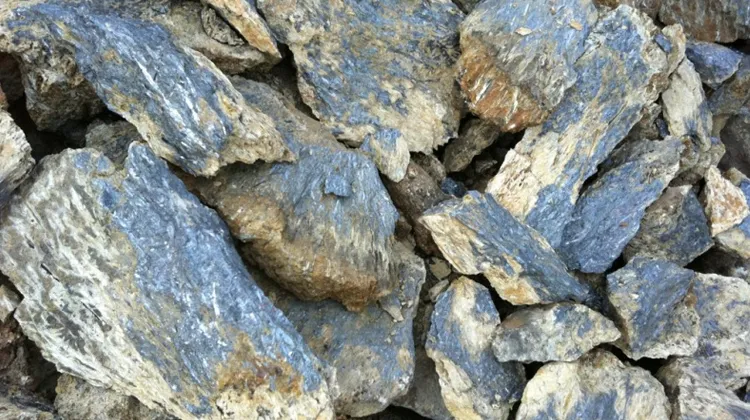
Antimony primarily occurs in nature as part of mineral compounds rather than in its pure metallic form. Its ores are found in a variety of geological settings, making its extraction both a scientific and industrial challenge. Understanding the types of antimony ores is essential for mining, processing, and equipment planning.
Stibnite (Sb₂S₃) – The Primary Commercial Ore
Chemical composition: Antimony trisulfide (Sb₂S₃)
Appearance: Metallic silver-gray needles or acicular crystals
Significance: Stibnite is the most important commercial source of antimony, accounting for the majority of global production.
Applications: Directly used for antimony extraction, alloy production, and precursor for antimony trioxide (Sb₂O₃) in flame retardants
Stibnite is typically mined from hydrothermal veins in quartz-rich rock formations. Its high antimony content (up to 71%) makes it economically viable for beneficiation.
Secondary Antimony Minerals
While stibnite dominates commercial extraction, over 100 antimony-bearing minerals exist. Key secondary ores include:
Valentinite (Sb₂O₃): An oxide mineral, often forms in oxidized zones of sulfide deposits.
Senarmontite (Sb₂O₃): A white cubic antimony oxide mineral, sometimes used as a minor antimony source.
Complex polymetallic sulfides: Antimony is frequently recovered as a by-product from gold, silver, lead, and zinc ores.
These secondary minerals require specialized processing due to lower antimony content and complex chemical composition.
Geological Occurrence
Antimony ores are generally associated with epithermal and hydrothermal vein systems. Common geological characteristics include:
Quartz veins hosting stibnite in metamorphic or sedimentary host rocks
Association with sulfide minerals such as arsenopyrite, galena, and sphalerite
Occurrence in orogenic gold-antimony systems where gold and antimony are co-located
Geological exploration focuses on identifying these structural and mineralogical patterns to locate economically viable deposits.
Ore Morphology and Industrial Implications
Antimony ores are typically acicular (needle-like) or crystalline, which affects how they are handled and processed:
Needle-like stibnite is brittle and can be crushed into powder efficiently
Oxide ores often require roasting or chemical conversion before metallurgical extraction
Polymetallic ores necessitate beneficiation techniques like gravity separation and flotation
Understanding ore morphology helps optimize mining, grinding, and smelting equipment selection, which is particularly relevant for mining machinery suppliers and processing plant design.
By-Product Sources
Antimony is also frequently recovered as a by-product during the processing of:
Gold ores (Au-Sb systems)
Silver ores (Ag-Sb veins)
Lead-zinc ores (Pb-Zn-Sb complex ores)
By-product recovery contributes significantly to global supply, particularly in regions where primary stibnite deposits are limited.
Industrial and Strategic Importance
Even though stibnite is the main ore, the diverse occurrence of antimony minerals makes it strategically important:
Global supply is concentrated, mainly in China, Russia, and Tajikistan
Ore grade variability requires advanced processing technology
Understanding ore types is critical for investment in beneficiation plants, smelting facilities, and specialized mining equipment
The combination of geological rarity, diverse mineralogy, and industrial utility reinforces why antimony ore remains a critical focus for the mining industry.
6. Global Antimony Production and Distribution

Antimony is a strategically important mineral with highly concentrated global production. Understanding its production landscape and distribution is essential for industries relying on this metal, from flame-retardant manufacturing to advanced battery systems.
Leading Antimony Producing Countries
Global antimony production is dominated by a few key countries:
China: The largest producer, accounting for approximately 70% of global output. Major deposits are located in Hunan, Guizhou, and Guangxi provinces.
Russia: Significant deposits in the Siberian region contribute to secondary global supply.
Tajikistan: Contains high-grade stibnite veins, primarily mined in the Zeravshan Valley.
Myanmar: Emerging producer with deposits in the Shan State, supplying regional markets.
Other minor producers include Bolivia, South Africa, and Turkey, mostly from small-scale mining operations.
Global Supply Concentration
Antimony production is geographically concentrated, which makes global markets sensitive to policy changes, export restrictions, and geopolitical risks.
China’s dominance in mining and processing has led to supply chain centralization, affecting pricing and international trade strategies.
Secondary production (by-product recovery from gold, silver, and lead-zinc ores) supplements primary stibnite mining in countries with smaller deposits.
Consumption and Market Distribution
Global consumption closely follows production:
China: Represents ~60% of global antimony consumption, mainly for flame retardants, batteries, and alloy production.
Europe & North America: Focus on flame-retardant materials and high-purity antimony for electronics.
Asia-Pacific (outside China): Uses antimony in industrial alloys, glass, ceramics, and plastics.
Industries dependent on antimony must account for transportation, import regulations, and price volatility due to concentrated supply.
Production Trends and Industrial Implications
Recent years show a steady increase in global antimony demand driven by electronics, energy storage, and fire safety regulations.
Supply concentration has prompted strategic stockpiling and exploration investment in alternative sources outside China.
Production methods vary between countries, from large-scale stibnite mining in China to small-scale by-product recovery in Russia and Tajikistan.
These trends influence equipment needs, such as crushing, grinding, flotation, and smelting machinery, for both primary and secondary antimony extraction.
Strategic Importance of Antimony Distribution
Because of its limited production regions, antimony is considered a critical mineral by governments worldwide. Its distribution affects:
Industrial planning for flame-retardant and alloy manufacturing
Global trade and export controls
Investment decisions in mining and mineral processing equipment
Companies targeting the antimony market must carefully consider regional supply risks and processing technology optimization to maintain reliable access.
7. Antimony Production and Market Prospect
The global antimony market is experiencing strong growth and strategic significance due to its industrial versatility and limited supply regions. Understanding production trends and market prospects is crucial for investors, manufacturers, and mining equipment suppliers.
Global Production Trends
China remains the dominant producer, responsible for roughly 70% of global output.
Secondary production from gold, silver, and lead-zinc mines contributes another 20–25%, mainly in Russia, Tajikistan, and Bolivia.
Overall global production has gradually increased over the past decade, driven by rising demand for batteries, flame retardants, and high-performance alloys.
Market Demand Drivers
Antimony demand is fueled by several industrial sectors:
Flame Retardants: Antimony trioxide (Sb₂O₃) is widely used in plastics, textiles, and electronic components to enhance fire resistance.
Batteries: Lead-acid and emerging lithium-antimony batteries rely on antimony alloys for durability and conductivity.
Alloy Production: Small quantities of antimony improve hardness and corrosion resistance in lead, tin, and copper alloys.
Electronics and Semiconductors: High-purity antimony is essential for infrared detectors, diodes, and thermoelectric materials.
Price Trends and Supply Challenges
Antimony prices have shown an upward trend in recent years, reflecting strong industrial demand and supply concentration.
Limited mining regions and geopolitical factors create volatility in the international market, particularly for export-dependent industries.
Secondary recovery and by-product extraction partially stabilize supply, but cannot fully offset primary production constraints.
Strategic Importance of Antimony
Recognized as a critical mineral in multiple countries due to limited production and strategic industrial uses.
Considered a military and energy-related resource, particularly in alloys for defense systems and battery grids.
Companies investing in antimony processing or equipment must account for supply chain concentration and potential export restrictions.
Market Outlook
Short-term: Continued growth in flame-retardant materials and industrial alloys will keep demand robust.
Medium-term: Expansion of battery technologies, including electric vehicles and grid storage, will increase the need for antimony alloys.
Long-term: Industrial diversification, coupled with exploration in alternative producing regions, may balance supply constraints.
Analysts predict that global antimony demand will continue to rise steadily, providing opportunities for mining, processing, and equipment suppliers.
Implications for Mining Equipment and Industrial Supply
Increased demand has led to higher investment in beneficiation plants, flotation circuits, and smelting facilities.
Mining and processing equipment manufacturers can capitalize on growth in ore crushing, grinding, and purification systems.
Strategic sourcing and modern processing techniques are key for industrial reliability and cost efficiency.
8. Antimony Ore Mining and Processing
Antimony mining and processing require specialized techniques to extract this metalloid efficiently from its ores. Understanding the full mining and beneficiation workflow is essential for industrial operations, equipment suppliers, and engineering projects.
Mining Methods
Antimony ores are primarily extracted from stibnite veins and oxidized deposits. Common mining methods include:
Underground Mining:
Used for high-grade vein deposits
Involves shaft sinking, tunneling, and careful ore handling
Minimizes ore dilution and protects the surrounding rock
Open-Pit Mining:
Suitable for shallow or lower-grade deposits
Enables large-scale extraction using excavators, bulldozers, and haul trucks
By-Product Recovery:
Antimony is also extracted as a secondary product from gold, silver, lead, and zinc mining operations
Requires additional processing steps to separate antimony from primary metal ores
Crushing and Grinding
Before beneficiation, antimony ore must be reduced in size:
Primary Crushing: Jaw crushers break large rocks into manageable pieces
Secondary Crushing: Cone crushers or impact crushers reduce ore to finer sizes
Grinding: Ball mills, rod mills, or vertical roller mills grind the ore into powder, improving liberation of antimony minerals
Proper crushing and grinding are essential to achieve high recovery rates in subsequent processing steps.
Beneficiation Techniques
The most common antimony ore processing methods include:
Gravity Separation
Suitable for high-grade, coarse-grained stibnite
Equipment includes shaking tables, jigs, and spiral concentrators
Exploits density differences between antimony sulfide and gangue minerals
Froth Flotation
Ideal for low-grade or complex ores
Involves mixing ground ore with reagents to selectively separate antimony sulfide
Produces a concentrated antimony product for smelting
Roasting and Smelting
For sulfide ores, roasting converts Sb₂S₃ into antimony oxide (Sb₂O₃)
Smelting reduces oxide to metallic antimony
Requires high-temperature furnaces and controlled atmospheres to achieve purity
Environmental and Safety Considerations
Modern antimony processing emphasizes green and sustainable practices:
Tailings management to prevent heavy metal leaching
Recycling water and reagents from flotation and grinding circuits
Dust and emission control during roasting and smelting
Worker safety protocols to minimize exposure to toxic antimony compounds
Industrial Equipment Integration
For mining and cement machinery manufacturers, antimony ore processing presents opportunities to supply:
Crushers and grinding mills for size reduction
Shaking tables, jigs, and flotation cells for beneficiation
Rotary kilns and smelting furnaces for oxide and metal recovery
Complete ore handling, storage, and conveyor systems
Integrated processing plants optimize recovery, reduce operational costs, and comply with environmental regulations.
Key Factors for Efficient Antimony Processing
Ore grade and mineral composition
Particle size distribution after crushing and grinding
Selection of proper beneficiation method (gravity vs flotation)
Control of temperature and atmosphere in smelting operations
Waste and tailings management for sustainability
Efficient antimony processing not only maximizes recovery but also ensures environmental compliance and long-term industrial viability.
9. Antimony Is a Life-Saving Toxin
Antimony is a unique element with a paradoxical nature: while certain compounds are toxic in high concentrations, controlled industrial and technological use makes it indispensable in modern applications. Its dual role as a hazard and a lifesaver highlights its strategic importance in multiple industries.
Toxicity and Safety Considerations
Health Risks: Excessive exposure to antimony or its compounds can irritate the eyes, skin, and respiratory system, and may lead to lung, heart, and gastrointestinal complications.
Environmental Impact: High concentrations of antimony in water or soil can harm ecosystems, requiring careful waste management and monitoring.
Industrial Safety: Modern processing plants use dust suppression, water recycling, and emission control to reduce occupational and environmental exposure.
Despite these hazards, regulated handling allows antimony to be safely used in critical industrial processes.
Industrial Applications
Antimony’s unique properties make it highly valuable in a wide range of applications:
Flame Retardants
Antimony trioxide (Sb₂O₃) is the primary flame retardant used worldwide.
Used in plastics, textiles, electronics, and household items to reduce fire risk.
Works synergistically with halogenated compounds to slow combustion.
Alloy Production
Small amounts of antimony strengthen lead, tin, and copper alloys.
Improves hardness, durability, and corrosion resistance.
Critical for lead-acid batteries, bullets, cable sheaths, and bearing metals.
Electronics and Semiconductors
High-purity antimony is used in infrared detectors, diodes, and thermoelectric devices.
Acts as a dopant in semiconductor materials, controlling electrical conductivity.
Glass and Ceramics
Removes gas bubbles and improves transparency in glass.
Acts as a decolorizer or pigment in tiles, ceramics, and specialty coatings.
Medical Uses
Historically used as a laxative and anti-parasitic treatment.
Modern applications are limited but include treatment for certain parasitic infections in controlled doses.
Fireworks and Pyrotechnics
Adds sparkle, flashing effects, and metallic coloration in fireworks.
Enhances visual effects without compromising safety when used in regulated amounts.
Why Antimony Is Considered Strategic
Antimony is classified as a critical mineral by governments due to its scarcity and essential industrial applications.
Its dual nature as a toxin and industrial enabler ensures it remains vital for:
Energy storage and batteries
Flame retardant production
Defense and military alloys
High-tech electronic devices
Proper regulation and processing transform a potentially hazardous element into a life-saving industrial resource.
Industrial Implications
For mining equipment suppliers and industrial operators:
Efficient ore processing minimizes environmental and health risks.
High-purity antimony production enables entry into electronics, battery, and flame retardant markets.
Controlled handling and smelting ensure compliance with international safety and environmental standards.
Antimony’s paradoxical profile — toxic yet essential — makes it both a critical resource and a technological enabler in modern industry.


 English
  Russian
  Arabic
  Vietnamese
  Spanish
  French
  Portuguese
  Japanese
  Chinese