


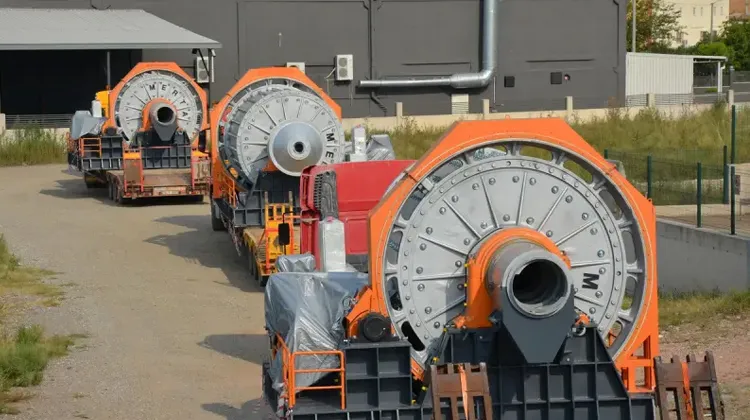
Although grinding technology has developed significantly over the years, many traditional grinding systems still face several common challenges.
One major issue is high energy consumption. Grinding is one of the most energy-intensive processes in industrial production, and inefficient equipment can greatly increase operating costs.
Some older grinding systems also struggle to maintain stable product fineness, which may affect downstream manufacturing quality.
In addition, excessive equipment wear, dust pollution, and frequent maintenance requirements can create operational difficulties for many factories.
As a result, modern industrial plants are increasingly looking for grinding solutions that offer:
- higher efficiency
- lower energy consumption
- better automation
- reduced maintenance
- improved environmental performance
What Are the Main Types of Mineral Grinding Mills?
Several types of grinding mills are commonly used in industrial applications today. Each type is designed for different materials, production capacities, and fineness requirements.
The most widely used grinding systems include:
- Ball Mill
- Raymond Mill
- HGM Ultra-fine Grinding Mill
Ball Mill
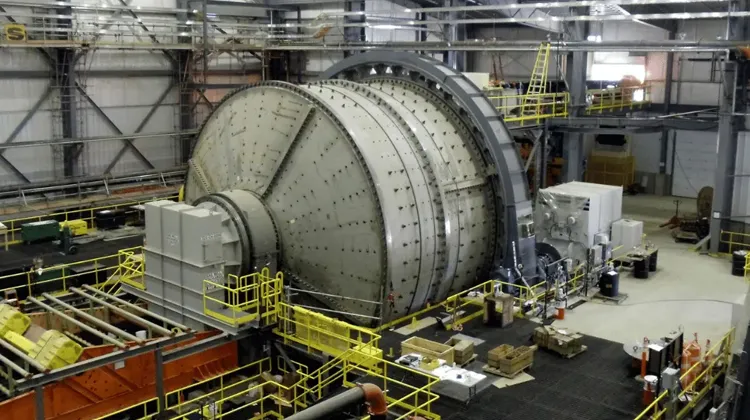
Ball mills are among the most traditional and widely used grinding machines in mining and cement plants.
They operate by rotating a cylindrical drum filled with grinding media such as steel balls or ceramic balls. As the drum rotates, the grinding media continuously impact and grind the material into fine powder.
Ball mills are especially suitable for processing high-hardness materials and large production volumes.
Common applications include:
- gold ore
- copper ore
- iron ore
- quartz sand
- feldspar
- cement clinker
One advantage of ball mills is their strong adaptability. They can support both dry grinding and wet grinding processes, making them suitable for a wide range of industrial conditions.
For certain flammable or explosive materials, ball mills can also operate with inert gas protection to improve production safety.
In addition, ball mills are known for stable operation, mature technology, and relatively reliable long-term performance.
However, compared with newer grinding technologies, traditional ball mills generally consume more energy.
Raymond Mill

Raymond mills are widely used for medium-hardness non-metallic mineral processing.
Compared with ball mills, Raymond mills are often more suitable for medium and small-scale production projects. Although their production capacity is lower, they can produce finer and more uniform powder while requiring lower investment costs.
Raymond mills are commonly used for grinding:
- limestone
- gypsum
- kaolin
- talc
- barite
One of the main advantages of Raymond mills is their stable particle size distribution. In many cases, the 325-mesh passing rate can reach very high levels, making the equipment suitable for industries that require uniform powder quality.
Raymond mills also have relatively good adaptability to moderate moisture fluctuations in raw materials, which helps maintain stable operation.
For small and medium-sized enterprises looking for a cost-effective grinding solution, Raymond mills are often considered a practical choice.
HGM Ultra-fine Grinding Mill
As demand for ultrafine powder continues to increase, HGM ultra-fine grinding mills are becoming more popular in modern industrial production.
These systems are specially designed for producing high-fineness mineral powder used in advanced manufacturing industries.
HGM ultra-fine mills are commonly used for processing:
- calcium carbonate
- barite
- phosphate rock
- talc powder
- non-metallic ultrafine minerals
Compared with traditional grinding equipment, HGM ultra-fine mills can achieve much finer particle sizes while consuming less energy.
Many modern ultrafine grinding systems are also equipped with intelligent automatic control systems, allowing more stable operation and more precise powder control.
For industries focused on high-value powder products, ultrafine grinding technology can significantly improve product competitiveness and market value.
How to Choose the Right Mineral Grinding Machine?
There is no single grinding machine that is suitable for every project. Selecting the right grinding equipment requires careful evaluation of raw materials, production requirements, and long-term operating goals.
Material Hardness
Different minerals have very different hardness levels.
If the grinding equipment does not match the material properties, excessive wear and reduced efficiency may occur.
High-hardness ores are generally more suitable for ball mills, while medium-soft non-metallic minerals may be processed more efficiently using Raymond mills or ultrafine grinding systems.
Required Product Fineness
Different industries require different powder fineness standards.
For example, some metal ore processing projects only require coarse grinding, while advanced calcium carbonate production may require ultrafine powder above 800 mesh.
Clearly understanding the final product requirements is essential before selecting equipment.
Production Capacity
Large mining and cement projects often require continuous high-capacity production.
In these cases, large grinding systems with stable operation are usually preferred.
Smaller projects may focus more on flexible operation and lower investment costs.
Investment and Operating Costs
Different grinding systems involve different investment levels and long-term operating expenses.
Raymond mills generally require lower initial investment, while ultrafine grinding systems may involve higher equipment costs but offer greater value in high-end powder markets.
Companies should evaluate both short-term budgets and long-term profitability when making equipment decisions.
Reliable Equipment Manufacturer
Choosing a reliable equipment supplier is just as important as choosing the grinding machine itself.
An experienced manufacturer can help provide:
- customized solutions
- stable equipment quality
- spare parts support
- technical service
- reduced downtime
For large industrial projects, long-term operational stability is often more important than simply reducing initial purchase costs.
Quick Selection Guide
If a project requires high-capacity grinding of hard iron ore, a ball mill is usually the more reliable solution.
If the goal is cost-effective production of 300-mesh talc powder, a Raymond mill may offer better economic value.
For low-energy production of 800-mesh calcium carbonate powder, an HGM ultra-fine grinding mill is generally the better option.
Future Trends in Grinding Technology
As industrial manufacturing continues moving toward greener and smarter production systems, grinding technology is also evolving rapidly.
Future grinding systems are expected to focus more on:
- energy-saving performance
- intelligent automation
- dust and noise reduction
- ultrafine powder processing
- remote monitoring and digital management
More industrial plants are now adopting intelligent grinding systems to improve operational efficiency and reduce labor costs.
Conclusion
Mineral grinding mills are essential equipment in modern industrial production. Whether in mining, cement manufacturing, metallurgy, or chemical processing, choosing the right grinding system can significantly improve production efficiency, reduce operating costs, and enhance final product quality.
Different grinding technologies offer different advantages.
Ball mills are more suitable for high-hardness and high-capacity projects. Raymond mills are ideal for economical medium-fine powder processing. HGM ultra-fine grinding mills are better suited for high-value ultrafine powder production.
Before selecting grinding equipment, companies should carefully evaluate material properties, required fineness, production scale, investment budget, and long-term operating requirements.
For modern cement equipment manufacturers and mining machinery companies, investing in efficient, stable, and energy-saving grinding systems can help improve competitiveness in the global industrial market while supporting long-term sustainable development.
FAQ
1. What is the most commonly used mineral grinding mill?
Ball mills are one of the most commonly used grinding mills in mining and cement industries because they can handle large production capacity and high-hardness materials.
2. Which grinding mill is best for ultrafine powder production?
HGM ultra-fine grinding mills are usually the best choice for producing ultrafine mineral powder, especially for materials such as calcium carbonate, talc, and barite.
3. How do I choose the right grinding mill for my project?
You should consider several factors, including material hardness, required powder fineness, production capacity, energy consumption, and long-term maintenance costs before choosing a grinding mill.


 English
  Russian
  Arabic
  Vietnamese
  Spanish
  French
  Portuguese
  Japanese
  Chinese