


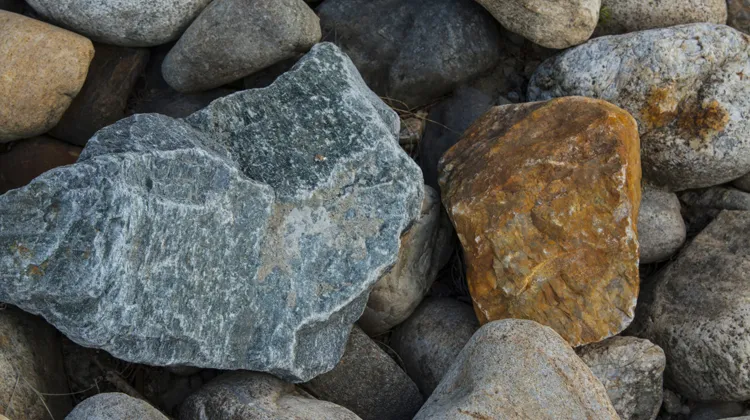
Choosing the right crusher for hard rock is a critical decision in mining and aggregate production. The performance of crushing equipment directly affects productivity, operating costs, and final product quality.
However, selecting the right crusher is not only about machine type. It requires a clear understanding of rock hardness, classification, and crushing characteristics. This guide provides a comprehensive overview to help you make informed decisions based on real working conditions.
1. What Is Rock Hardness?
Rock hardness refers to the ability of a material to resist scratching or abrasion. It is an important property that determines how difficult the rock is to crush and how quickly equipment will wear.
It is important to distinguish between hardness and compressive strength. Hardness describes surface resistance, while compressive strength (measured in MPa) indicates how much load a rock can withstand before failure. Although these two properties are related, they are not the same. A rock may have high compressive strength but moderate hardness, or vice versa.
Understanding both parameters is essential when selecting crushing equipment, especially for abrasive materials.
2. How to Measure Rock Hardness?
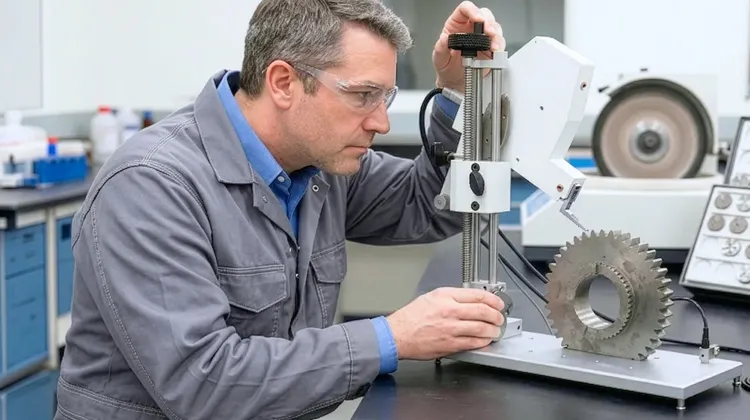
There are several commonly used methods to evaluate rock hardness in both laboratory and field conditions.
Mohs Hardness Scale
The Mohs hardness scale is a widely used qualitative method that ranks minerals from 1 to 10, from talc (softest) to diamond (hardest).
Typical hard rocks such as granite, basalt, and quartz fall within the range of 5 to 7 on this scale. This provides a quick reference for estimating crushing difficulty.
Simple Field Testing Methods
In practical situations, quick field tests can be used to estimate hardness. For example, scratching the rock surface with a fingernail, copper key, or knife can provide a rough indication of hardness level. While not precise, these methods are useful for preliminary assessment.
Protodyakonov Scale
The Protodyakonov scale is based on compressive strength and provides a more quantitative measure. It is calculated using the formula:
f = R / 10
where R represents compressive strength in MPa.
This method classifies rocks into different firmness levels, ranging from very hard materials like quartz to soft and loose rocks. It is widely used in mining engineering for equipment selection.
3. How to Classify Rocks?

Based on compressive strength, rocks can generally be classified into three categories:
Hard Rock
Hard rock typically has a compressive strength greater than 30 MPa. Examples include granite, basalt, quartz, and river pebble. These materials require high-strength crushers with strong wear resistance.
Soft Rock
Soft rock has a compressive strength below 30 MPa. Limestone is a common example. These materials are easier to crush and allow for more flexible equipment selection.
Extremely Soft Rock
Extremely soft rock has a compressive strength below 5 MPa. These materials require less intensive crushing and can often be processed with simpler equipment.
4. Types of Crushers Suitable for Hard Rock

When processing hard rock, selecting the appropriate crusher type is not only about breaking the material, but also about ensuring long-term efficiency, wear resistance, and consistent output quality. Different crushers are designed for different stages of the crushing process, and their performance varies significantly depending on rock characteristics.
Jaw Crusher – Primary Crushing Stage
Jaw crushers are widely used as the first stage in hard rock crushing. Their main function is to reduce large feed materials into smaller, manageable sizes for downstream processing.
They operate using compressive force, making them highly effective for hard and abrasive materials. Due to their simple structure and stable performance, jaw crushers are reliable in harsh working conditions. In large-scale crushing plants, they serve as the foundation of the entire process.
Cone Crusher – Secondary and Tertiary Crushing
Cone crushers play a critical role in processing hard rock after primary crushing. They use a lamination crushing principle, where material is compressed between a moving cone and a fixed surface.
This mechanism not only improves crushing efficiency but also reduces wear compared to impact-based crushing. Cone crushers are particularly suitable for materials such as granite, basalt, and river pebble, where high hardness and abrasiveness require durable equipment.
Impact Crusher – Particle Shape Optimization
Impact crushers rely on high-speed impact force to break materials. While they are more commonly used for medium-hard rocks, they can still be applied in certain hard rock scenarios where particle shape is a priority.
However, due to higher wear rates when handling abrasive materials, their application in hard rock crushing must be carefully evaluated. They are often used in combination with other crushers rather than as a standalone solution.
VSI Crusher – Final Shaping and Sand Making
VSI (Vertical Shaft Impact) crushers are typically used in the final stage of the crushing process. Their main function is to produce high-quality aggregates with excellent particle shape.
In hard rock processing, VSI crushers are especially important in sand production lines, where uniformity and grading are critical. By optimizing the final product, they add value to the overall crushing process.
5. Typical Hard Rock Crushing Processes for Different Materials
Different types of hard rock require different crushing strategies. A well-designed process not only improves efficiency but also reduces equipment wear and operational costs. Below are practical solutions based on commonly encountered materials.
Granite Crushing Solution
Granite is one of the most typical hard rocks, with high compressive strength and a Mohs hardness of 6–7.
A standard crushing process includes a jaw crusher for primary reduction, followed by a cone crusher for secondary crushing, and a VSI crusher for final shaping. This combination ensures high efficiency while maintaining good particle shape and reducing wear on equipment.
Basalt Crushing Solution
Basalt is known for its high abrasiveness, which can significantly increase wear on crushing equipment.
To address this, a combination of jaw crusher and cone crusher is commonly used. This setup minimizes the use of impact-based crushing and helps extend the lifespan of wear parts, making it more cost-effective in the long run.
River Pebble Crushing Solution
River pebble is extremely hard and has a smooth surface, making it difficult to crush.
The lamination crushing principle used by cone crushers is particularly effective in this case. A typical configuration includes a jaw crusher followed by a cone crusher, and sometimes a VSI crusher for shaping.
Limestone Crushing Solution
Limestone is relatively softer compared to other hard rocks, which allows for more flexible crushing solutions.
In many cases, a heavy hammer crusher can achieve one-stage crushing. Alternatively, a combination of jaw crusher and impact crusher can be used to balance efficiency and product quality.
Quartz Crushing Solution
Quartz is highly abrasive and hard, requiring a multi-stage crushing process.
A three-stage configuration—jaw crusher, cone crusher, and VSI crusher—is typically recommended. This ensures efficient size reduction while maintaining control over product quality.
Gold Ore Crushing Solution
Gold ore often requires both efficient crushing and careful handling to support downstream processing.
A common solution involves a jaw crusher for primary crushing, followed by a hydraulic cone crusher. This setup provides stable performance and better control over particle size.
6. How to Choose the Right Crusher for Hard Rock
Selecting the right crusher for hard rock is a complex process that requires balancing multiple technical and economic factors. A well-informed decision can significantly improve production efficiency and reduce long-term costs.
Evaluate Rock Properties First
The first step in crusher selection is understanding the material. Hardness, abrasiveness, moisture content, and compressive strength all influence equipment choice.
Highly abrasive rocks require crushers with strong wear resistance, while extremely hard materials may require multi-stage crushing systems.
Consider Production Capacity
Production requirements play a major role in determining the type and number of crushers needed.
For high-capacity operations, a multi-stage crushing plant with optimized equipment layout is often necessary. Proper sizing ensures stable operation and avoids bottlenecks.
Define Final Product Requirements
The desired output size and particle shape will influence the selection of crushing equipment.
If high-quality aggregates or manufactured sand are required, additional equipment such as VSI crushers may be needed to improve particle shape and grading.
Analyze Operating and Maintenance Costs
Initial investment is important, but long-term operating costs should not be overlooked.
Wear parts, maintenance frequency, and energy consumption all affect the overall cost of ownership. For hard rock applications, choosing durable equipment can significantly reduce downtime and expenses.
Optimize the Entire Crushing System
Rather than focusing on a single machine, it is important to consider the entire crushing process.
A well-designed system integrates different types of crushers to achieve maximum efficiency. Modern crushing plants often rely on advanced automation and process control to maintain consistent performance.
7. Why Crusher Selection Matters
Choosing the right crusher is not only about achieving the desired output but also about ensuring long-term operational stability.
Proper equipment selection can reduce downtime, improve energy efficiency, and extend equipment lifespan. In modern crushing plants, advanced process design and automation systems play an important role in maintaining consistent performance.
Conclusion
There is no universal solution for hard rock crushing. Each project requires a tailored approach based on material characteristics and production goals.
By understanding rock hardness, classification methods, and crushing processes, you can select the most suitable equipment and achieve better performance, lower costs, and higher efficiency over time.
FAQs About Hard Rock Crushers
1. What is the best crusher for very hard rock?
For very hard and abrasive rocks such as granite or quartz, a combination of jaw crusher and cone crusher is usually the best choice. This setup provides strong crushing force and better wear resistance. In many cases, a multi-stage system is more effective than using a single machine.
2. How do I know if my rock is suitable for cone crushing?
If your material has high compressive strength and strong abrasiveness, it is generally suitable for cone crushing. Cone crushers work well with hard rocks because they use compression rather than impact. A material test or hardness evaluation can help confirm the best option.
3. Which crusher produces the best particle shape?
VSI crushers are typically used to produce the best particle shape. They are widely applied in sand making and aggregate shaping processes. In many crushing plants, they are used as the final stage to improve product quality.
4. Can one crusher handle all types of rock?
In most cases, a single crusher cannot handle all types of rock efficiently. Different materials require different crushing methods and equipment. A combination of crushers is usually needed to achieve the best performance and cost efficiency.
5. What factors affect crusher wear in hard rock processing?
Crusher wear is mainly affected by rock hardness, abrasiveness, and moisture content. Highly abrasive materials can significantly reduce the lifespan of wear parts. Proper equipment selection and process design can help minimize wear and maintenance costs.
6. Is it better to use impact or cone crusher for hard rock?
For hard rock, cone crushers are generally more suitable due to their durability and lower wear rates. Impact crushers can be used in certain cases, especially when better particle shape is required, but they tend to wear faster with abrasive materials.
7. How can I improve the efficiency of a hard rock crushing plant?
Efficiency can be improved by optimizing the crushing process, selecting the right equipment combination, and ensuring proper maintenance. Using multi-stage crushing and modern control systems can also help achieve stable and efficient operation.
8. How do I choose the right crusher for my project?
Choosing the right crusher depends on factors such as rock type, capacity requirements, and final product size. A detailed evaluation of these factors is essential. In many cases, customized solutions provide the best results.


 English
  Russian
  Arabic
  Vietnamese
  Spanish
  French
  Portuguese
  Japanese
  Chinese