



Vermiculite is a naturally occurring mineral that has become increasingly important in industries such as horticulture, construction, insulation, and agriculture. Because of its lightweight structure, excellent thermal resistance, and water-retention properties, expanded vermiculite is widely used in modern industrial production and building materials.
As demand continues to grow for energy-efficient insulation materials and sustainable agricultural products, vermiculite is attracting more attention in global markets. In this article, we will explain what vermiculite is, how expanded vermiculite is produced, and why it is widely used in industries ranging from gardening to construction and thermal insulation.
What Is Vermiculite?

Vermiculite is a natural, non-toxic silicate mineral that belongs to the mica group. The name “vermiculite” comes from the Latin word “vermiculare,” which means “to breed worms.” The mineral received this name because it curls and expands into worm-like shapes when heated at high temperatures.
Its general chemical composition can be expressed as:
(Mg,Fe,Al)3(Al,Si)4O10(OH)2⋅4H2O
Vermiculite forms naturally through the alteration of mica minerals over long geological periods. Raw vermiculite usually appears as layered flakes with colors ranging from brown and yellow to dark green. After heating, the expanded product often turns grayish gold or silver gray.
Compared with many industrial minerals, vermiculite is relatively soft, with a Mohs hardness of approximately:
1.5−21.5
Its layered crystal structure allows water molecules to exist between mineral sheets, which is the key reason why vermiculite expands dramatically during heating.
What Is Expanded Vermiculite?
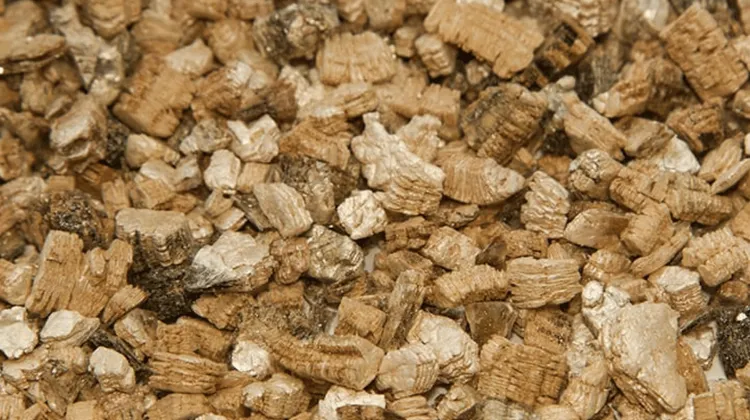
Expanded vermiculite is produced by rapidly heating raw vermiculite ore at high temperatures. During this process, the interlayer water inside the mineral instantly vaporizes, forcing the layers apart and causing the material to expand several times its original volume.
Under proper heating conditions, vermiculite can expand approximately:
8−10x
or even several dozen times larger than its raw ore volume.
After expansion, vermiculite becomes:
- Lightweight
- Porous
- Fire-resistant
- Chemically inert
- Non-toxic
- Sterile
- Low in thermal conductivity
These properties make expanded vermiculite highly suitable for insulation materials, lightweight construction products, horticultural substrates, and industrial applications.
Physical Properties of Vermiculite
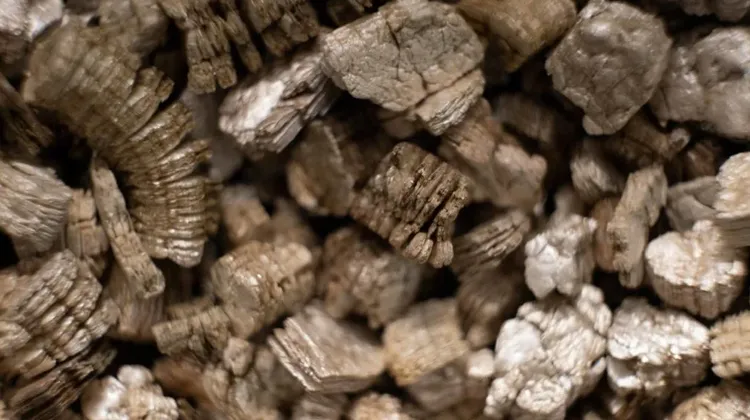
The industrial value of vermiculite largely comes from its unique physical and thermal characteristics.
| Property | Description |
|---|---|
| Color | Brown, yellow, dark green, gray after expansion |
| Crystal System | Monoclinic |
| Hardness | Mohs 1.5–2 |
| Density | Low after expansion |
| Thermal Conductivity | Very low |
| Fire Resistance | Excellent |
| Chemical Stability | High |
| Toxicity | Non-toxic and sterile |
Because expanded vermiculite contains many internal air pockets, it provides excellent insulation performance while remaining extremely lightweight.
How to Produce Expanded Vermiculite

Unlike some mineral beneficiation processes that rely heavily on wet separation methods, vermiculite is usually processed using dry beneficiation technology. This is mainly because vermiculite has relatively low surface activity, and wet processing may generate unnecessary wastewater and increase operational costs.
Modern vermiculite processing plants generally include six major production stages.
Crushing Process
After mining, large pieces of raw vermiculite ore are first sent to the crushing system.
In most processing plants, hammer crushers are used to reduce the raw ore size to below 25 mm. If finer particle sizes are required, double-toothed roll crushers may be used to further crush the material to approximately 2–10 mm.
Proper crushing is important because oversized particles can negatively affect subsequent screening and expansion efficiency.
Common crushing equipment includes:
- Hammer crushers
- Double roll crushers
- Jaw crushers
Screening Process
After crushing, the vermiculite material enters the screening stage.
Vibrating screens are commonly used to classify particles into different size ranges. Proper particle classification is essential because different vermiculite sizes are used for different industrial applications.
For example:
- Fine particles are often used in horticulture
- Medium grades are suitable for construction materials
- Coarse grades are commonly used in insulation products
Accurate screening also helps improve expansion consistency during calcination.
Magnetic Separation Process
Although vermiculite itself is generally non-magnetic, raw ore may contain magnetic gangue minerals and impurities.
To improve product purity, high-intensity magnetic separators are used to remove unwanted magnetic materials from the ore.
This step is particularly important for producing high-quality expanded vermiculite used in insulation materials and horticultural products.
Preheating Process
Before entering the expansion furnace, raw vermiculite usually requires preheating or drying.
This process can be carried out through natural drying or with rotary dryers. The main purpose is to reduce moisture content to approximately:
0.5%−1%
Proper moisture control helps optimize expansion performance and improve thermal efficiency during calcination.
In industrial production lines, rotary dryers are often preferred because they provide continuous operation and stable drying conditions.
Calcining Process
Calcination is the most critical stage in expanded vermiculite production.
During this process, preheated vermiculite enters a rotary kiln or expansion furnace where temperatures generally range between:
800∘C−1000∘C
As the interlayer water rapidly vaporizes, the mineral expands dramatically within approximately:
5−30 seconds
The final expanded product becomes lightweight and highly porous with excellent thermal insulation properties.
Modern vermiculite expansion systems may include:
- Rotary kilns
- Vertical furnaces
- Gas-fired expansion furnaces
- Electric heating furnaces
Precise temperature control is essential because insufficient heating reduces expansion efficiency, while overheating may damage product strength.
Cooling Process
After calcination, expanded vermiculite must be cooled immediately.
The hot material is typically sent into cooling equipment or naturally cooled until its temperature falls below:
200∘C
Proper cooling helps prevent brittleness and preserves the mechanical strength of expanded vermiculite.
In large-scale industrial plants, rotary coolers are often used to improve cooling efficiency and maintain stable product quality.
Applications of Expanded Vermiculite
Because of its unique physical properties, expanded vermiculite has applications across many industries.
Vermiculite in Gardening and Horticulture
One of the largest application markets for expanded vermiculite is horticulture.
Its porous structure allows it to absorb and retain large amounts of water while still maintaining good air circulation around plant roots. Because of this balance between moisture retention and aeration, vermiculite is widely used in seed germination, greenhouse cultivation, hydroponics, and potting soil mixtures.
Expanded vermiculite can also help regulate soil pH and absorb certain harmful heavy metals, improving soil quality for plant growth.
In commercial agriculture, vermiculite is often mixed with peat moss or other substrates to improve water management and reduce irrigation frequency.
Vermiculite vs Perlite
Perlite and vermiculite are often compared in horticultural applications because both are lightweight soil additives.
However, their functions are slightly different.
Perlite mainly improves drainage and air permeability, while vermiculite focuses more on water retention and nutrient preservation.
Because of this difference, many growers combine both materials to create balanced growing conditions for plants.
Vermiculite in the Construction Industry
Expanded vermiculite is widely used in construction materials because of its lightweight and fire-resistant properties.
In cement-based products and lightweight concrete, vermiculite helps reduce overall material density while improving thermal insulation performance.
It is commonly used in:
- Lightweight concrete
- Fireproof boards
- Insulating plaster
- Mortar mixtures
- Acoustic panels
In many construction systems, vermiculite also improves fire resistance because it remains stable under extremely high temperatures.
Vermiculite in Thermal Insulation Materials
One of the most important industrial uses of vermiculite is thermal insulation.
Even under temperatures approaching:
1000∘C
expanded vermiculite can still maintain stable insulation performance.
Because of this property, it is widely used in:
- Chimney linings
- Industrial furnaces
- High-temperature insulation boards
- Attic insulation systems
Many industrial plants and cement factories use vermiculite-based insulation materials to reduce heat loss and improve energy efficiency.
Vermiculite in Animal Husbandry
Expanded vermiculite is also used in livestock and animal feed industries.
As a feed additive, vermiculite can help improve feed utilization efficiency. Its absorption properties also allow it to bind certain toxins and pesticide residues, helping reduce contamination risks in animal products.
In some animal farming environments, vermiculite is additionally used as an absorbent bedding material because it can help control moisture and odors.
Market Outlook for Vermiculite
As global industries continue focusing on lightweight materials, energy-saving construction products, sustainable agriculture, and fire-resistant insulation systems, demand for expanded vermiculite is expected to grow steadily.
The increasing popularity of greenhouse cultivation, environmentally friendly building materials, and industrial insulation products is creating new opportunities for vermiculite processing companies and equipment manufacturers.
For mineral processing plants and industrial machinery suppliers, vermiculite production lines represent an important market with long-term growth potential.
FAQ About Vermiculite
Is vermiculite environmentally friendly?
Vermiculite is generally considered an environmentally friendly mineral because it is naturally occurring, non-toxic, chemically stable, and recyclable in many applications. Expanded vermiculite is widely used in sustainable construction materials and modern agriculture due to its ability to improve insulation performance and reduce water consumption in soil.
Can vermiculite absorb water and chemicals?
Yes. One of the unique characteristics of expanded vermiculite is its strong absorption capacity. Its layered porous structure allows it to absorb water, nutrients, oils, and certain chemicals efficiently. Because of this property, vermiculite is often used in spill control materials, filtration systems, and agricultural growing media.
What industries commonly use vermiculite processing equipment?
Vermiculite processing equipment is widely used in industries such as mining, horticulture, construction materials, thermal insulation, agriculture, and environmental protection. Modern processing plants often require crushing, drying, screening, calcining, and cooling systems to produce different grades of expanded vermiculite for commercial applications.
Conclusion
Vermiculite is a highly versatile mineral with important applications in horticulture, construction, insulation, agriculture, and industrial manufacturing.
Through crushing, screening, magnetic separation, preheating, calcination, and cooling, raw vermiculite can be transformed into expanded vermiculite with excellent thermal insulation, water retention, and lightweight properties.
As industries continue searching for energy-efficient and environmentally friendly materials, the global demand for expanded vermiculite and modern vermiculite processing equipment is expected to continue growing in the coming years.


 English
  Russian
  Arabic
  Vietnamese
  Spanish
  French
  Portuguese
  Japanese
  Chinese