


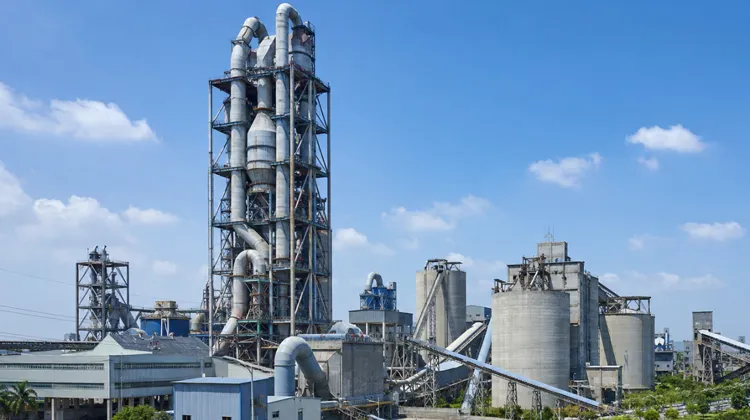
As the construction industry places greater emphasis on carbon reduction and sustainable materials, green cement is becoming an important development direction for cement manufacturers.
Conventional cement production requires large quantities of limestone and high-temperature clinker burning, both of which contribute to energy consumption and carbon dioxide emissions. Green cement reduces this impact by lowering clinker content, using industrial by-products, improving grinding efficiency, and adopting cleaner production technologies.
Green cement is not one fixed formulation. It is a broad term covering different low-carbon cement products and environmentally improved manufacturing methods.
What Is Green Cement?
Green cement refers to cement products that reduce carbon emissions, energy consumption, or the use of natural mineral resources while maintaining the strength, setting behavior, and durability required for construction.
Portland clinker is the main component of conventional cement and also the most carbon-intensive part of cement production. Green cement replaces part of the clinker with slag, fly ash, calcined clay, limestone powder, or other supplementary cementitious materials.
Carbon emissions can be reduced further through efficient grinding, alternative fuels, waste heat recovery, industrial waste recycling, and carbon capture. Green cement therefore represents both a material change and an improvement in the overall cement production process.
Why Does Conventional Cement Production Generate Carbon Emissions?
Most cement-related emissions are generated during clinker production.
Limestone is heated inside the kiln system and decomposes at high temperatures, releasing carbon dioxide. At the same time, rotary kilns, calciners, and preheaters consume coal, natural gas, petroleum coke, or other fuels.
For this reason, changing the fuel alone cannot eliminate all cement emissions. Cement plants also need to reduce clinker consumption, improve thermal efficiency, and develop binder materials that require less high-temperature processing.
How Is Green Cement Produced?

The green cement production process is similar to conventional cement manufacturing, but it normally involves a wider range of raw materials and more demanding control of drying, grinding, dosing, and blending.
Slag, fly ash, clay, limestone, and other alternative materials must first be tested for chemical composition, moisture, reactivity, and stability. Lump materials may require crushing and screening before drying or grinding.
Wet slag and clay can be processed with rotary dryers or vertical roller mills with integrated drying. Some natural clays have limited cementitious activity and must be calcined at a controlled temperature before they can be used as reactive materials.
Clinker, slag, calcined clay, limestone, and gypsum can be interground in one mill or ground separately before blending. Intergrinding provides a simpler production layout, while separate grinding offers better control of the fineness and particle-size distribution of each material.
After grinding, all components are accurately dosed and uniformly blended. Stable feeding and mixing are essential for maintaining consistent cement strength, setting time, and product quality.
Main Types of Green Cement
Low-Clinker Blended Cement
Low-clinker blended cement replaces part of Portland clinker with slag, fly ash, limestone, natural pozzolan, or calcined clay.
This is one of the most practical methods for reducing cement emissions because it can often be introduced into existing cement grinding plants. Additional storage, dosing, and blending systems may be sufficient for producing different blended cement formulations.
Slag Cement
Slag is an industrial by-product from iron production. After drying and fine grinding, it can be used as a reactive cementitious component.
Slag cement generally provides good later-age strength, low heat of hydration, and improved durability. It is commonly considered for mass concrete, underground structures, marine projects, and other applications requiring low permeability.
Because slag can be hard and contain considerable moisture, the grinding system must provide adequate drying capacity and wear resistance.
Fly Ash Cement
Fly ash is a fine mineral by-product generated by coal-fired power plants. Suitable fly ash can reduce clinker consumption and improve concrete workability and long-term performance.
However, fly ash from different sources may vary in fineness, carbon content, and chemical composition. Stable quality control is therefore necessary before it is used in cement production.
Limestone Calcined Clay Cement
Limestone calcined clay cement, commonly known as LC3, is normally produced from clinker, calcined clay, limestone, and gypsum.
Clay resources are widely available in many regions. By installing clay drying, calcination, and grinding systems, cement plants can use local clay to produce lower-clinker cement. This makes LC3 particularly attractive in markets where high-quality slag or fly ash is limited.
Geopolymer Cement
Geopolymer cement is generally produced from aluminosilicate-rich materials such as fly ash, slag, or metakaolin.
These materials form a cementitious structure through an activation reaction. Geopolymer cement can significantly reduce conventional clinker use, but it requires accurate control of raw material chemistry, activator dosage, and curing conditions.
What Equipment Is Needed for Green Cement Production?
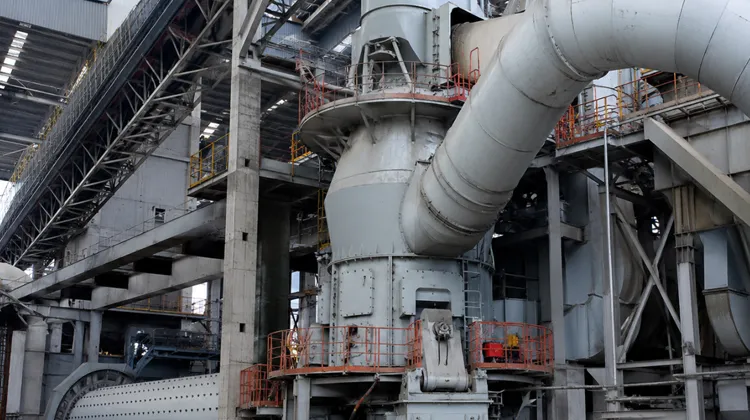
The equipment configuration of a green cement plant depends on the raw materials, production capacity, and target cement formulation.
Raw material preparation usually requires crushers, screening equipment, dryers, and storage systems. A calcined clay project may also require a clay calciner, cooler, dust collector, and dedicated conveying equipment.
For cement grinding, manufacturers can use ball mills, vertical roller mills, or roller press systems. Ball mills are reliable and adaptable, vertical mills can combine drying and grinding, and roller presses can improve grinding efficiency and reduce power consumption.
Because green cement normally contains several components, accurate weigh feeders, blending systems, pneumatic conveyors, cement silos, and automatic control systems are also important. A properly designed equipment system helps maintain stable material proportions and consistent product quality.
Benefits of Green Cement
The main benefit of green cement is the reduction of clinker consumption. This lowers both limestone demand and emissions from high-temperature clinker production.
Green cement also makes productive use of slag, fly ash, and other industrial by-products, reducing the need for waste disposal and improving resource efficiency.
Some green cement products can also improve concrete performance. Slag and fly ash cement, for example, often provide good later-age strength, lower heat of hydration, and improved durability.
However, green cement is not always cheaper to produce. The total cost depends on raw material transport, drying, activation, grinding, storage, and quality control. A suitable process must therefore be designed according to local material conditions.
Applications of Green Cement
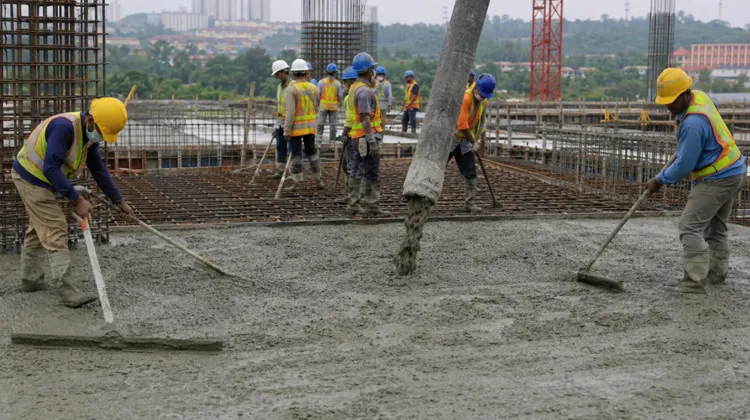
Green cement can be used in residential buildings, commercial developments, roads, bridges, tunnels, ports, hydraulic structures, and industrial infrastructure.
Different formulations are suitable for different applications. Slag cement is often selected for projects requiring durability and low permeability, while fly ash cement can be useful in mass concrete and applications requiring good workability.
Limestone calcined clay cement can be used in many conventional building and infrastructure projects, provided that it meets local cement and concrete standards.
Future Trends in Green Cement

Reducing the clinker factor will remain one of the main strategies for lowering cement emissions. Slag and fly ash will continue to be used, while calcined clay is expected to become increasingly important because suitable clay resources are available in many regions.
Green cement plants will also become more flexible. Manufacturers will need to process materials with different moisture, hardness, and reactivity while using separate grinding, automatic dosing, and online quality control to produce several cement formulations.
Alternative fuels, waste heat recovery, digital process control, and carbon capture will also become more closely integrated with green cement manufacturing.
For cement equipment suppliers, the ability to provide a complete solution covering raw material preparation, calcination, grinding, blending, and emission control will become more valuable than supplying individual machines alone.
Conclusion
Green cement is an important solution for reducing clinker consumption, lowering carbon emissions, and increasing the use of industrial by-products.
Its production requires more than changing the cement formula. Crushing, drying, calcination, grinding, dosing, blending, and environmental control must be designed as one complete system.
When building or upgrading a green cement plant, manufacturers should consider local raw material availability, product standards, energy consumption, and future expansion. A suitable process and equipment configuration can reduce environmental impact while maintaining stable cement quality.
Frequently Asked Questions
What is the difference between green cement and ordinary cement?
Green cement usually contains less Portland clinker and more supplementary cementitious materials such as slag, fly ash, or calcined clay. Its purpose is to reduce production emissions while maintaining the required construction performance.
Is green cement weaker than Portland cement?
Not necessarily. Its strength depends on material reactivity, replacement ratio, grinding fineness, and formulation. Some products develop early strength more slowly but provide good later-age strength and durability.
Can an existing cement plant produce green cement?
Yes. Many existing plants can produce low-clinker blended cement by adding material storage, drying, dosing, and blending equipment. Calcined clay cement may require a dedicated clay calcination line.
What is LC3 cement?
LC3 is limestone calcined clay cement made mainly from clinker, calcined clay, limestone, and gypsum. It reduces clinker consumption while maintaining suitable strength and durability.
How should green cement equipment be selected?
Equipment selection should be based on raw material moisture, hardness, abrasiveness, plant capacity, and cement formulation. High-moisture materials require sufficient drying capacity, while multi-component cement requires accurate dosing and automatic process control.
SEO Title
What Is Green Cement? Types, Production Process and Equipment
Meta Description
Learn what green cement is, how it is produced, its main types, benefits, applications and equipment for low-carbon cement production.


 English
  Russian
  Arabic
  Vietnamese
  Spanish
  French
  Portuguese
  Japanese
  Chinese