


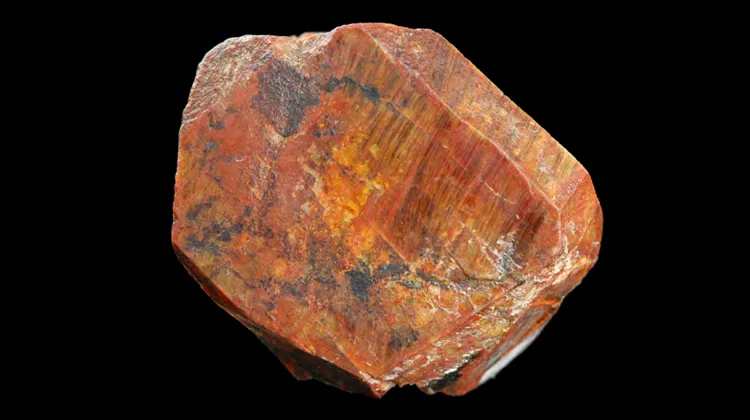
Thorium is estimated to be about three times more abundant in the Earth’s crust than uranium. As the world searches for stable, low-carbon and long-term energy sources, this long-overlooked element is returning to the center of nuclear energy research.
Why has thorium attracted so much attention in recent years? The answer involves not only reactor technology, but also the way thorium-bearing ores are beneficiated, purified and integrated with rare earth recovery.
Shining Thorium: The Radiant Element
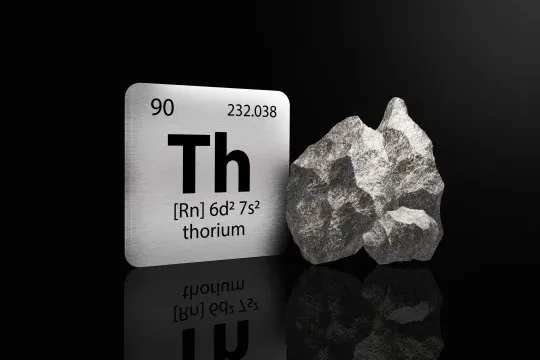
Thorium was discovered in 1828 after a Norwegian mineralogist identified an unusual mineral containing an unknown substance. Swedish chemist Jöns Jakob Berzelius later isolated and identified the new element, naming it after Thor, the Norse god of thunder.
Its chemical symbol is Th, its atomic number is 90, and it belongs to the actinide series. Thorium has a density of approximately 11.7 g/cm³. Freshly exposed metal is silver-white, but oxidation gradually turns its surface gray or black.
Thorium also performs well under extreme temperatures. Its melting point is approximately 1,750°C, while its boiling point is close to 4,800°C. Naturally occurring members of the thorium family include Th-232, Th-230, Th-229 and Th-228. Th-232 is by far the most abundant and has a half-life of approximately 14 billion years.
This extremely slow decay allows thorium to remain in minerals and placer deposits over geological timescales.
Valuable Thorium: A Dark Horse in Nuclear Energy
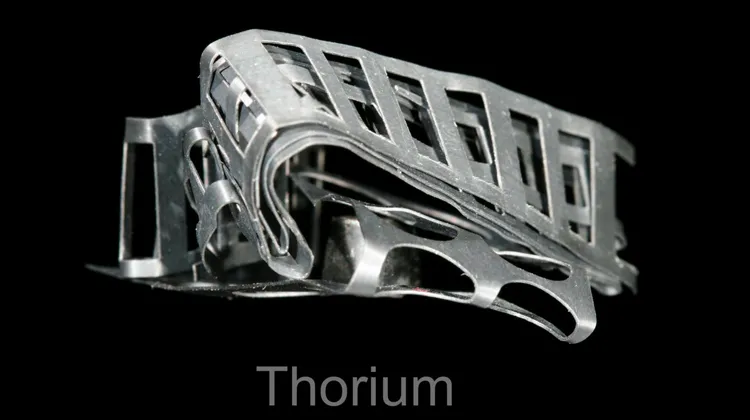
Thorium is not naturally fissile and cannot sustain a nuclear chain reaction by itself. It is a fertile material that must absorb a neutron and eventually be converted into fissile uranium-233 before it can release useful nuclear energy.
One reason for renewed interest is its abundance. Thorium is generally considered three to four times more abundant in nature than uranium and is distributed across many regions. This broad resource base could provide an additional long-term source of nuclear fuel.
A properly designed thorium fuel cycle may also improve fuel utilization and reduce the production of some long-lived transuranic elements. This could ease part of the long-term nuclear waste burden. However, waste volume, radiotoxicity, safety and economic performance still depend on the reactor design, fuel cycle and reprocessing method. Thorium should not be described as producing no radioactive waste.
Thorium systems may also be combined with uranium, plutonium or depleted-uranium fuel strategies. Nevertheless, challenges involving fuel fabrication, uranium-233 handling, radiation protection and commercial costs must still be addressed.
Thorium Beyond Nuclear Power
The earliest industrial value of thorium did not come from nuclear energy. Thorium dioxide was historically used in gas mantles because it produced an intense light when heated. Thorium compounds were also used in certain optical glasses, ceramics, electrodes and heat-resistant materials, although many of these applications declined as radiation controls became stricter and safer substitutes became available.
Thorium was once added to magnesium alloys to improve strength and stability at elevated temperatures. Such materials were mainly developed for specialized aerospace and engineering applications.
Thorium compounds have also served as catalysts in selected chemical reactions. In modern medical research, certain thorium isotopes are being investigated for targeted alpha therapies, but these highly regulated applications should not be confused with the general industrial use of natural thorium.
Today, the element’s most important potential application remains advanced nuclear fuel.
Rare Thorium: Where Is It Found?
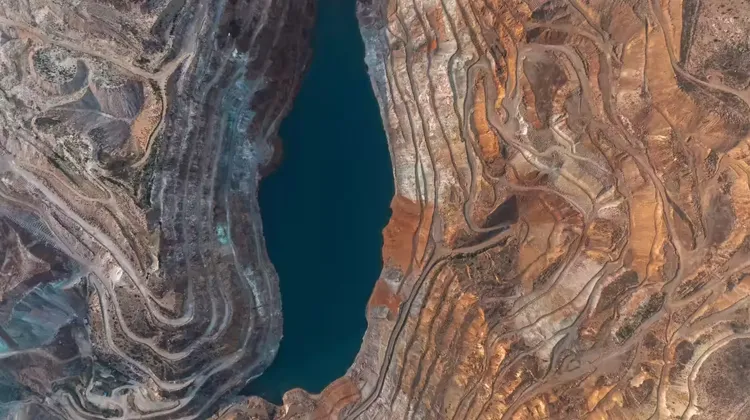
Thorium rarely occurs as a free metal. It is usually present as a compound in rare earth minerals and heavy mineral sands. Monazite is one of the most important thorium-bearing minerals and commonly contains cerium, lanthanum, neodymium and other rare earth elements.
Thorium can also occur in thorite, zircon, allanite and some bastnäsite deposits. Geological studies confirm that monazite and several other rare earth minerals can contain varying concentrations of thorium.
Major resources are associated with monazite-rich beach sands in India. Brazil, Australia, the United States, South Africa, Canada, Russia, China and Norway also have notable thorium-bearing deposits.
However, global resource estimates remain less complete than those for iron, copper or bauxite. Because there has been little demand for thorium as a stand-alone commodity, it is usually recovered as a by-product of rare earth or heavy mineral processing.
How Is Thorium Ore Processed?

There is no universal thorium processing flowsheet. The process depends on the ore type, mineral association, rare earth content and required final product.
1. Nghiền và xay
Run-of-mine ore is first reduced in size using máy nghiền hàm, máy nghiền hình nón or other crushing equipment. Máy nghiền bi or similar grinding systems then liberate thorium-bearing minerals from quartz, feldspar and other gangue.
Grinding must be carefully controlled. Insufficient liberation reduces separation efficiency, while excessive grinding increases energy consumption and may make fine mineral particles more difficult to recover.
2. Physical Beneficiation
For monazite-bearing beach sands and other heavy mineral deposits, gravity separation, magnetic separation and electrostatic separation are commonly used to separate monazite from quartz, zircon, ilmenite and associated minerals.
This stage does not normally produce high-purity thorium. Its purpose is to upgrade the mineral concentrate, reduce the mass entering chemical treatment and lower reagent consumption.
3. Acid Leaching or Alkaline Decomposition
The enriched concentrate can be treated using acidic or alkaline processes. Acid leaching dissolves thorium, rare earths and other soluble components, while alkaline decomposition is often used to break down the phosphate structure of monazite.
Reagent concentration, temperature, reaction time and solid-to-liquid ratio must be controlled according to mineral composition. Poor process control can reduce recovery while increasing corrosion, waste generation and safety risks.
4. Separation and Purification
The leach solution normally contains thorium, uranium, rare earth elements and various impurities. Selective precipitation, solvent extraction or ion exchange can be used to separate them.
Several purification stages may be required because nuclear-grade and high-purity industrial products have strict limits on impurities. A stable separation process can recover thorium while also improving the utilization of accompanying rare earth resources.
5. Product Formation
Purified thorium solutions can be precipitated, calcined or crystallized to produce thorium dioxide, thorium fluoride or other compounds.
Lò quay, calcination systems, filters and dryers may be used during this stage, but equipment selection should always be based on laboratory testing and the required final product.
Why Mineral Processing Equipment Matters
Thorium can only become an economically useful resource when it is efficiently recovered from complex minerals.
Reliable crushing and grinding systems improve mineral liberation. Gravity, magnetic and flotation equipment reduce the amount of gangue entering chemical processing. Thickeners and filters improve solid-liquid separation, while calcination equipment supports compound conversion and final product preparation.
For thorium deposits associated with rare earths, a well-designed plant may also recover zircon, ilmenite and other valuable minerals. This improves project economics while reducing the amount of material discarded as waste.
Before selecting equipment, operators should therefore complete mineralogical analysis and beneficiation tests rather than copying a standard flowsheet from another project.
Hazardous Thorium: Understanding the Risks
Thorium is a naturally radioactive material. External exposure to solid material may be relatively limited under controlled conditions, but thorium-containing dust can create greater long-term risks if inhaled or ingested.
Mining, crushing, grinding, drying and packaging are among the stages most likely to generate dust. The U.S. Agency for Toxic Substances and Disease Registry identifies inhalation and ingestion as important exposure pathways, while workers in thorium-related industries may experience higher exposure levels than the general population.
A responsible processing plant therefore requires enclosed conveying, dust collection, local ventilation, radiation monitoring, wastewater treatment and appropriate personal protective equipment. Tailings, filter residues and chemical effluents must also be managed according to applicable regulations.
Can Thorium Become a Green Energy Source?
Thorium offers an abundant resource base, potentially efficient fuel utilization and the possibility of reducing some long-lived nuclear waste. However, it is not yet a widely commercialized nuclear fuel.
Fuel fabrication, reactor development, uranium-233 management, reprocessing technology, regulatory systems and project costs remain major barriers. Compared with the mature uranium industry, thorium still lacks a complete commercial supply chain and extensive operating experience.
Calling thorium the “green heart” of nuclear energy should therefore be understood as a description of its long-term potential, rather than proof that it can immediately replace uranium.
Phần kết luận
Thorium has remained in the Earth’s crust for billions of years, but modern energy technology is beginning to reconsider its value. It may provide another option for future nuclear fuel while supporting advances in rare earth recovery, mineral separation and high-purity material production.
Its future, however, will not be determined by reactors alone. Efficient crushing, grinding, beneficiation, leaching and purification will also shape the economic and environmental performance of the entire thorium supply chain.
As energy demand and mineral processing technology continue to develop, thorium may play a more important role in global energy security and the transition toward low-carbon power.
Câu hỏi thường gặp
1. Is thorium more abundant than uranium?
Yes. Thorium is generally estimated to be three to four times more abundant in the Earth’s crust, although recoverable resources and ore grades differ between regions.
2. Can thorium be used directly as nuclear fuel?
No. Natural Th-232 must absorb a neutron and be converted into fissile U-233 before it can participate effectively in nuclear power generation.
3. What is the main mineral source of thorium?
Monazite is one of the most important thorium-bearing minerals, particularly in coastal heavy mineral sands. Thorium also occurs in thorite, zircon and allanite.
4. What equipment is used in thorium ore processing?
Typical equipment may include jaw crushers, cone crushers, ball mills, classifiers, gravity separators, magnetic separators, flotation machines, thickeners, filters and calcination systems. The exact configuration depends on the ore.
5. Does thorium produce less nuclear waste?
Some thorium fuel cycles may reduce the production of long-lived transuranic waste, but they still produce radioactive materials. The final waste profile depends on the reactor and fuel-cycle design.
6. Can thorium and rare earth elements be recovered together?
Yes. Thorium commonly occurs in monazite and other rare earth minerals, so integrated processing can recover rare earth elements while separating thorium.
7. Is thorium ore processing dangerous?
Thorium-bearing dust may create long-term health risks if inhaled or ingested. Enclosed processing, dust control, ventilation, radiation monitoring and regulated waste management are therefore essential.


 Vietnamese
  English
  Russian
  Arabic
  Spanish
  French
  Portuguese
  Japanese
  Chinese