


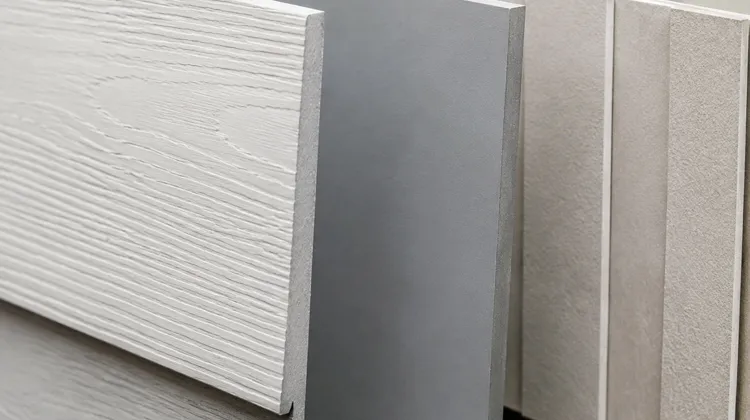
Fiber cement siding is an exterior cladding material commonly made from cement, silica sand, cellulose fibers, water, and other formulation-specific ingredients. After mixing, pressing, forming, and curing, it can be manufactured as horizontal lap siding, vertical panels, trim boards, decorative cladding, and shingle-style products.
Its main appeal is the ability to create wood-grain, smooth-panel, or contemporary façade looks while offering strong resistance to weather exposure, insects, and dimensional movement. Fiber cement siding is used on homes, commercial buildings, office facilities, renovation projects, and selected light-industrial buildings.
However, fiber cement siding is not a maintenance-free product. Correct installation, water-management details, edge treatment, joint design, and periodic inspection are all important for long-term performance.
What Is Fiber Cement Siding Made Of?
Formulations differ by manufacturer, but common fiber cement siding typically contains:
- Xi măng, which provides hardened strength and structural stability;
- Silica sand or mineral fillers, which help control dimensions, texture, and material performance;
- Cellulose fibers, which improve toughness and reduce brittleness;
- Water and process additives, used for forming, curing, and manufacturing performance.
These ingredients are mixed, pressed, shaped, and cured to create dense cement-based boards. The surface can be finished with wood grain, a smooth texture, an embossed pattern, or a paint-ready flat face.
The fibers reinforce the material; they do not make the product behave like untreated wood. Its cement-based structure is designed for exterior exposure when it is installed and maintained as part of a complete wall system.
Common Types of Fiber Cement Siding

Fiber cement exterior cladding is available in several profiles to suit different building styles and installation methods.
Horizontal Lap Siding
Horizontal lap siding is a familiar residential style that resembles traditional wood siding. Different board widths, edge profiles, and surface textures can support either classic or modern exterior designs.
Vertical Panels and Board-and-Batten Systems
Vertical fiber cement panels are widely used on contemporary homes, commercial façades, accessory buildings, and industrial office structures. When paired with battens, they create strong vertical lines and visual height.
Large-Format Architectural Panels
Large fiber cement panels are commonly used for modern façades, rain-screen assemblies, and commercial projects. They can create a cleaner, more continuous appearance and work well with metal, glass, insulation, and other façade components.
Shingle-Style and Trim Products
Some fiber cement products are formed as shingle-style cladding, soffit boards, corner trims, window trims, and decorative elements. These details can support a complete exterior design while reducing the maintenance burden associated with exposed natural wood.
Key Benefits of Fiber Cement Siding
Good Weather Resistance
Fiber cement siding can perform well in rain, sunlight, temperature changes, and general outdoor exposure. When it is installed correctly, it is less likely than unprotected conventional wood siding to rot, attract wood-destroying insects, or show significant warping.
Weather resistance does not remove the need for proper detailing. Flashing, drainage, joints, coatings, and edge protection still have a major influence on exterior-wall performance.
Flexible Appearance Options
Fiber cement can imitate wood grain, smooth boards, modern flat panels, and traditional siding profiles. It is a practical option for projects that want a wood-like exterior appearance with reduced long-term maintenance demands.
Resistance to Insect Damage
Unlike natural wood, fiber cement is not a food source for termites or wood-boring insects. This can make it useful in climates and locations where insect exposure or moisture-related deterioration is a concern.
Paintable and Renewable Finish
Many fiber cement siding products are factory-finished, while others can be painted in the field when installed according to the manufacturer’s requirements. Repainting can help renew the building appearance and extend the useful life of the exterior finish.
Suitable for Different Building Types
In addition to homes, fiber cement siding can be used on small commercial buildings, schools, offices, warehouse support facilities, and exterior renovation projects. The exact application should be confirmed based on local code, fire requirements, structural conditions, and product approvals.
Drawbacks and Limitations of Fiber Cement Siding
Heavier Than Vinyl Siding
Fiber cement is generally heavier than vinyl siding. Shipping, handling, fastener selection, and substrate preparation therefore require more attention. Large panels and elevated installations may also require mechanical handling and a more detailed safety plan.
Cutting Requires Dust Control
Cutting fiber cement can generate dust that may contain respirable crystalline silica. Installers should use cutting tools, dust-control methods, and personal protective equipment that meet the product instructions and applicable site safety requirements.
Dry cutting, indoor cutting, or cutting without dust control can increase exposure risks.
Installation Quality Matters
Fiber cement itself is a stable material, but poor substrate preparation, incorrect flashing, unsuitable fasteners, untreated cut edges, or missing movement allowances can still lead to cracking, water intrusion, coating problems, or loose sections.
It is usually best installed by a team familiar with the selected fiber cement siding system.
It Is Not Completely Maintenance-Free
The exterior should still be checked periodically for sealant condition, coating damage, joint performance, fasteners, and drainage details. Maintenance is especially important in strong sun, salt-air, freeze-thaw, and high-moisture environments.
Fiber Cement Siding vs. Vinyl Siding vs. Wood Siding
| Tính năng | Fiber Cement Siding | Vinyl Siding | Wood Siding |
|---|---|---|---|
| Main material | Cement, sand, and reinforcing fibers | PVC and polymer materials | Natural wood or engineered wood |
| Appearance | Wood grain, smooth boards, and modern panels | Many color and texture options | Natural grain and distinctive character |
| Cân nặng | Cao hơn | Thấp hơn | Trung bình |
| Insect resistance | Tốt | Not affected by insects | Requires insect and decay protection |
| Moisture performance | Depends on wall-system design and coating | Does not rot, but can deform with heat | Needs moisture control and regular protection |
| Cutting and installation | Requires dust control and skilled installation | Lightweight and relatively fast to install | Requires protective treatment, painting, and detailed maintenance |
| Ongoing maintenance | Periodic inspection and possible repainting | Cleaning and localized repairs | Usually higher maintenance demand |
No siding material is ideal for every project. Building style, budget, climate, wall construction, labor cost, maintenance capacity, and expected service life should all be considered.
Where Is Fiber Cement Siding Used?
Fiber cement siding can be used for:
- Detached homes, townhouses, and low-rise residential buildings;
- Retail stores, office buildings, and educational facilities;
- Industrial-park office buildings, support structures, and visitor centers;
- Existing-building renovations and façade upgrades;
- Projects seeking a wood-style look without using large areas of natural wood;
- Buildings that require weather resistance, insect resistance, and a paintable exterior finish.
In coastal, humid, high-wind, or high-temperature-swing locations, confirm that the product’s weather rating, fastening method, flashing details, and coating system are appropriate for local conditions.
How Is Fiber Cement Siding Installed?
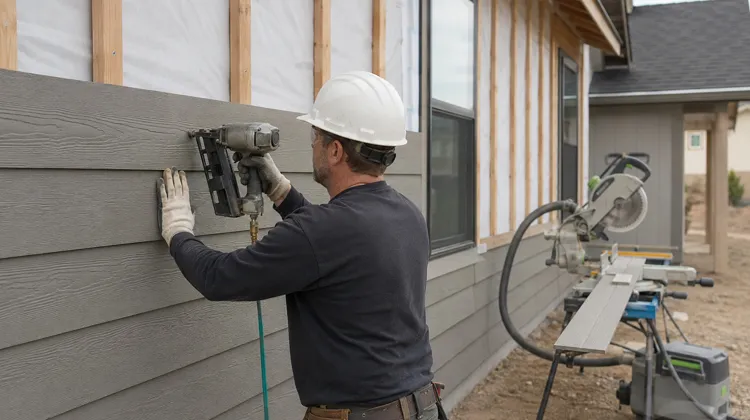
Fiber cement siding is not simply attached to a wall. It is part of a complete exterior-wall system. A typical installation process includes:
- Checking the substrate for flatness, structural condition, and water-resistive protection;
- Installing suitable weather barriers, flashing, and drainage details;
- Setting out furring, framing, fasteners, or support components according to the product system;
- Installing boards or panels at the required spacing and treating joints, edges, and penetrations;
- Protecting cut edges, fastener heads, and field-painted areas where required;
- Reviewing drainage paths, window interfaces, and exterior finishing details.
Fastening methods, joint treatments, overlap dimensions, and coating requirements vary among products. Always follow the project drawings, product installation guide, and applicable local building requirements.
How to Maintain Fiber Cement Siding
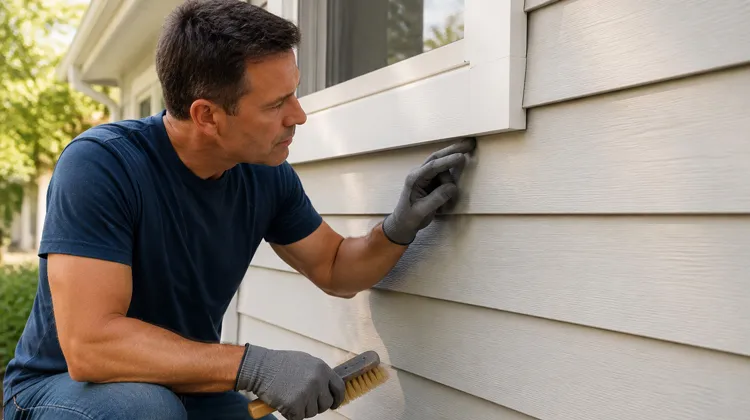
Routine maintenance helps identify small issues before they become costly repairs. Good practice includes:
- Inspecting joints, window edges, roof interfaces, and wall penetrations at least once a year;
- Removing soil, leaves, and debris from the base of exterior walls;
- Washing surfaces with a mild cleaner and soft brush instead of excessive pressure;
- Checking caulk and sealant for cracking, loss of adhesion, or aging;
- Repairing damaged coatings, exposed cut edges, and loose sections promptly;
- Keeping shrubs and vegetation away from the wall to support airflow and drainage.
When repainting is needed, clean the siding first, repair damaged areas, and confirm that the selected primer and topcoat are compatible with the existing finish.
How to Choose the Right Fiber Cement Siding
When requesting a quotation or selecting materials, confirm:
- Building type and intended exterior-wall location;
- Required profile, texture, color, and finish method;
- Whether a rain-screen cavity or insulation layer is needed;
- Local climate, wind load, and fire-performance requirements;
- Board thickness, dimensions, fastening method, and trim accessories;
- Whether factory finishing, field painting, or custom colors are required;
- Whether the installation team is familiar with the selected system;
- Warranty scope, maintenance requirements, and relevant standards.
For commercial and industrial projects, architects, structural engineers, façade contractors, and material suppliers should coordinate so that the siding, fasteners, weather barrier, and detailing work together as one system.
Phần kết luận
Fiber cement siding is a cement-based exterior cladding solution that balances weather resistance with flexible architectural appearance. It can create wood-grain or contemporary panel looks while providing good insect resistance and paintability.
Its long-term performance depends heavily on system design and installation quality. Selecting the right product is only the first step. Proper flashing, fastening, dust-controlled cutting, edge treatment, and regular maintenance are what allow fiber cement siding to perform reliably over time.
Câu hỏi thường gặp
Is fiber cement siding waterproof?
Fiber cement boards have useful moisture resistance, but the wall’s water protection should never depend on the boards alone. Weather barriers, flashing, drainage paths, joints, and window details are also essential.
Does fiber cement siding crack?
Cracking or corner damage can occur if boards are mishandled, fastened incorrectly, installed over uneven substrates, or exposed to strong impact. Following the product installation requirements greatly reduces this risk.
Does fiber cement siding need to be repainted?
Some products have factory-applied finishes with longer maintenance intervals. Field-painted siding may require repainting based on climate, sun exposure, and coating condition. Follow the product system requirements rather than relying on one universal schedule.
Is fiber cement siding the same as cement board?
Fiber cement siding is one exterior-cladding use of fiber cement board. Other fiber cement boards may be designed for wet-area backer applications, decorative panels, or other uses, and they should not be assumed to be interchangeable.


 Vietnamese
  English
  Russian
  Arabic
  Spanish
  French
  Portuguese
  Japanese
  Chinese