


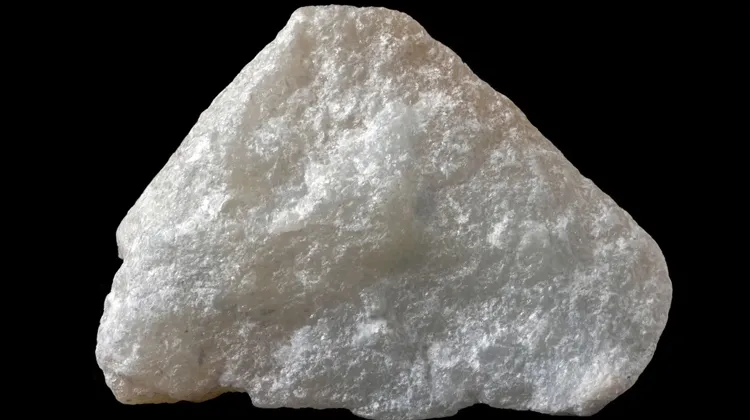
1. What is Talc?
Talc is the softest mineral on the Mohs scale, with a hardness of 1. Its chemical composition is magnesium silicate hydrate (Mg₃Si₄O₁₀(OH)₂). Talc is characterized by:
Extremely soft texture: It can be easily scratched with a fingernail, and has a smooth, greasy feel
Color variation: White, pale green, brown, or gray depending on impurities
Hydrophobic nature: Repels water, which allows easy separation during wet processing
Chemical stability: Resistant to acids and alkalies, making it suitable for chemical, cosmetic, and industrial applications
Due to these properties, talc is widely used for producing ultrafine cosmetic talc powders, high-purity industrial talc for plastics, rubber, ceramics, and paints, and as a lubricant in pharmaceuticals. Its softness, chemical inertness, and thermal stability make it a preferred mineral for high-end industrial applications and consumer products.
2. How is Talc Formed?

Talc is primarily a metamorphic mineral, formed through long-term chemical and physical transformation of magnesium-rich rocks under low- to medium-grade metamorphism.
Talc formation occurs in several geological environments:
From magnesium silicate minerals – serpentine, pyroxene, and other Mg-rich minerals transform under hydrothermal conditions
From magnesium carbonate rocks – magnesite and dolomite often produce the highest purity white talc, which is ideal for cosmetic applications
From aluminosilicate rocks – resulting talc may contain other silicates and is typically used in industrial applications
From magnesian sedimentary deposits – talc forms as layered deposits in association with other magnesium minerals
Understanding talc’s origin is crucial because formation type influences purity, color, particle size, and hardness, which directly affects processing methods and product quality. High-purity talc from magnesium carbonate rocks is especially valued for cosmetics, pharmaceuticals, and ultrafine powders.
3. Major Talc-Producing Countries
Globally, talc production is concentrated in countries with abundant magnesium-rich geological formations. The leading producers are:
China: Supplies roughly 30% of the world’s talc, including high-grade cosmetic talc and industrial talc
India: Known for cosmetic and pharmaceutical-grade talc
Brazil: Produces talc mainly for plastics, ceramics, paper, and coatings
United States: Focused on industrial applications and specialty talc for high-tech uses
Key companies include Luzenac Group (France), the world’s largest talc supplier, which exports to Europe, Asia, and the Americas. Other minor producers include Italy, Finland, and Japan, which focus on specialized industrial talc and ultrafine powders.
Global production data and supplier reliability are important for procurement planning, quality assurance, and pricing in international talc trade, especially for companies producing cosmetic-grade and high-purity industrial talc.
4. Talc Uses

Talc is a versatile mineral with applications across many industries and everyday products due to its softness, chemical stability, and smooth texture.
Industrial Applications
Plastics: Talc is used as a filler to improve strength, heat resistance, surface smoothness, and stability in products like polypropylene, polyethylene, and PVC. It is widely applied in automotive parts, packaging, and consumer goods.
Rubber: Talc acts as an anti-sticking agent and filler, enhancing elasticity, durability, and processability in both natural and synthetic rubber products, including tires, seals, and molded components.
Paper: Talc improves smoothness, opacity, printability, and brightness in coated and uncoated paper. It also reduces dusting during printing and helps produce a better coating surface.
Paints and Coatings: Talc contributes to a smooth matte finish, adhesion, durability, and corrosion resistance. It is used in interior and exterior paints, varnishes, and powder coatings.
Ceramics and Refractories: Talc enhances thermal stability, lowers firing temperature, improves surface finish, and reduces shrinkage in ceramics, tiles, sanitaryware, and refractory materials.
Agriculture: Talc is used as a carrier for pesticides and fertilizers, and as an anti-caking agent to prevent clumping.
Consumer and Daily Life Applications
Cosmetics: Talc is a key ingredient in baby powder, face powders, eyeshadows, foundations, and body powders. Its smooth texture and mildness on skin make it ideal for cosmetic products.
Pharmaceuticals: Talc is used as a tablet lubricant and excipient, improving tablet flow, compressibility, and stability.
Food Industry: Talc acts as an anti-caking agent and flow enhancer in powdered foods, sugar, and candy.
Environmental Applications: Talc is used in wastewater treatment and filtration systems due to its chemical stability and high surface area.
Talc’s unique properties make it suitable for a wide range of products, from industrial applications in plastics, rubber, and ceramics to consumer products in cosmetics, pharmaceuticals, and food processing. Different forms and grades of talc are selected depending on the intended use, from ultrafine powders for cosmetics to coarser talc for industrial applications.
5. Talc Mining (Extraction Methods and Ore Characteristics)

Talc mining is a critical step in producing high-quality talc powders for industrial, cosmetic, and pharmaceutical applications. The process begins with a detailed understanding of talc deposits, including their geological formation, ore quality, and vein structure. Talc deposits vary in color, texture, particle size, and impurity content. High-purity talc is soft, fine-grained, and light-colored, suitable for cosmetic powders and pharmaceuticals, while lower-grade talc often contains chlorite, magnesite, dolomite, or other silicates, suitable for plastics, rubber, ceramics, and paint fillers.
Exploration and Deposit Assessment
The first step in talc mining is geological exploration, which identifies talc-rich areas and estimates ore volume and quality. Techniques include core drilling, trenching, geochemical analysis, and geophysical surveys. Exploration helps determine deposit thickness, continuity, and purity, enabling miners to plan efficient extraction while minimizing waste. Modern exploration methods also allow identification of high-brightness veins for cosmetic-grade talc.
Mining Methods
Open-Pit Mining
Open-pit quarrying is the most common method for extracting industrial and cosmetic talc. Large overburden is removed using excavators, bulldozers, and loaders, and talc seams are carefully extracted to minimize contamination. This method allows continuous access to ore and is cost-effective for large deposits.Underground Mining
For deep or irregular high-purity talc veins, underground mining is preferred. Miners create tunnels and employ selective extraction techniques to maintain ore quality. This is often required for ultrafine cosmetic and pharmaceutical talc, where purity is paramount.Selective Mining
Talc veins are often irregular and discontinuous. Miners perform selective extraction, following the natural ore boundaries and removing only talc-rich material. In some cases, manual or mechanical pre-sorting is used on-site to remove visible impurities before transport.
Transport and Ore Handling
After extraction, talc ore is transported carefully to processing facilities using conveyors, trucks, or rail systems. Handling is designed to avoid contamination, moisture absorption, and physical damage, which can affect downstream processing and the quality of the final talc powder.
Factors Affecting Mining Quality
Moisture content: Talc is soft and may absorb water, so moisture control is essential.
Deposit structure: Thick, continuous veins allow efficient mining, while thin or irregular veins require careful selective mining.
Intended use: Cosmetic or pharmaceutical talc demands the strictest control over impurities and particle size, while industrial talc can tolerate minor mineral inclusions.
Talc mining combines geological expertise, modern quarrying techniques, and careful ore handling to produce high-quality talc suitable for plastics, rubber, ceramics, paints, coatings, cosmetics, pharmaceuticals, and food-grade applications. Proper planning, extraction, and handling ensure that talc retains its softness, brightness, and purity throughout the supply chain.
6. Talc Processing Methods (Dry vs. Wet Processing)
After mining, talc ore requires beneficiation to separate it from impurities and produce a product suitable for industrial, cosmetic, or pharmaceutical use. Talc processing methods are primarily divided into dry processing for high-grade ores and wet processing for lower-grade ores. Each method is chosen based on ore quality, intended use, and purity requirements.
Dry Talc Processing
Dry processing is generally used for high-purity talc that requires minimal moisture exposure and retains its natural brightness. Key steps include:
Hand Sorting – Talc ore is manually separated based on color, texture, and visible impurities. This step is crucial for cosmetic-grade talc.
Optical/Color Sorting – Advanced machines use fluorescence and color differentiation to remove darker or contaminated ore, increasing the overall whiteness and purity.
Electrostatic Separation – Removes conductive impurities, such as mica or sulfides, without affecting the talc structure.
Magnetic Separation – Eliminates iron-bearing minerals to enhance whiteness, brightness, and product quality.
Dry processing is widely used for cosmetic talc, pharmaceutical talc, and ultrafine industrial talc, ensuring minimal moisture absorption and high particle integrity.
Wet Talc Processing
Wet processing is suitable for lower-grade talc ores with more impurities. The process uses water-based methods to improve separation efficiency:
Flotation – Leveraging talc’s hydrophobic nature, talc particles attach to air bubbles and float, separating them from heavier gangue minerals. This method is efficient for producing industrial-grade talc used in plastics, rubber, paper, and paints.
Scrubbing and Washing – Mechanical scrubbing removes coarse gangue and clay impurities. Although recovery rates are slightly lower, this step is effective in producing high-purity industrial talc from low-grade ores.
Key Considerations in Talc Processing
Ore grade: Higher-grade ores often go through dry processing, while lower-grade ores require wet processing to achieve acceptable purity.
Final application: Cosmetic and pharmaceutical talc demand extremely low impurities and fine particle size, while industrial talc tolerates minor inclusions.
Process control: Maintaining proper moisture, temperature, and particle size during processing is essential for consistent quality.
Proper selection of processing methods ensures that talc maintains its natural softness, color, and chemical stability. These methods also optimize particle size distribution, surface properties, and purity, which are critical for applications in plastics, rubber, ceramics, paints, coatings, cosmetics, pharmaceuticals, and food-grade talc.
7. Talc Fine Grinding and Pulverization

Fine grinding is essential for producing industrial and cosmetic-grade talc powders. The typical workflow includes:
Coarse crushing: Jaw crusher reduces ore to ~15–30 mm
Drying: Rotary dryer removes moisture
Intermediate crushing: Hammer crusher produces smaller particles
Grinding: Ball mill, Raymond mill, or ultra-fine grinder achieves desired mesh size (5–325 mesh)
Classification and packaging: Spiral classifier separates particles, ensuring uniformity before packaging
The particle size, uniformity, and surface area determine application performance, whether for cosmetic ultrafine powders, paint fillers, or industrial talc for plastics, ceramics, and coatings.
8. FAQ – Talc Processing
Q1: How fine can talc powder be processed?
A: Typically 5–325 mesh; cosmetic-grade talc can be finer than 10 μm.
Q2: What impurities should be removed?
A: Iron minerals, light gangue, and dust.
Q3: Which grinding equipment is used?
A: Ball mills, Raymond mills, and rod mills.
Q4: Which industries use talc powder?
A: Cosmetics, plastics, paper, ceramics, coatings, rubber, and food.
Q5: How to ensure uniform particle size?
A: Use vibrating screens or air classifiers, optionally combined with air separation.


 English
  Russian
  Arabic
  Vietnamese
  Spanish
  French
  Portuguese
  Japanese
  Chinese