



Introduction
Activated charcoal, also known as activated carbon, is a highly porous material with excellent adsorption properties. It is widely used in water treatment, air purification, pharmaceuticals, food processing, chemical experiments, and industrial applications. Its unique structure allows it to remove contaminants from water, harmful gases from air, and other chemical impurities.
Although many online tutorials claim to teach how to make activated charcoal at home, this process is extremely dangerous. High-temperature carbonization, chemical activation, and fine dust can pose serious fire, chemical, and health hazards. This article explains the principles, industrial production methods, materials, equipment, step-by-step processes, applications, and safety precautions without encouraging home experiments.
1. Basic Principles of Activated Charcoal Production
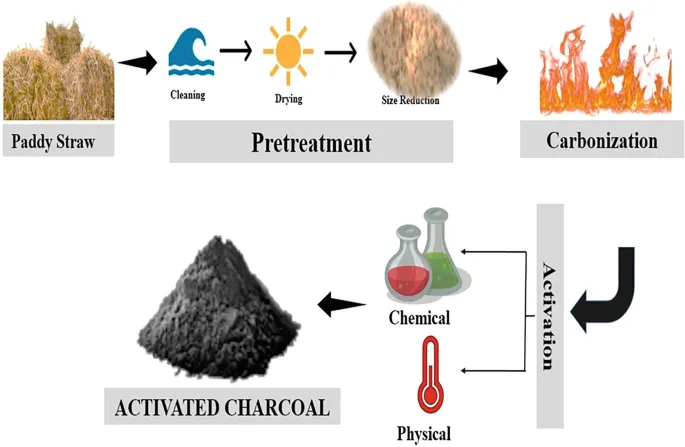
Activated charcoal, also known as activated carbon, is produced by transforming carbon-rich raw materials into a highly porous material with exceptional adsorption capacity. The process is based on fundamental chemical and physical principles that maximize the material’s surface area and pore structure, which directly influence its ability to remove impurities from water, air, chemicals, and biological systems.
The production process involves two core stages: carbonization and activation.
1.1 Carbonization
Carbonization is the process of thermally decomposing biomass (such as coconut shells, wood, or bamboo) in a low-oxygen environment, typically at temperatures between 400–600°C.
During carbonization, volatile compounds, moisture, and tars are removed, leaving behind a solid carbon-rich material known as charcoal.
This stage initiates the formation of micropores and macropores, which are essential for adsorption, although the material’s full adsorption potential is achieved only after activation.
Carbonization is influenced by temperature, duration, and raw material type, each of which determines the initial porosity, carbon content, and hardness of the resulting charcoal.
1.2 Activation
Activation is the critical step that enhances the surface area and adsorption properties of the charcoal. There are two primary activation methods:
Physical Activation (Steam or CO₂ Activation):
Charcoal is exposed to high-temperature steam or carbon dioxide (above 600°C).
This controlled oxidation etches the carbon surface, enlarging micropores and creating a highly porous structure suitable for adsorbing gases, liquids, and dissolved compounds.
Physical activation is often used in industrial air filters, water purification systems, and chemical adsorption applications.
Chemical Activation:
Involves impregnating the carbonized material with chemical agents such as potassium hydroxide (KOH), zinc chloride (ZnCl₂), or phosphoric acid.
The chemical agents react with the carbon matrix during heating, forming a dense network of micro- and mesopores, increasing the specific surface area significantly.
Chemical activation allows precise control over pore size distribution, which is critical for applications in gas purification, pharmaceutical detoxification, and industrial chemical processing.
The combination of carbonization and activation creates a highly porous, chemically reactive material capable of removing pollutants, toxins, and impurities from a wide variety of media.
2. Materials and Equipment
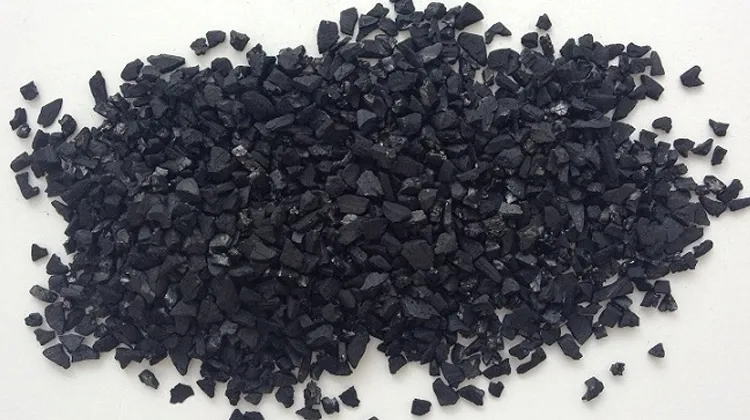
The production of activated charcoal requires high-quality carbon-rich raw materials and specialized industrial equipment to ensure safety and optimal adsorption performance.
2.1 Common Raw Materials
Coconut shells – widely used for granular and powdered activated carbon.
Wood and bamboo – versatile biomass sources with moderate density.
Other agricultural residues – rice husks, nutshells, or sawdust, depending on availability and application.
High-quality raw materials help avoid impurities and improve the surface area and adsorption efficiency of the final product.
2.2 Industrial Equipment
Rotary kiln or furnace – for controlled carbonization at high temperatures.
Activation reactor – for physical or chemical activation under precise conditions.
Drying and washing systems – remove moisture and residual chemicals after activation.
Grinding and sieving machines – produce different particle sizes suitable for various applications.
Key point: Home setups cannot safely replicate industrial temperature control, chemical handling, or exhaust management. Only professional equipment ensures consistent quality and safety.
3. Step-by-Step Industrial Production of Coconut Shell Activated Charcoal
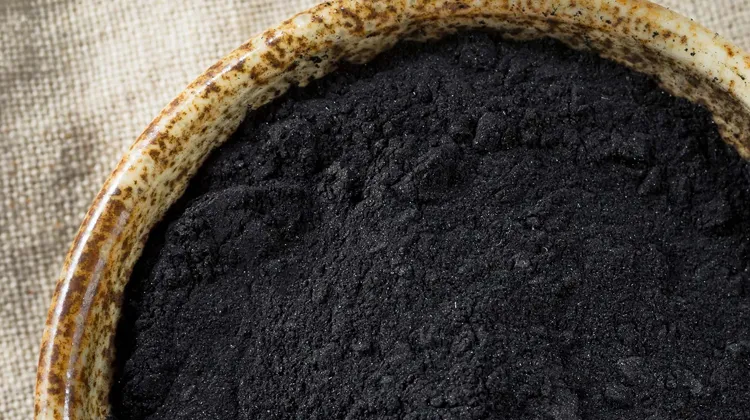
The industrial production of activated charcoal from coconut shells is a highly controlled process designed to produce high-quality, highly adsorptive carbon. Unlike DIY methods, industrial production ensures consistent pore structure, high surface area, and safety.
Step 1: Raw Material Preparation
Selection and Cleaning: High-quality coconut shells are carefully selected, removing dust, stones, or other impurities.
Drying: Shells are dried to reduce moisture content, ensuring even carbonization.
Crushing and Sieving: Crushed into uniform sizes to promote consistent heat transfer during carbonization.
Step 2: Carbonization
The biomass is heated in a low-oxygen kiln or furnace at 400–600°C.
Volatile compounds, water, and tars are released, leaving a carbon-rich charcoal.
Proper temperature control ensures uniform pore formation and prevents cracking or burning.
Step 3: Activation
Physical Activation: Charcoal is treated with steam or carbon dioxide at 700–1000°C, creating micropores that enhance adsorption.
Chemical Activation: Charcoal is impregnated with KOH, ZnCl₂, or phosphoric acid, then heated to develop highly porous structures.
Activation determines surface area, pore size, and adsorption efficiency, making it suitable for water purification, air filtration, and industrial chemical applications.
Step 4: Grinding and Sieving
Activated charcoal is pulverized and sorted by particle size.
Different sizes are used for water filters, air purifiers, pharmaceutical tablets, or industrial processes.
Proper sieving ensures uniformity and consistency in performance.
Step 5: Washing and Drying (Optional)
Chemical residues from activation are neutralized with water or mild acid washing.
Drying removes moisture to prevent clumping or microbial growth, producing high-purity activated carbon.
Step 6: Packaging
Activated charcoal is packed as powder, granules, or column forms depending on the application.
Proper packaging maintains moisture-free storage and prevents contamination, ensuring long-term performance.
Safety Reminder
Industrial processes use controlled temperatures, specialized reactors, and chemical safety measures that are impossible to replicate at home. High temperatures, chemical reagents, and flammable gases pose serious fire, health, and chemical risks, so never attempt home production.
4. Applications of Activated Charcoal
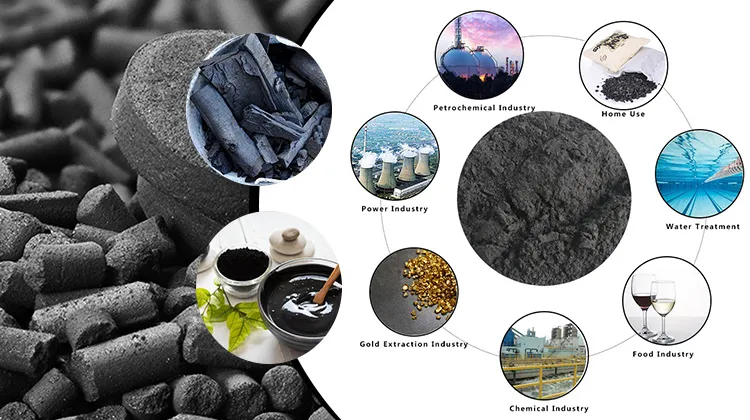
Activated charcoal is a versatile material widely used across industrial, medical, environmental, and consumer applications due to its high adsorption capacity and porous structure.
4.1 Water Treatment
Removes heavy metals, chlorine, organic pollutants, and odors from drinking water.
Used in municipal water plants, industrial wastewater treatment, and home water filters.
4.2 Air Purification
Adsorbs volatile organic compounds (VOCs), smoke, odors, and toxic gases.
Commonly used in air filters, gas masks, ventilation systems, and industrial emission control.
4.3 Medical and Pharmaceutical Use
Used for detoxification in cases of poisoning and as an active ingredient in pharmaceutical tablets.
Supports drug formulation, intestinal cleansing, and digestive health products.
4.4 Food and Beverage Industry
Removes color, taste, and impurities from sugar, oils, beverages, and edible products.
Ensures product quality, consistency, and safety in food processing.
4.5 Industrial and Chemical Applications
Serves as a catalyst support, solvent recovery agent, and metal recovery medium.
Critical in chemical manufacturing, petrochemical processes, and environmental remediation.
4.6 Emerging Applications
Used in energy storage, supercapacitors, and carbon-based nanomaterials for high-tech industries.
Supports advanced environmental technologies and renewable energy solutions.
Summary: Activated charcoal’s multi-industry applications leverage its high porosity, large surface area, and chemical stability, making it a cornerstone in water, air, medical, food, and industrial purification processes.
5. Safety Warning
Producing activated charcoal involves high temperatures, chemical agents, and flammable gases, making it extremely hazardous for home attempts. Industrial production is carried out in controlled environments with specialized equipment to ensure safety and consistent quality.
Key Safety Risks
High Temperature Hazards
Carbonization requires 400–600°C, and physical activation can exceed 800–1000°C.
Exposure to open flames or hot surfaces can cause burns or fire accidents.
Chemical Hazards
Chemical activation uses KOH, ZnCl₂, or phosphoric acid, which are corrosive and toxic.
Improper handling can result in skin burns, respiratory problems, or chemical poisoning.
Gas and Dust Risks
Volatile gases released during carbonization are flammable and potentially toxic.
Fine activated carbon dust can be explosive in confined spaces.
Recommendations
Do not attempt home production. Temperatures and chemical reactions cannot be safely controlled without industrial equipment.
Use commercially produced activated charcoal from certified suppliers for water filtration, air purification, or laboratory applications.
Always follow personal protective equipment (PPE) protocols, including gloves, masks, and eye protection, when handling activated carbon.
Summary: The combination of extreme heat, chemical reactions, and dust hazards makes DIY activated charcoal production unsafe. Only trained professionals in industrial settings can safely produce high-quality activated carbon.
Conclusion
Activated charcoal is a high-value, versatile adsorbent widely used in industrial, pharmaceutical, water, and air applications. While DIY methods exist online, they are inefficient, unsafe, and produce low-quality charcoal. The safest and most effective way to obtain activated charcoal is to purchase from reputable suppliers and use it according to safety guidelines.


 English
  Russian
  Arabic
  Vietnamese
  Spanish
  French
  Portuguese
  Japanese
  Chinese