



Oil stains are common on cement and concrete in garages, driveways, workshops, equipment maintenance areas, and industrial floors. Motor oil, hydraulic oil, lubricant, diesel, and grease can affect the appearance of the surface, create a slip hazard, and interfere with the adhesion of sealers, repair mortars, and floor coatings.
The right way to get oil off cement is not simply to use more water. Start by containing the spill, absorb the free oil, and then choose a cleaning method based on how deeply the stain has penetrated. Fresh oil stains are usually much easier to remove than old oil stains from concrete.
Why Does Oil Stain Cement and Concrete?
Although concrete looks hard and dense, it contains small pores. When oil reaches the surface, it can remain on top at first and then gradually penetrate into the concrete.
Fresh oil is usually easier to remove with absorbent material and a concrete degreaser. Old oil stains may remain visible as dark shadows even after most oily residue has been removed. This does not always mean that cleaning has failed; it can mean the oil has already penetrated beneath the surface.
What Do You Need Before Cleaning?
For small oil stains, prepare oil absorbent, clay-based cat litter or another absorbent material, a stiff nylon brush, gloves, containers, and a degreaser suitable for concrete.
For larger spills in workshops or maintenance areas, use absorbent pads, containment materials, or industrial oil absorbent before cleaning. Prevent oil from reaching storm drains, trenches, and nearby drainage channels. Used absorbents and oily wash residue should be collected and disposed of properly.
Method 1: Absorb Fresh Oil First
For fresh motor oil, hydraulic fluid, or lubricating oil, begin with absorption rather than rinsing.
Cover the spill generously with oil absorbent, cat litter, sawdust, or a commercial absorbent product. Press the material lightly into the spill with a brush so it can contact the oil fully. Leave it for several hours or overnight, then sweep it up and place it in a suitable waste container.
If a thin oil film or light stain remains, follow with a concrete degreaser. Fast absorption reduces the amount of oil that can enter the concrete pores.
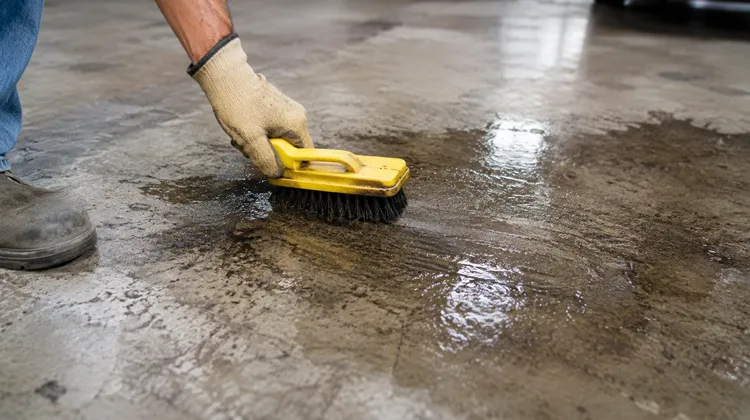
For visible oil stains that have not penetrated deeply, a concrete degreaser is usually an effective option. Choose a product labeled for concrete, masonry, or garage floors, and follow its dilution and application instructions.
Apply the degreaser evenly to the affected area and give it enough dwell time to loosen the oil. Scrub thoroughly with a stiff nylon brush, then rinse with a controlled amount of water and collect the residue where possible.
Deep stains often need two or three cleaning cycles. Do not move immediately to strong acid or flammable solvents if a slight color difference remains after one cleaning attempt. Those materials can damage the surface or create additional safety and environmental risks.
Method 3: Use a Poultice for Old Oil Stains
For old oil stains that have penetrated deeper into cement or concrete, a poultice treatment can work better than ordinary scrubbing. The cleaning material remains on the surface longer while the absorbent portion draws loosened oil out of the pores.
Commercial concrete oil-stain poultice products are available. You may also use a concrete-compatible degreaser with an absorbent powder to form a paste, when allowed by the product instructions. Spread the paste evenly over the stain, leave it in place as directed, and remove it after it has dried.
Heavy stains may need repeated treatment. Although a poultice takes longer, it is often useful for older garage floors, equipment foundations, and areas exposed to repeated oil drips.
Method 4: Use Hot-Water Pressure Washing for Larger Areas
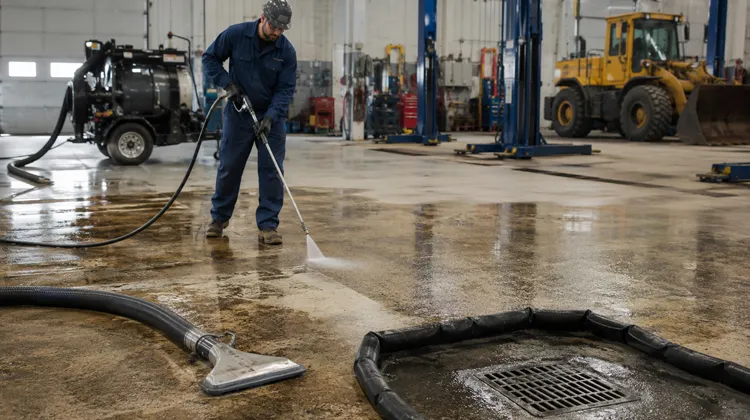
Hot-water pressure washing can be useful on workshop floors, maintenance areas, and large driveways after the oil has been absorbed and treated with degreaser. The heat helps soften remaining oil, while pressure washing can remove material already loosened from the surface.
A pressure washer should not be used as the first response to an untreated spill. It may spread oil over a larger area and push contaminated water into drains. The correct sequence is containment, absorption, degreasing, and then controlled pressure washing where wastewater can be collected.
When Cleaning Is Not Enough: Mechanical Preparation or Local Repair
Oil can penetrate deeply in areas with long-term or repeated leaks. In these cases, dark marks may remain even after repeated cleaning.
If the surface will be coated with epoxy, sealed, or repaired, make sure no oily residue remains. Mechanical preparation such as grinding, shot blasting, scarifying, or removing the contaminated surface layer may be necessary.
Do not apply a coating just to hide the stain. Residual oil can reduce adhesion and later cause blistering, peeling, or localized coating failure.
What Should You Avoid?
Do not use gasoline, diesel, paint thinner, or other flammable solvents to remove oil from cement. They may drive oil further into the concrete and create fire, vapor, and pollution hazards.
Strong acid cleaners are also unsuitable for oil stains. Acid can etch the cement surface and expose aggregate, but it does not effectively remove oil and grease.
Do not discharge oily wash water into storm drains. Stormwater drainage systems often carry runoff directly to surrounding waterways.
How to Prevent Future Oil Stains on Cement
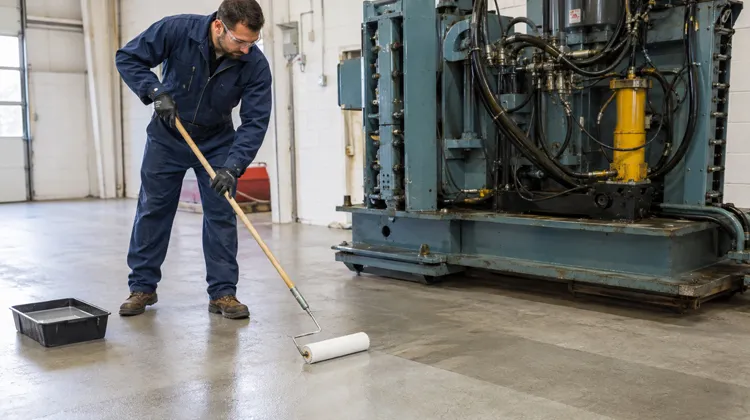
The best prevention is to repair the source of the leak, whether it comes from a vehicle engine, forklift hydraulic system, gearbox, or another piece of equipment.
Keep absorbent pads, granules, and basic spill-control supplies in garages, maintenance areas, and around machinery. Once the concrete is clean and fully dry, a suitable concrete sealer can slow down future oil penetration and provide more time for cleanup.
Conclusion
The most effective way to remove oil from cement is to contain the spill, absorb free oil, apply a suitable concrete degreaser, and scrub the surface. For old and deeply embedded oil stains, use a poultice, mechanical surface preparation, or local repair when necessary.
Fast action is usually more effective and economical than repeated cleaning later. In industrial settings, leak repair and controlled wastewater handling are just as important as cleaning the concrete surface.
FAQs
Can baking soda remove oil stains from concrete?
Baking soda may help with a light, fresh stain, but it is usually not strong enough for motor oil or lubricating oil that has penetrated concrete. Absorb the oil first, then use a concrete degreaser.
Can I use WD-40 to remove oil from concrete?
It is not recommended. WD-40 contains oily components and may loosen some residue temporarily, but it can also leave new oily residue behind.
Can I pressure wash motor oil off concrete?
Do not pressure wash untreated oil. Absorb the oil and use a degreaser first. Direct pressure washing can spread contamination and carry oily water into drainage systems.
Can I apply epoxy after removing an oil stain from concrete?
Yes, but only after confirming the surface is free of oily residue. Deeply contaminated areas may require grinding or localized repair before epoxy can achieve reliable adhesion.


 English
  Russian
  Arabic
  Vietnamese
  Spanish
  French
  Portuguese
  Japanese
  Chinese