


People often say “cement patio,” but most outdoor patios are actually concrete patios made from cement, sand, aggregate, and water. They are durable surfaces, yet they can collect dust, leaves, grease, mildew, algae, rust marks, and weather-related stains over time.
Cleaning a cement patio does not always require harsh chemicals. For normal dirt, sweeping, a mild cleaner, and a suitable brush are often enough. Oil stains, mildew, and rust stains need a more targeted approach based on the type of contamination and the condition of the concrete.
Proper cleaning improves appearance, helps reduce slip hazards, and can extend the useful life of the concrete surface and any protective sealer.
What Do You Need to Clean a Cement Patio?
Before cleaning, gather the basic tools and materials:
- A stiff nylon brush or long-handled deck brush;
- A broom, dustpan, or leaf blower;
- A garden hose with a standard spray nozzle;
- A bucket, warm water, and a cleaner suitable for concrete;
- Waterproof gloves, eye protection, and slip-resistant footwear;
- An absorbent material or concrete degreaser for oil stains;
- A pressure washer with adjustable pressure for larger areas.
Protect nearby plants, outdoor furniture, metal features, glass doors, and drains before starting. Cleaning solutions and wastewater should not be allowed to run into storm drains, soil, or landscaped areas.
Step 1: Remove Leaves, Dirt, and Loose Debris
Move furniture, planters, grills, and loose items off the patio. Sweep or blow away leaves, dirt, gravel, and loose debris, paying attention to corners, drainage edges, and areas under furniture.
This simple step makes the cleaning process much more effective. If heavy dirt is washed immediately with water, it can turn into a muddy film, reduce scrubbing efficiency, and create drainage problems.
For regular maintenance, routine sweeping and a light rinse can prevent dirt from becoming embedded in the pores of the concrete.
How to Clean Normal Patio Dirt With Soap and Water
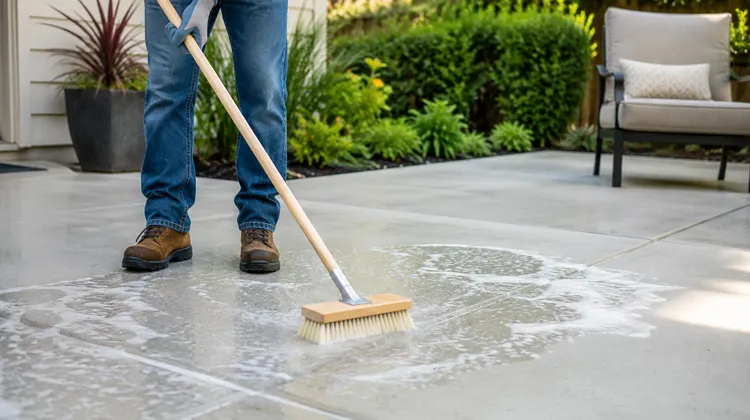
For everyday dirt, footprints, light mud, and marks from outdoor furniture, start with warm water and a mild, pH-neutral cleaner.
Mix the cleaner according to its instructions, apply it evenly to the patio, and allow it to sit for a few minutes. Scrub with a nylon brush in a consistent direction. Do not allow the cleaning solution to dry on the surface in direct heat or strong sunlight.
Rinse thoroughly with clean water. On a large patio, work in manageable sections so the cleaner does not dry unevenly and leave streaks or water marks.
How to Pressure Wash a Concrete Patio
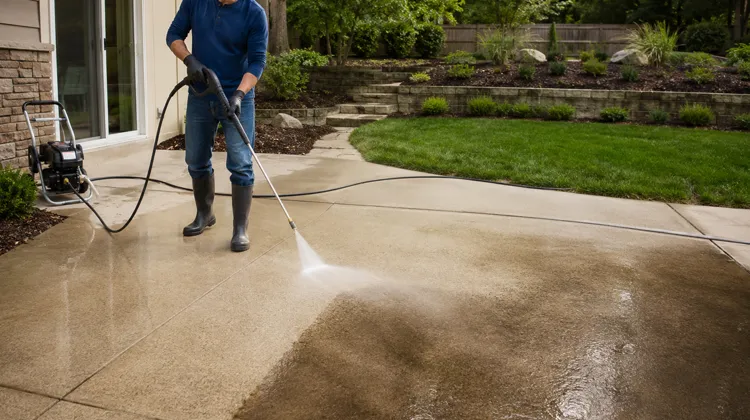
A pressure washer can be useful for a large, heavily soiled, or textured concrete patio. However, more pressure is not always better. Excessive pressure or holding the spray too close can damage weathered concrete, remove weak repair material, and leave an uneven or rough surface.
Use these pressure-washing practices:
- Test a small, inconspicuous area first;
- Use a fan-pattern nozzle rather than a concentrated jet;
- Keep the nozzle at an appropriate distance and move steadily;
- Work from the higher side of the patio toward drainage areas;
- Avoid spraying directly at door thresholds, wall joints, sealants, and wood structures;
- Use lower pressure or a brush on cracked, scaling, or weak areas.
Pressure washing can remove loose dirt around oil stains and mildew, but it usually does not replace the need for a suitable stain treatment.
How to Remove Oil Stains From a Cement Patio

Grills, vehicles, gardening machinery, and outdoor repair work can leave oil stains on concrete. Early treatment usually gives the best results.
For a fresh spill, cover the area with a suitable absorbent material and allow it to draw up as much oil as possible. Then sweep it away. Do not start by flushing the area with large amounts of water, as this can spread the oil and carry it toward drains.
For old stains, use a degreaser designed for concrete. Apply it as directed, allow the recommended dwell time, scrub with a stiff nylon brush, and rinse with a controlled amount of water. Repeat if necessary, but do not mix chemicals or use unknown solvents simply to speed up the result.
When oil has penetrated deeply into porous concrete, the original color may not return completely. In that case, focus on removing the oily film and reducing slip risk rather than over-scrubbing and damaging the surface.
How to Remove Mildew, Algae, and Black Stains From Concrete
Patios in damp, shaded, or poorly drained areas can develop green algae, dark mildew staining, or other biological growth. These stains affect appearance and can make the surface slippery.
First remove leaves and organic debris. Then use an outdoor cleaner suitable for concrete and follow the product label for dilution, contact time, and rinsing instructions.
After cleaning, address the cause of recurring growth. Trim vegetation that blocks sunlight, improve drainage, remove fallen leaves promptly, and avoid prolonged standing water. Removing dark stains without correcting moisture conditions often leads to the same problem returning.
How to Remove Rust Stains From a Cement Patio
Metal furniture, grills, plant stands, and tools can leave orange or reddish-brown rust marks on concrete. Mild soap and water are often not enough to remove them.
Use a rust remover formulated for concrete or masonry surfaces, and follow the product instructions carefully. Test a small area first, especially if the patio is colored, stamped, sealed, or coated.
Avoid applying strong acid without understanding the surface and product requirements. Acid can whiten or roughen concrete and may damage nearby metal, stone, grout, or coatings.
Can You Use Bleach or Vinegar on a Cement Patio?
Neither bleach nor vinegar is a universal patio-cleaning solution.
Chlorine bleach may help with some mildew staining, but it can harm nearby plants, fade fabrics, and increase corrosion risk for some metal components. If a bleach-based product is used, follow its label, avoid mixing it with other cleaners, and control where the rinse water goes.
Vinegar is acidic and may have limited effect on light mineral marks, but it is not an ideal routine cleaner for concrete. Frequent use or long contact time can affect the cement paste at the concrete surface, creating roughness or uneven color.
For most patio-cleaning tasks, a mild cleaner, concrete degreaser, masonry rust remover, or concrete-safe outdoor cleaner is the safer choice.
How to Handle Stubborn Stains and White Deposits
White patches are not always ordinary dirt. They may be efflorescence, which is a mineral salt deposit caused by moisture moving through concrete. Scrubbing can temporarily improve the appearance, but the white residue may return if the moisture source remains.
For stubborn stains, heavy grease, old rust marks, widespread mildew, or visible surface damage, determine whether the underlying cause is poor drainage, failed sealer, groundwater moisture, or cracking.
If the patio has broad scaling, spalling, cracks, or peeling coating, cleaning alone will not solve the problem. It may require local repair, resealing, or surface restoration.
Should You Seal a Cement Patio After Cleaning?

If the patio is unsealed or the existing sealer has worn away, consider applying a concrete sealer after the surface is thoroughly cleaned and dried.
A suitable outdoor sealer can help reduce water, oil, and dirt penetration, making future maintenance easier. Different products focus on water resistance, stain resistance, or color enhancement, so select one based on the patio finish, climate, appearance goals, and slip-resistance requirements.
Before sealing, make sure the concrete is dry, free of loose material, and compatible with the new product. Sealer is not a substitute for repairing cracks or improving drainage.
Simple Cement Patio Maintenance Tips
The best way to keep a patio clean is to prevent stains from sitting too long:
- Sweep leaves, soil, and standing water away regularly;
- Clean grill grease and repair spills promptly;
- Use breathable pads or trays under planters to reduce moisture marks;
- Keep drainage paths clear and prevent long-term ponding;
- Inspect cracks, scaling, and sealer condition periodically;
- Avoid repeated use of strong acids, steel wool, or excessive pressure.
Routine care takes far less time than removing stains that have accumulated over several years, and it helps keep the outdoor space safer and more attractive.
Conclusion
The best way to clean a cement patio is to match the cleaning method to the type of stain. Normal dirt can be handled with sweeping, mild cleaner, and brushing. Oil, mildew, algae, and rust each need a more specific approach.
For any chemical cleaner, test a small area first, protect surrounding plants and materials, and keep wastewater out of inappropriate drainage systems. After cleaning, improve drainage, maintain the surface regularly, and reseal it when appropriate to keep the concrete patio looking cleaner for longer.
Frequently Asked Questions
Can pressure washing damage a cement patio?
Yes. Pressure that is too high, a nozzle that is held too close, or staying in one spot for too long can damage weak or weathered concrete. Test first and use a fan-pattern nozzle with steady movement.
How can I make my concrete patio look white again?
Start by removing dirt, grease, mildew, and mineral deposits. If the surface is faded, scaled, or heavily weathered, cleaning may not restore the original appearance completely. Surface restoration or resealing may be needed.
Can I use dish soap to clean a cement patio?
A small amount of mild dish soap can help remove light dirt and footprints. It is not a complete solution for heavy grease, rust stains, or widespread mildew.
How long should I wait before putting furniture back on the patio?
After rinsing, wait until the surface is no longer wet or slippery before returning ordinary furniture. If you apply a sealer, coating, or repair material, follow that product’s stated drying and curing time.


 English
  Russian
  Arabic
  Vietnamese
  Spanish
  French
  Portuguese
  Japanese
  Chinese