


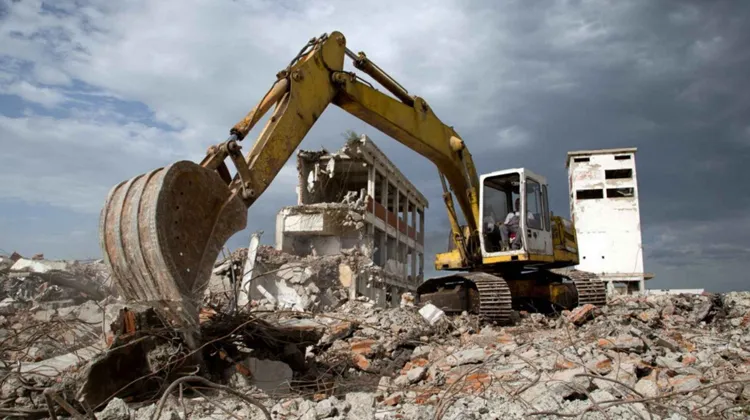
With rapid urban renewal, road reconstruction, old building demolition and infrastructure development, construction and demolition waste, also known as C&D waste, has become one of the most important solid waste challenges in the world.
However, construction waste is not simply useless debris. Concrete, bricks, stone, asphalt, metals, wood and glass can be sorted, crushed, screened and processed into recycled aggregates, road base materials, recycled concrete raw materials, paving blocks and backfill materials.
According to the U.S. EPA, about 600 million tons of construction and demolition debris were generated in the United States in 2018, more than twice the amount of municipal solid waste. The European Commission also states that construction and demolition waste accounts for more than one third of all waste generated in the EU. This means C&D waste recycling is not only an environmental issue, but also a growing opportunity for the cement equipment, aggregate equipment and mining machinery industries.
For cement equipment and crushing-screening equipment suppliers, C&D waste recycling is closely related to traditional aggregate production. With crushers, vibrating screens, magnetic separators, washing systems, dust collectors and mobile crushing plants, waste concrete and masonry can be converted into reusable construction materials.
What Is Construction and Demolition Waste?

Construction and demolition waste comes from building construction, demolition, renovation, road repair, bridge reconstruction and municipal engineering projects. Its composition is complex, but the most common materials include:
- waste concrete;
- bricks and tiles;
- stone and mortar;
- asphalt pavement materials;
- steel bars and other metals;
- wood, plastics, glass and gypsum board;
- soil, dust and mixed impurities.
Among these materials, concrete, bricks, stone and asphalt are the most suitable for recycling. After processing, they can become recycled aggregates for road base, site backfill, pipe bedding, non-structural concrete, paving blocks and cement-related materials.
C&D waste cannot be simply crushed and used directly. It may contain steel bars, wood, plastics, glass, soil and even contaminants. Sorting and pre-treatment are necessary to ensure the quality and safety of recycled materials.
Why Recycle Construction and Demolition Waste?
The first benefit of C&D waste recycling is reducing landfill pressure. If large amounts of construction waste are sent directly to landfill, they take up land and increase transportation, disposal and environmental management costs.
The second benefit is saving natural aggregates. Traditional construction materials depend heavily on natural stone and sand. Recycled aggregates can replace natural aggregates in some applications, reducing quarrying and raw material transportation.
The third benefit is lowering project cost. For demolition projects, road reconstruction and concrete recycling projects, on-site crushing and reuse can reduce waste hauling and aggregate purchase costs.
The fourth benefit is supporting circular construction. The European Commission notes that some components of C&D waste have high resource value, while others can still be reprocessed into new products or materials.
Therefore, recycling construction waste is not only waste treatment. It is a process of turning demolition debris into useful construction resources.
Main Recycling Products from C&D Waste
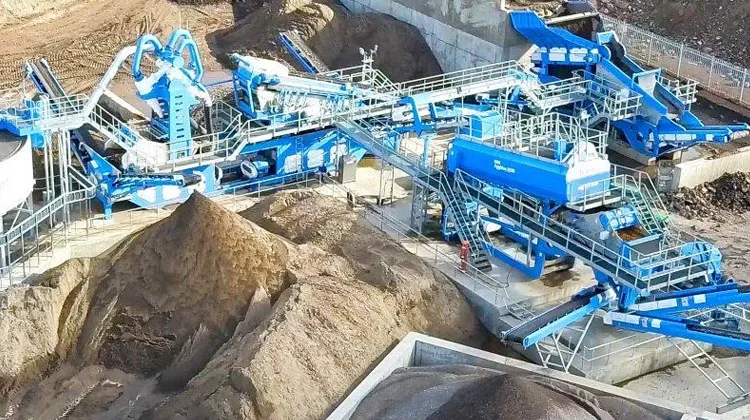
After proper processing, C&D waste can be converted into different recycled products:
| Original Waste | Recycled Product | Common Applications |
|---|---|---|
| Waste concrete | Recycled coarse and fine aggregates | Road base, non-structural concrete, backfill |
| Waste bricks | Recycled brick powder and recycled sand | Paving blocks, bedding layer, low-strength materials |
| Waste asphalt | Reclaimed asphalt material | Road repair, recycled asphalt mixtures |
| Steel and metals | Scrap metal | Steel recycling and reprocessing |
| Mixed masonry waste | Graded recycled material | Municipal roads, site leveling, trench backfill |
The final application depends on raw material quality, particle shape, grading, mud content, impurity level and local standards. A good C&D waste recycling line does more than crush debris. It controls product size, cleanliness and consistency.
Sustainable Recycling Process for C&D Waste
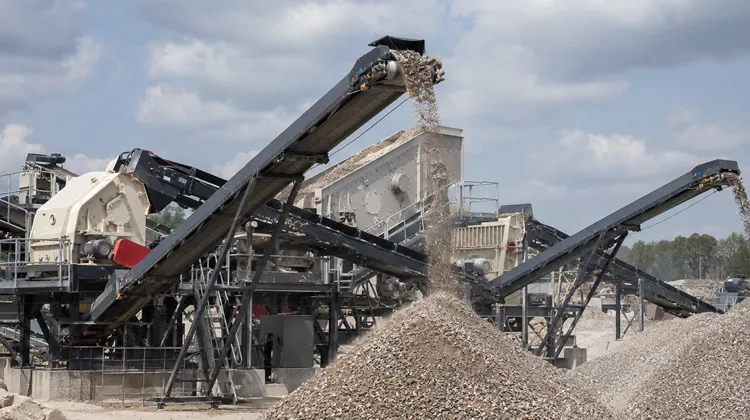
A complete C&D waste recycling plant usually includes:
Sorting and pre-treatment → crushing → magnetic separation → screening → air separation or washing → product grading → recycled aggregate application
1. Sorting and Pre-treatment
Before entering the production line, construction waste should be sorted manually or mechanically. Large pieces of wood, plastics, glass, domestic waste and hazardous materials should be removed as early as possible.
For waste concrete with steel bars, hydraulic breakers, shears or pre-crushing equipment may be used before feeding. This helps reduce impact on crushers and improves production stability.
The purpose of pre-treatment is to make the feed material more stable and reduce blockage and equipment wear.
2. Crushing System
Crushing is the core step in C&D waste recycling. Waste concrete, bricks and stone can be crushed into recycled aggregates of different sizes.
Common crushing equipment includes:
- jaw crusher for large concrete and masonry blocks;
- impact crusher for better particle shape;
- cone crusher for harder materials and medium-fine crushing;
- mobile crusher for demolition sites and temporary recycling projects.
Impact crushers are widely used in construction waste recycling because they can produce better-shaped aggregates from concrete and bricks.
3. Magnetic Separation
Waste concrete often contains steel bars, iron wires, bolts and metal pieces. If these metals are not removed, they can damage conveyors and screens and reduce product quality.
Therefore, magnetic separators are usually installed after crushing. They remove metal impurities from the material flow. Recovered scrap steel can also be sold separately, improving total project value.
4. Screening and Grading
After crushing, the material is classified by vibrating screens. Different sizes of recycled aggregates can be used for different applications:
- 0–5 mm: recycled sand, brick-making material, bedding material;
- 5–10 mm: small recycled aggregate;
- 10–20 mm: road base and non-structural concrete;
- 20–40 mm: backfill, foundation treatment and engineering bedding.
Proper screening improves product utilization and allows customers to choose suitable recycled aggregate sizes for different projects.
5. Washing, Air Separation and Dust Control
Construction waste often contains soil, light impurities and dust. For higher-quality recycled aggregates, washing, air separation and dust collection systems can be added.
Washing systems reduce mud content and improve aggregate cleanliness. Air separators remove light materials such as plastics, wood chips and paper. Dust collectors reduce dust emissions during crushing, screening and conveying.
For urban recycling centers, environmental protection systems are especially important. Enclosed workshops, spray dust suppression, bag filters and wastewater recycling can help improve environmental compliance.
6. Recycled Aggregate Production
After crushing, metal removal, screening and cleaning, C&D waste can be processed into recycled aggregates. These aggregates can be used for road base, parking lots, temporary roads, trench backfill, municipal works and some low-strength concrete applications.
In some projects, recycled aggregates can also be sent to brick-making machines, concrete batching plants or cement material systems to produce paving blocks, curbstones, blocks, recycled concrete and other green building materials.
This is the core value of C&D waste recycling: demolition waste returns to the construction material cycle instead of going directly to landfill.
Key Equipment for C&D Waste Recycling
| Process Stage | Main Equipment | Function |
|---|---|---|
| Pre-treatment | Hydraulic breaker, shear, feeder | Handles large material and stabilizes feeding |
| Primary crushing | Jaw crusher | Crushes large concrete and masonry blocks |
| Secondary crushing | Impact crusher, cone crusher | Improves particle shape and product quality |
| Metal removal | Magnetic separator | Removes steel bars and metal impurities |
| Screening | Vibrating screen, trommel screen | Classifies different product sizes |
| Cleaning | Sand washer, air separator | Removes mud and light impurities |
| Environmental control | Dust collector, spray system, wastewater system | Controls dust and wastewater |
| Flexible production | Mobile crusher, mobile screen | Supports on-site recycling projects |
Stationary or Mobile Recycling Plant?
C&D waste recycling projects usually use two types of solutions: stationary recycling plants and mobile crushing-screening plants.
A stationary C&D waste recycling plant is suitable for long-term operation, such as urban recycling centers, recycled aggregate factories and large building material bases. It has stable capacity and can include washing, dust collection, wastewater treatment and brick-making systems.
A mobile crushing and screening plant is suitable for demolition sites, road reconstruction and temporary projects. It can process construction waste directly on site, reducing transportation distance and enabling local reuse.
The right choice depends on raw material source, project duration, site conditions, capacity requirement and final product use.
How to Build a Better C&D Waste Recycling Solution
A good construction waste recycling project should not focus only on crusher price. The whole production line must match the material and product requirements.
First, the raw material composition should be analyzed. If waste concrete is the main material, crushing, metal removal and screening are the key sections. If mixed renovation waste is included, sorting and air separation become more important.
Second, the final product application should be clear. Road base materials need proper grading and impurity control. Brick-making and backfill materials have different particle size and mud content requirements.
Third, environmental protection must be considered. C&D waste recycling often operates near cities or construction areas, so dust, noise, wastewater and transportation pollution should be controlled.
Finally, the recycling plant should have a reliable downstream market. Recycled aggregates must be used in roads, municipal works, bricks, concrete or backfill projects to create long-term value.
Conclusion
Construction and demolition waste is not only an urban burden. It is also a reusable resource. Through sorting, crushing, screening, magnetic separation, cleaning and environmental control, waste concrete, bricks and asphalt can be transformed into recycled aggregates and green building materials.
For cement equipment, mining machinery and aggregate equipment suppliers, C&D waste recycling is a valuable market direction. It supports sustainable construction and circular economy development, while matching existing capabilities in crushing, screening, conveying, dust collection and complete plant design.
As urban renewal and green building continue to grow, stable, efficient and environmentally friendly C&D waste recycling solutions will become an important part of the future construction material industry.
FAQ
1. What is construction and demolition waste?
Construction and demolition waste refers to waste generated from building construction, demolition, renovation, road repair and infrastructure projects. It usually includes concrete, bricks, asphalt, wood, metals, glass and plastics.
2. Can construction waste be recycled?
Yes. Concrete, bricks, asphalt and metals from construction waste can be recycled into aggregates, road base materials, recycled concrete raw materials, paving blocks and backfill materials.
3. What equipment is used for C&D waste recycling?
Common equipment includes jaw crushers, impact crushers, vibrating screens, magnetic separators, mobile crushing plants, washing systems, dust collectors and conveyors.
4. What are recycled aggregates used for?
Recycled aggregates can be used in road base, backfill, pipe bedding, temporary roads, non-structural concrete, paving blocks and other construction applications.
5. Is a mobile crusher suitable for construction waste recycling?
Yes. Mobile crushers are very suitable for demolition sites and road projects because they can process waste directly on site and reduce transportation cost.


 English
  Russian
  Arabic
  Vietnamese
  Spanish
  French
  Portuguese
  Japanese
  Chinese