



Hammer crushers are widely used in mining, cement plants, limestone crushing lines, coal crushing plants, and aggregate production. Due to the high-speed rotation of the rotor and continuous impact crushing process, hammer crushers are subjected to heavy mechanical loads and severe wear conditions.
During long-term operation, various mechanical faults and operational problems may occur. If these hammer crusher problems are not handled in time, they may cause production interruption, equipment damage, and increased maintenance costs.
This article provides a complete guide to hammer crusher troubleshooting, covering 11 common hammer crusher faults and solutions to help operators maintain stable crusher performance and reduce downtime.
1. Excessive Hammer Crusher Vibration

Excessive vibration is one of the most frequently encountered hammer crusher faults in mining and aggregate production plants. Strong vibration not only affects crushing efficiency but may also cause structural damage to the crusher frame and foundation.
Hammer crusher vibration usually originates from rotor imbalance. When hammer heads wear unevenly or when individual hammers break or fall off, the rotor loses dynamic balance during high-speed rotation. This imbalance generates centrifugal force and causes severe vibration.
Loose foundation bolts or insufficient foundation strength may also increase vibration amplitude. Damaged bearings and shaft misalignment can further worsen vibration problems.
Operators may observe shaking of the crusher body, abnormal noise, or increased bearing temperature during operation. In severe cases, vibration may cause cracking of the crusher housing.
To solve hammer crusher vibration problems, the rotor should be dynamically balanced after hammer replacement. Hammer heads should always be replaced in symmetrical groups rather than individually.
Foundation bolts must be checked regularly and tightened when necessary. Bearings should be inspected for wear and replaced if damage is detected.
Proper preventive maintenance can effectively reduce hammer crusher vibration and extend equipment service life.
2. Discharge Particle Size Too Large
Oversized discharge material is a common hammer crusher problem that directly affects product quality and downstream processing efficiency. When the discharge particle size becomes larger than specified, the crusher may fail to meet production requirements.
The most common cause of large discharge size is hammer head wear. As hammer heads become shorter and lose their sharp edges, the impact force decreases and crushing efficiency drops.
Screen plate damage is another major factor. Enlarged screen openings allow oversized materials to pass through the crusher without sufficient crushing.
Incorrect rotor speed or insufficient motor power may also reduce crushing effectiveness.
Operators may notice that more large stones appear in the discharge conveyor or that the final product no longer meets size specifications.
Replacing worn hammer heads and damaged screen plates usually restores normal discharge size. The rotor speed should also be checked to ensure that the crusher operates at its rated speed.
Feed material size must be controlled within the design limits of the hammer crusher to maintain consistent product size.
3. Reduced Hammer Crusher Production Capacity
Reduced production capacity is often a gradual hammer crusher fault that develops over time. The crusher may continue running normally but fails to reach the expected throughput.
Hammer wear is one of the main reasons for reduced crusher capacity. Worn hammers cannot effectively break materials, which slows the crushing process.
Screen blockage is another common cause. When screen openings become partially blocked by wet or sticky materials, the discharge rate decreases and production capacity drops.
Uneven feeding conditions may also affect crusher efficiency. Excessive feeding or intermittent feeding may reduce crushing performance.
Belt slipping in the transmission system may reduce rotor speed and significantly decrease crusher output.
Regular inspection and replacement of hammer heads help maintain stable production capacity. Screens should be cleaned periodically to ensure smooth discharge.
Using a stable feeding system such as a vibrating feeder helps maintain consistent crusher performance.
4. Hammer Crusher Bearing Overheating
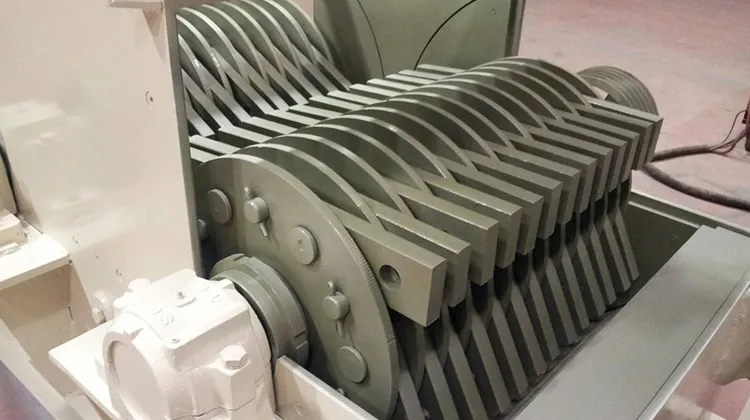
Bearing overheating is a serious hammer crusher problem that requires immediate attention. Excessive bearing temperature may cause bearing seizure and unexpected shutdown.
Insufficient lubrication is the most common cause of bearing overheating. When lubrication grease becomes dry or contaminated, friction increases and generates heat.
Over-lubrication may also cause overheating by increasing internal resistance inside the bearing housing.
Bearing misalignment and improper installation may create uneven load distribution, resulting in temperature rise.
Operators may observe bearing temperature exceeding normal limits, unusual smell of overheated grease, or increased vibration near bearing housings.
Bearings should be lubricated according to manufacturer recommendations. High-quality industrial grease should be used to ensure proper lubrication.
Old or contaminated grease must be replaced regularly. Damaged bearings should be replaced immediately to prevent further damage.
5. Hammer Crusher Motor Overload
Motor overload is a common electrical and mechanical problem in hammer crusher operation. High motor current may activate protection systems and stop the crusher automatically.
Excessive feeding rate is one of the main causes of motor overload. When too much material enters the crusher at once, the rotor experiences excessive resistance.
Hard or uncrushable materials may also cause sudden motor overload. Metal objects entering the crusher may severely damage internal components.
Blocked crushing chambers increase rotor resistance and lead to high motor current.
Operators should monitor motor current during operation. Sudden increases in current usually indicate overload conditions.
Feed rate should be adjusted to match crusher capacity. Foreign materials must be removed before feeding.
Regular cleaning of the crushing chamber helps prevent overload problems.
6. Rapid Hammer Wear
Hammer heads are the primary wear parts of hammer crushers and directly affect crushing efficiency and operating cost.
Rapid hammer wear often occurs when crushing highly abrasive materials such as quartz, granite, or basalt. High rotor speed may further accelerate hammer wear.
Low-quality hammer materials may reduce service life significantly. Improper hammer installation may cause uneven wear patterns.
Operators may observe decreasing crushing efficiency and increasing discharge particle size when hammer wear becomes severe.
Using high manganese steel or alloy hammer heads improves wear resistance and extends service life.
Hammer heads should be inspected regularly and replaced before excessive wear occurs.
Uniform feeding conditions help prevent uneven hammer wear.
7. Material Blockage Inside Hammer Crusher
Material blockage is a common hammer crusher fault that may cause sudden production stoppage. Blockage usually occurs when materials cannot pass smoothly through the crushing chamber.
Wet or sticky materials tend to adhere to screen plates and inner walls, reducing discharge efficiency.
Excessive feeding rate may also cause materials to accumulate inside the crusher.
Blocked discharge openings prevent crushed materials from leaving the crusher, resulting in internal buildup.
Operators may notice reduced discharge flow and increased motor load before blockage occurs.
Reducing feed rate and controlling material moisture help prevent blockage.
Screen plates and discharge openings should be cleaned regularly.
Installing pre-screening equipment may reduce blockage risk.
8. Abnormal Noise in Hammer Crusher
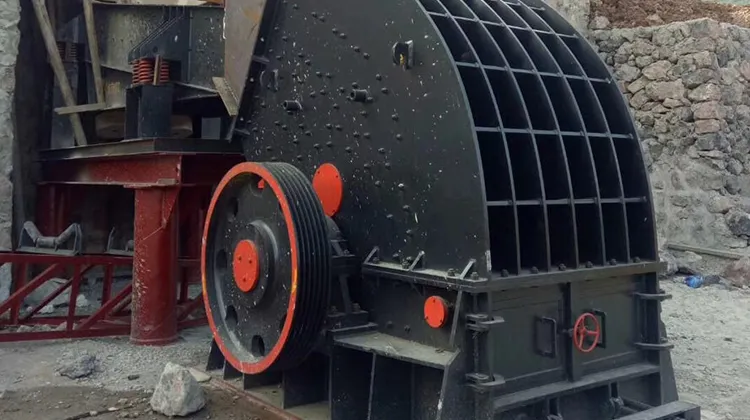
Abnormal noise during hammer crusher operation usually indicates internal mechanical problems. Ignoring abnormal noise may result in serious equipment damage.
Loose hammer heads may produce knocking sounds during rotor rotation. Damaged liners may also generate impact noise.
Metal objects inside the crusher can cause sharp impact sounds and damage internal components.
Bearing damage may produce continuous grinding noise.
If abnormal noise occurs, the crusher should be stopped immediately for inspection.
Loose parts must be tightened and damaged components replaced.
Regular inspection helps prevent serious mechanical failures.
9. Hammer Crusher Cannot Start Normally
Startup failure is a common hammer crusher problem that affects production schedules. The crusher may fail to start or may trip immediately after startup.
Residual materials inside the crushing chamber often prevent the rotor from rotating freely.
Motor electrical faults such as voltage instability or damaged wiring may also prevent startup.
Overloaded startup conditions increase motor starting current.
Operators should check whether the rotor rotates freely before starting.
The crushing chamber should be cleaned before startup.
Power supply voltage should remain stable.
Regular inspection of electrical components helps prevent startup failure.
10. Pulley Rotates Slowly with Motor Vibration and High Current
Slow pulley rotation accompanied by motor vibration and high current usually indicates transmission system problems.
Loose V-belts may slip during operation and reduce rotor speed. Slipping belts generate heat and reduce transmission efficiency.
Pulley misalignment may cause uneven belt tension and vibration.
Worn pulleys may reduce friction between belts and pulley surfaces.
Improper belt tension increases motor load and causes vibration.
Operators may observe reduced crusher speed and unstable operation.
V-belt tension should be adjusted according to specifications.
Pulleys should be aligned and worn pulleys replaced.
Bearings should be inspected to reduce mechanical resistance.
11. V-Belt Layer Separation or Damage
V-belt damage is a frequent hammer crusher transmission problem that affects crusher stability and efficiency.
Layer separation often occurs due to long-term fatigue and improper tension.
Excessive belt tension increases internal stress and accelerates belt cracking.
Insufficient tension causes belt slipping and overheating.
Pulley groove wear may damage belt surfaces.
Misalignment between pulleys may cause uneven belt wear.
High temperature and dusty environments may shorten belt service life.
Operators should inspect V-belts regularly for cracks or separation.
Belt tension should be adjusted properly.
Pulleys should be aligned carefully.
High-quality industrial V-belts should be used to ensure reliable transmission.
How to Reduce Hammer Crusher Failures
Regular maintenance is the most effective way to reduce hammer crusher failures and improve equipment reliability.
Operators should inspect hammer wear, bearing lubrication, belt tension, and screen condition on a regular basis. Maintaining stable feeding conditions and avoiding overload operation can significantly extend crusher service life.
Preventive maintenance not only reduces unexpected shutdowns but also improves crushing efficiency and operating stability.
Conclusion
Hammer crushers are essential equipment in mining and construction industries, but mechanical problems may occur during long-term operation.
Understanding common hammer crusher faults and solutions helps operators quickly identify problems and restore production.
Proper maintenance and timely troubleshooting can improve crusher reliability, reduce operating costs, and ensure stable production.


 English
  Russian
  Arabic
  Vietnamese
  Spanish
  French
  Portuguese
  Japanese
  Chinese