


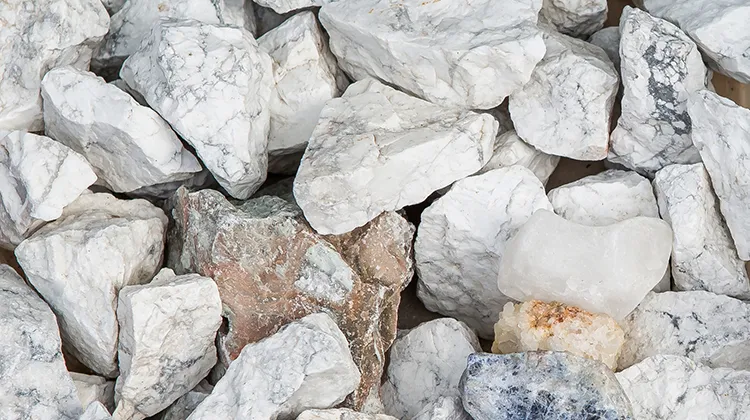
Introduction: The Unique Industrial Value of Dolomite
Dolomite is a critical industrial mineral widely used in cement, steel, refractory materials, glass, ceramics, construction, and agriculture. Unlike limestone, dolomite provides not only CaO but also MgO, giving it a unique role in slag control, refractory brick production, cement clinker formulation, and soil improvement.
In practice, many companies underestimate the importance of dolomite, leading to problems such as raw material mixing errors, product quality fluctuations, kiln buildup, high energy consumption, or low raw material utilization. Understanding dolomite’s mineral characteristics, processing technologies, and industrial applications is essential to ensure production efficiency and product consistency.
1: What is Dolomite?
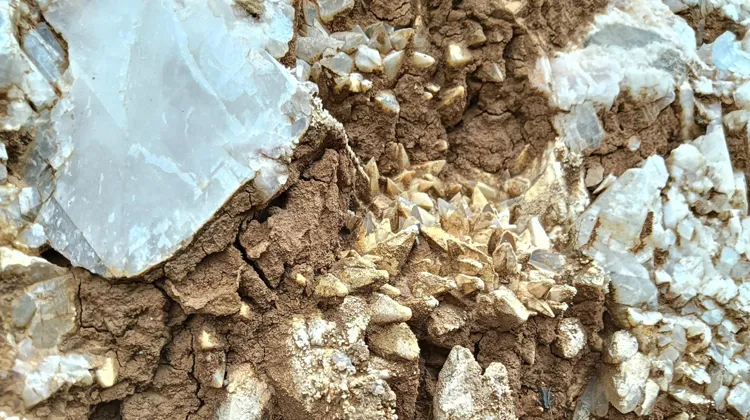
Dolomite is a carbonate mineral with the chemical formula CaMg(CO₃)₂. In industrial contexts, the term “dolomite” refers both to the mineral itself and to dolostone, the rock primarily composed of dolomite.
Dolomite is an essential source of MgO for various industrial processes and plays a key role in steelmaking fluxes, cement clinker stabilization, and refractory material production.
Formation and Properties
Dolomite primarily forms through dolomitization, a process where magnesium ions replace calcium ions in limestone. Its crystalline structure is trigonal, with Ca²⁺ and Mg²⁺ ions arranged in an ordered pattern. This structure gives dolomite distinctive physical and chemical properties:
Thermal decomposition: More complex than limestone, requiring precise temperature control
Chemical reactivity: Reacts slowly with acids at room temperature, more visibly when powdered or heated
Mechanical properties: Well-developed cleavage may produce platy fragments during crushing and grinding, requiring specialized equipment
Industrial Significance
Dolomite is more than just a raw material—it is a critical parameter for process design. Its MgO content improves slag fluidity in steelmaking, regulates cement clinker stability, and enhances high-temperature performance in refractory materials. Understanding what dolomite is—its chemical composition, crystal structure, and industrial role—is the foundation for designing processing systems and selecting suitable equipment.
❗ Mineral testing should always precede process design and equipment selection in industrial projects.
2: Dolomite Characteristics
Although visually similar to limestone, dolomite has distinct chemical and physical characteristics that affect industrial processing.
| Property | Dolomite | Limestone | Industrial Significance |
|---|---|---|---|
| Chemical Composition | CaMg(CO₃)₂ | CaCO₃ | MgO content affects steel slag and cement clinker stability |
| Mohs Hardness | 3.5–4 | ~3 | Crushing and grinding energy, equipment selection |
| True Density | 2.8–2.9 g/cm³ | 2.6–2.7 g/cm³ | Layer thickness and conveyor system design |
| Thermal Decomposition | Stepwise/Wide temperature range | Single temperature range | Kiln type selection and temperature control |
| Calcined Products | CaO + MgO | CaO | Determines refractory and steel flux performance |
At room temperature, dolomite reacts slowly with acids. Heating or powdering enhances reactivity, which is crucial for laboratory testing and industrial verification.
3: Dolomite Production & Availability
Dolomite resources are distributed globally, with major deposits in:
Europe: Dolomites in northern Italy
North America: Wisconsin and New York in the USA, southern Canada
Asia: Several provinces in China
Other regions: Mexico, Spain, Russia, Australia
Industrial-grade dolomite must meet strict criteria:
| Parameter | Ideal Range | Industrial Significance |
|---|---|---|
| MgO Content | 16–22% | Impacts steelmaking flux and cement clinker stability |
| CaO Content | 28–35% | Balances chemical composition |
| SiO₂ Content | <3% | Controls slag fluidity |
| Loss on Ignition | 45–48% | Indicates mineral purity and calcined product yield |
| Homogeneity | High | Ensures consistent grinding and calcination |
❗ Mineral analysis should always precede process design to avoid blind industrial decisions.
4: Industrial Applications of Dolomite
Dolomite’s industrial value comes from its dual CaO + MgO functionality, with applications in steel, refractory, cement, glass, ceramics, and agriculture.
| Industry | Form Used | Function |
|---|---|---|
| Steel | Calcined dolomite | Slag formation, desulfurization, lining protection |
| Refractory | Sintered dolomite | High-temperature bricks, crucibles, furnace linings |
| Cement | Raw dolomite powder | Clinker stability, MgO regulation |
| Glass & Ceramics | Powder | MgO source, improves thermal stability |
| Agriculture | Powder | Soil amendment, neutralizes acidity |
Different forms and calcination states enable dolomite to achieve optimal performance in each industry.
5: Raw vs Calcined Dolomite
Raw dolomite is a stable carbonate mineral, whereas calcined dolomite transforms into highly reactive CaO + MgO. Calcination occurs in two steps:
MgCO₃ → MgO + CO₂
CaCO₃ → CaO + CO₂
Calcination types include light, dead-burned, and sintered dolomite, each suited to specific industrial applications.
| Feature | Raw Dolomite | Calcined Dolomite |
|---|---|---|
| Chemical Reactivity | Low | High |
| Reaction with Water | Minimal | Vigorous |
| Industrial Use | Construction, glass | Steel flux, refractory materials |
| Storage Requirement | Normal | Moisture-proof |
❗ Calcined dolomite requires precise temperature, timing, and kiln design.
6: Dolomite Processing & Equipment

Dolomite processing is a combined mineral and thermal process where each stage affects product quality.
Jaw crusher for primary crushing
Cone or impact crusher for secondary/tertiary crushing
Vibrating screens for particle size classification
Particle size affects calcination activity, slag fluidity, and cement clinker composition
Industrial grinders provide controlled particle distribution
Calcination
Rotary or vertical kilns, precise temperature control
Light vs dead-burned temperatures significantly affect product reactivity, crystal structure, and downstream performance
Dust Collection & Safety
Dust collection ensures occupational health
Flue gas treatment meets environmental standards
❗ Successful dolomite processing relies on professional equipment + precise temperature control + optimized workflow.
7: Dolomite in Cement Production
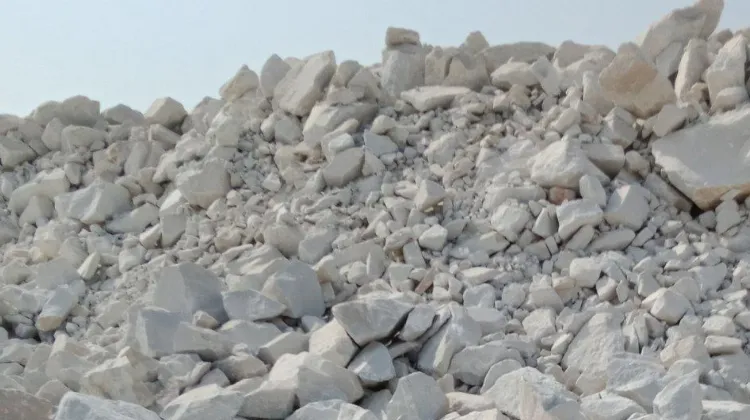
In cement manufacturing, dolomite regulates MgO content and CaO/MgO ratios.
Proper MgO improves clinker durability
Excess MgO may cause long-term expansion
Particle size and calcination influence raw meal homogeneity and kiln temperature
Industrial experience shows:
Clinker formulation must be optimized based on mineral analysis
Particle size directly affects kiln efficiency and temperature distribution
Calcined dolomite enables high-performance clinker with precise MgO control
Dolomite is not just a raw material—it is essential for precise clinker performance control.
8: Five Common Dolomite Misconceptions
Misconception 1: Dolomite is the same as limestone
Many people assume that dolomite is just a variant of limestone. While visually similar, dolomite contains MgO (CaMg(CO₃)₂), whereas limestone is primarily CaCO₃. This difference has significant industrial implications:
In steelmaking, MgO in dolomite improves slag fluidity and protects the furnace lining. Using limestone instead may reduce slag efficiency and accelerate refractory wear.
In cement, MgO content affects clinker stability. Mistaking dolomite for limestone can cause long-term expansion and cracking in cement products.
Correct industrial practice: always conduct chemical assays to determine CaO and MgO content before using the material in any industrial application.
Key takeaway: Dolomite and limestone are not interchangeable, and relying on visual inspection alone can compromise product performance and equipment lifespan.
Misconception 2: Dolomite is the same as marble
Some assume that marble is equivalent to dolomite because both can appear white or gray. Marble is a metamorphic rock formed from limestone or dolostone under heat and pressure, resulting in a dense crystal structure with very low reactivity. Misusing marble as dolomite in industrial applications can lead to:
Reduced chemical reactivity during calcination, leading to incomplete decomposition
Poor clinker formation in cement, resulting in inconsistent MgO and CaO ratios
Lower steel flux performance and irregular slag behavior
Practical solution: Always verify the mineral source and conduct X-ray diffraction (XRD) or chemical analysis to confirm that the material is industrial-grade dolomite.
Misconception 3: Dolomite is harmful
While dolomite as a solid mineral is non-toxic and safe, the industrial reality is that processing generates fine dust containing crystalline silica. If inhaled over long periods, this dust can cause silicosis, lung irritation, or other occupational hazards. Key safety practices include:
Installing industrial dust collection systems in crushing, grinding, and calcination stages
Providing workers with personal protective equipment (PPE) such as respirators and protective clothing
Regular monitoring of airborne particulate matter in production facilities
Industrial takeaway: Dolomite itself is safe; risk comes from dust exposure, which can be mitigated with proper engineering controls.
Misconception 4: Dolomite processing is simple and can be done casually
Some believe dolomite processing is just crushing and grinding. In reality, it is a complex system integrating mineral processing and thermal treatment:
Crushing and grinding must achieve uniform particle size to ensure proper calcination
Calcination requires precise temperature control; too low leaves residual carbonates, too high produces coarse grains and reduces reactivity
Equipment selection (jaw crusher, cone crusher, vertical kiln, rotary kiln) and workflow optimization directly impact product quality, energy consumption, and industrial efficiency
Engineering solution: Implement a full process design from raw material analysis to calcined product testing. Simplifying or skipping steps can lead to inconsistent industrial performance and higher operating costs.
Misconception 5: Dolomite can be identified by appearance alone
Many assume that color, texture, or block size can indicate dolomite quality. In practice, dolomite varies widely in MgO content, impurities, crystal structure, and crystallinity. Relying on visual inspection can result in:
Using material with unsuitable MgO/CaO ratios
Introducing excessive silica or other impurities into steelmaking flux or cement
Unexpected reactions in calcination or kiln operations
Best practice: Use chemical analysis, acid reactivity testing, and thermogravimetric analysis (TGA) to verify suitability for industrial applications.
Conclusion: Understand the Material, Optimize the Process
The key steps for a successful dolomite project:
Mineral analysis → Application confirmation → Process design → Equipment selection → Precise management
Understanding dolomite’s mineral characteristics, processing methods, and industrial applications is essential for improving efficiency, reducing costs, and ensuring product quality.


 English
  Russian
  Arabic
  Vietnamese
  Spanish
  French
  Portuguese
  Japanese
  Chinese