


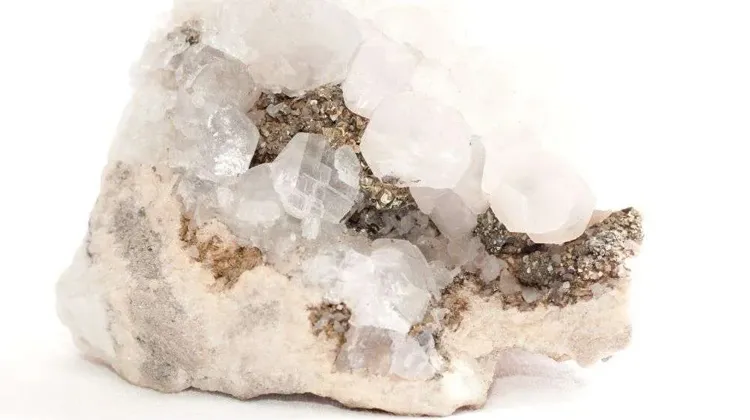
Calcite, primarily derived from limestone, is one of the most essential raw materials in cement manufacturing. It is responsible for providing the calcium component required in clinker formation, which directly determines the physical strength and chemical stability of cement.
In modern cement plants, calcite is not only evaluated as a raw material, but also as a key factor influencing печь efficiency, energy consumption, and final product performance.
Calcite as the Foundation of Cement Chemistry

At the core of cement production is a high-temperature chemical transformation process inside the rotary kiln. Calcite (calcium carbonate, CaCO₃) undergoes thermal decomposition when exposed to temperatures typically above 850°C.
During this reaction, calcite breaks down into calcium oxide (CaO) and carbon dioxide (CO₂). The generated calcium oxide is highly reactive and immediately participates in further chemical reactions with silica (SiO₂), alumina (Al₂O₃), and iron oxides (Fe₂O₃) present in the raw meal.
These reactions form the main clinker phases such as alite and belite, which are responsible for the strength development of cement when it hydrates with water.
From an industrial perspective, the stability of this reaction process depends heavily on the purity, particle size distribution, and thermal behavior of calcite-containing limestone. Even small variations in chemical composition can affect kiln temperature distribution and lead to inconsistent clinker quality.
Influence of Calcite on Cement Quality and Performance
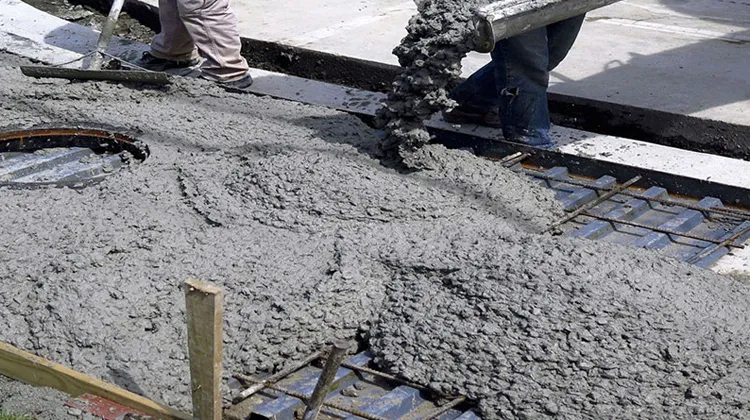
The role of calcite extends beyond chemical reaction; it directly affects the physical and mechanical performance of cement.
When limestone with high calcite content is properly processed, the resulting clinker tends to have a more uniform mineral structure. This improves hydration behavior, allowing cement to develop strength more consistently over time.
In contrast, limestone with excessive impurities such as magnesium, clay, or silica can disrupt kiln reactions, leading to uneven clinker formation and reduced cement strength.
Particle fineness is also an important factor. When calcite is ground more uniformly during raw material preparation, it improves blending efficiency in the raw meal and ensures more complete reactions in the kiln. This results in better burnability and more stable production output.
Calcite and Energy Efficiency in Cement Plants

One of the most overlooked roles of calcite in cement manufacturing is its influence on energy consumption.
Because calcite decomposition is an endothermic reaction, it directly affects the thermal balance inside the kiln. High-quality limestone with stable calcite content allows for more predictable decomposition behavior, reducing the risk of over-burning or incomplete calcination.
When kiln conditions are stable, fuel consumption can be significantly reduced, and operational efficiency is improved. This is particularly important in modern cement plants where energy cost represents a large portion of total production expenses.
Additionally, stable calcite behavior reduces thermal stress on kiln linings and extends equipment service life, which further reduces maintenance costs.
Industrial Application: Calcite in Cement Production Systems
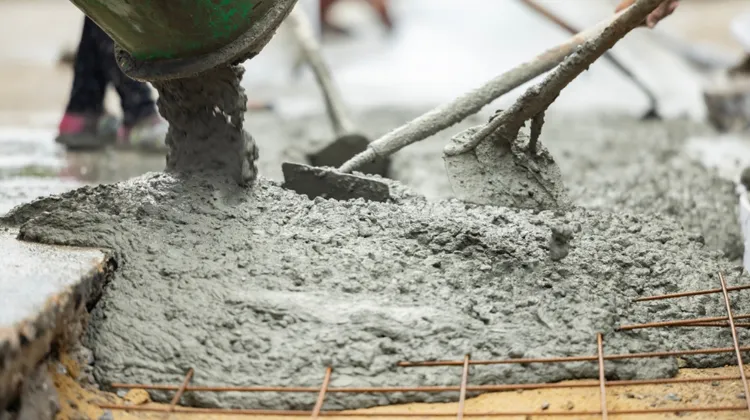
In a full-scale cement manufacturing plant, calcite is processed through multiple interconnected systems that ensure its transformation into clinker and final cement products.
The process typically begins with limestone extraction, where raw calcite-rich rock is mined and transported to crushing systems. Here, large rocks are reduced into manageable sizes using primary and secondary crushers.
The crushed material is then sent to grinding systems such as ball mills or vertical roller mills. These machines are responsible for producing a fine and homogeneous raw meal, which is essential for stable kiln operation.
Once prepared, the raw meal enters a preheating system where it is gradually heated using kiln exhaust gases. This stage begins the partial decomposition of calcite before it enters the rotary kiln.
Inside the kiln, the main calcination reaction occurs. Calcite decomposes into CaO, which reacts with other oxides to form clinker minerals at temperatures approaching 1450°C. This is the most critical stage of cement production, requiring precise control of temperature, airflow, and material residence time.
After clinker formation, the material is rapidly cooled to preserve its mineral structure. It is then mixed with gypsum and finely ground in cement mills to produce the final cement product.
Each stage of this process depends on the behavior of calcite, making it a foundational element in cement plant design and optimization.
Case Study: 300 TPD Cement Plant Configuration
In a typical medium-scale cement plant with a capacity of 300 tons per day, the production system is divided into four integrated sections.
The raw material preparation section includes jaw crushers and grinding mills that ensure consistent limestone particle size and chemical uniformity.
The clinker production section consists of a cyclone preheater and rotary kiln system, where calcite decomposition and clinker formation take place under controlled high-temperature conditions.
The cement grinding section uses ball mills and separators to achieve the required fineness and quality of final cement products.
Finally, the packaging and storage system ensures safe handling and distribution of cement, supported by automated packing machines and storage silos.
Modern plants also integrate dust collection systems such as pulse-jet bag filters and gas cleaning systems to reduce emissions and improve environmental compliance.
Key Factors Affecting Cement Quality
Cement quality is influenced by a combination of raw material properties, process control, and environmental conditions.
The chemical balance of raw materials plays a fundamental role, as the ratio between limestone, clay, and corrective materials determines clinker composition and final strength development.
Process stability inside the kiln is equally important, particularly temperature control and material residence time, which directly influence reaction completeness.
Gypsum addition must also be carefully controlled to regulate cement setting time and avoid flash setting during construction.
The water-cement ratio used during concrete mixing significantly affects compressive strength and durability, making it a critical parameter in construction applications.
Supplementary materials and chemical additives can enhance specific properties such as workability, durability, and resistance to environmental conditions.
Finally, improper storage conditions such as exposure to moisture can reduce cement performance even after production, highlighting the importance of proper packaging and handling systems.
Заключение
Calcite plays a fundamental and irreplaceable role in cement manufacturing. It is not only the primary source of calcium in clinker formation, but also a key factor influencing energy efficiency, production stability, and final cement quality.
From raw material preparation to high-temperature kiln reactions and final cement grinding, every stage of the production process is directly or indirectly affected by the behavior of calcite.
As global demand for infrastructure continues to increase, optimizing the use of calcite and improving cement plant efficiency will remain essential for achieving higher productivity, lower energy consumption, and more sustainable industrial development.
Часто задаваемые вопросы
Q1: Why is calcite considered essential in cement manufacturing?
Calcite provides the calcium oxide required for clinker formation. Without it, the fundamental chemical reactions that produce cement minerals would not occur.
Q2: What happens to calcite inside a cement kiln?
When exposed to high temperatures, calcite decomposes into calcium oxide and carbon dioxide. The calcium oxide then reacts with other raw materials to form clinker phases.
Q3: How does calcite quality affect cement strength?
Higher purity calcite leads to more stable clinker formation and more consistent hydration behavior, which results in improved compressive strength and durability of cement.
Q4: Can variations in limestone composition affect cement production?
Yes. Variations in calcite content and impurities can significantly impact kiln stability, fuel consumption, and final clinker quality.
Q5: How does calcite influence energy consumption in cement plants?
Stable calcite decomposition reduces thermal fluctuations in the kiln, improving fuel efficiency and reducing overall energy consumption during clinker production.
Q6: What equipment is most affected by calcite quality in a cement plant?
Key equipment includes crushers, raw mills, rotary kilns, and separators. Each stage depends on consistent raw material quality for stable operation.


 Russian
  English
  Arabic
  Vietnamese
  Spanish
  French
  Portuguese
  Japanese
  Chinese