



In adhesive terminology, the word “cement” does not always refer to Portland cement, concrete, or mortar. It can also describe a material used to bond two surfaces together.
Contact cement and rubber cement are both used in repairs, crafts, furniture work, and light manufacturing, but they are not the same product. They differ in bonding strength, application method, repositionability, material compatibility, and intended service life.
What Is Contact Cement?

Contact cement, also called contact adhesive, is designed to be applied to both surfaces being joined. The coated surfaces are normally left open until the water or solvent has evaporated to the condition specified by the manufacturer. They are then carefully aligned and pressed together.
Traditional solvent-based contact cements are often made with synthetic rubber polymers. For example, one DAP product is described as a polychloroprene rubber-based contact adhesive that forms permanent bonds and develops immediate adhesion without extended clamping. Water-based and low-VOC contact adhesives are also available, so the exact chemistry varies between products.
The defining feature is the high initial bond created when the two adhesive-coated surfaces meet. A typical solvent-based product may require approximately 15 to 20 minutes of open time, but the correct time depends on the formulation, coating thickness, temperature, and humidity.
Unique Properties of Contact Adhesives
Fast Bonding Without Long Clamping Times
Once the surfaces are correctly aligned and pressed together, contact cement can develop enough immediate strength to hold an assembly without extended clamping. This makes it useful for large sheets of laminate, veneer, and other materials that would be difficult to clamp evenly.
The same feature also creates a practical challenge: alignment must be correct before full contact occurs.
Strong Bonds Across a Wide Range of Materials
Product compatibility varies, but contact adhesives are commonly specified for high-pressure laminates, wood and plastic veneers, leather, fabrics, rubber, wood, particleboard, plywood, metal, concrete, and related surfaces. Some industrial formulations also provide resistance to heat, water, oils, and other service conditions.
Plastics, coated metals, painted finishes, and glass should always be tested first. The solvent in one formulation may soften, discolor, or damage a material that another formulation can safely bond.
Limitations of Contact Adhesives
The main limitation of contact cement is its lack of repositionability. Once the coated surfaces make full contact, separating or realigning them can be extremely difficult. Installers working with large laminate sheets often use temporary spacers to prevent accidental contact while positioning the material.
Traditional solvent-based contact cements can also produce strong vapors and present a serious fire risk. A current safety data sheet for a solvent-based contact cement classifies it as a highly flammable liquid and vapor and warns of skin, eye, respiratory, and inhalation hazards. Adequate ventilation, control of ignition sources, and appropriate personal protective equipment are therefore essential.
Spilled contact cement may also be difficult to remove. Strong cleaning solvents can damage paint, plastics, laminates, and furniture finishes, so cleanup should follow the adhesive manufacturer’s instructions.
What Is Rubber Cement?

Rubber cement is an adhesive in which natural or synthetic rubber polymers are dispersed in a liquid carrier. Traditional products commonly use volatile organic solvents, although the solvent system differs between brands and water-based rubber adhesives also exist.
For this reason, rubber cement should not be universally described as raw rubber dissolved in gasoline or benzene. One rubber cement safety data sheet, for example, identifies n-heptane as its main disclosed solvent ingredient.
Rubber cement is most closely associated with paper, photo mounting, scrapbooking, model making, costume work, and light leathercraft. Elmer’s currently presents its rubber cement as a solution for photographs and detailed cut-and-paste projects rather than heavy construction bonding.
Potential Advantages of Rubber Cement
Repositionable or Semi-Permanent Bonding
Some rubber cements can create a repositionable bond when applied to one surface and joined while wet. The material can then be peeled back and adjusted, making the adhesive useful for photos, paper layouts, templates, and craft projects that require accurate placement.
Certain products can also form a stronger semi-permanent bond when applied to both surfaces and allowed to become tacky. Drying instructions vary. One manufacturer recommends approximately 10 minutes for a particular rubber cement, while the often-quoted 15-to-20-minute period belongs to certain contact cement formulations and should not be applied to every rubber cement.
Cleaner Removal of Excess Adhesive
Some rubber cements allow dried excess adhesive to be rubbed away from many surfaces. This is one reason they remain useful for photo mounting, scrapbooking, presentations, and craft work where visible residue would affect the finished appearance.
Flexible Bond Lines
The rubber polymer can provide a bond that tolerates modest movement and bending. This can be helpful with paper, fabric, lightweight leather, and costume materials, although flexibility should not be confused with high load-bearing strength.
Disadvantages of Rubber Cement
Ordinary craft rubber cement is generally not designed for large permanent installations, structural loads, or continuous exposure to demanding temperatures and moisture. Even when a product is described as semi-permanent, it should not be assumed to match the strength or service life of an industrial contact adhesive.
The term “rubber cement” also does not guarantee that a product is suitable for permanent rubber repair. Tire repair, conveyor belt bonding, and industrial rubber-to-metal work may require vulcanizing cement, primers, hardeners, or a specialized rubber bonding system. Craft rubber cement is not automatically interchangeable with those products.
Solvent-based rubber cement also requires careful handling. One SDS classifies the product as a highly flammable liquid and vapor and warns that it may irritate the skin, eyes, and respiratory system. It instructs users to work in a well-ventilated area, keep the container closed, and keep the product away from heat, sparks, and open flames.
Is Contact Cement the Same as Rubber Cement?
No.
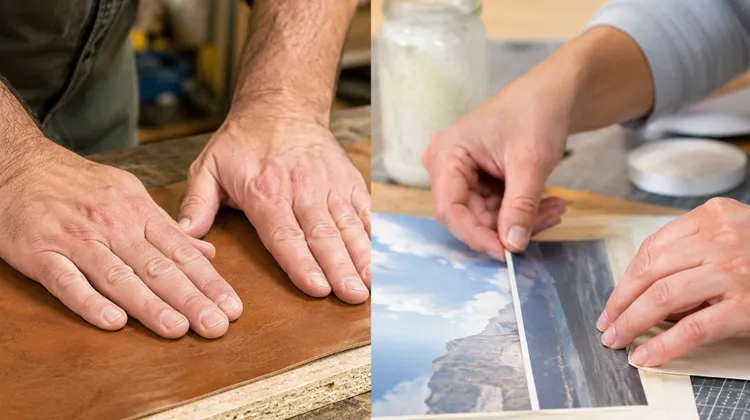
Although some contact cements and rubber cements both contain rubber polymers, they are formulated for different purposes. Contact cement prioritizes immediate strength, permanent attachment, and broad-surface bonding. Rubber cement usually prioritizes flexibility, clean handling, and the ability to reposition lightweight materials.
| Comparison | Contact Cement | Rubber Cement |
|---|---|---|
| Primary purpose | Strong, permanent or long-term bonding | Repositionable, lightweight, or semi-permanent bonding |
| Typical application | Applied to both surfaces and allowed to reach the specified tack | May be applied wet to one surface or to both surfaces, depending on the product |
| Repositioning after contact | Usually very limited | Possible with many craft formulations |
| Initial bond strength | Generally high | Generally lower and easier to control |
| Common materials | Laminates, veneer, leather, rubber, wood, and selected metals and plastics | Paper, photographs, fabric, lightweight leather, and model materials |
| Common industries | Furniture, interior finishing, automotive trim, and industrial assembly | Arts, photo mounting, scrapbooking, models, and costume work |
| Need for clamps | Usually no extended clamping | Depends on the material and formulation |
| Relationship to Portland cement | None | None |
When Should You Use Each Adhesive?
| Project or Material | Better Choice | Reason |
|---|---|---|
| Wood veneer, cabinet laminate, or countertop laminate | Contact cement | Covers large areas and develops a fast, strong bond |
| Bonding suitable metal, wood, rubber, or decorative materials | Product-approved contact cement | Suitable for longer-term attachment when compatibility is confirmed |
| Automotive interior trim | Automotive-grade or high-temperature contact adhesive | General craft adhesives may not tolerate vehicle temperatures |
| PVC flooring | Flooring adhesive approved by the flooring manufacturer | Not every general-purpose contact cement is suitable for PVC flooring |
| Paper, photographs, and scrapbooks | Rubber cement | Allows accurate placement and easier cleanup |
| Models, templates, and temporary displays | Rubber cement | Well suited to lightweight, adjustable work |
| Lightweight leather or costume work | Rubber cement or a dedicated leather adhesive | The choice depends on whether repositioning or permanence is required |
| Ceramic tile repair | Tile adhesive, repair mortar, or an appropriate epoxy | General contact cement is normally not the preferred tile repair material |
How to Use Rubber Cement Effectively and Safely
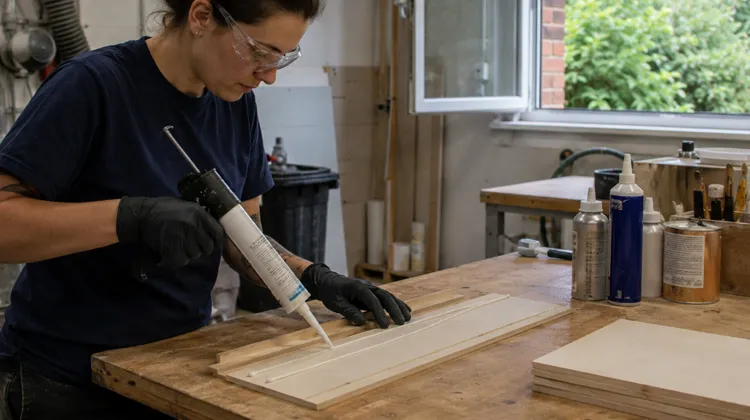
Begin by reading the label because application methods, open times, and material compatibility vary significantly. Test the adhesive on scrap material or a hidden area, especially when working with plastics, coated paper, photographs, painted finishes, or leather.
Clean and dry the surfaces, then apply a thin, even coat according to the type of bond required. For a repositionable bond, some products are applied to one surface and joined while still wet. For a stronger semi-permanent bond, some formulations are applied to both surfaces and left until tacky before being pressed together.
Do not automatically apply two or three coats, and do not assume every rubber cement requires 15 to 20 minutes of drying. The number of coats and open time should be determined by the product label, the porosity of the material, and the surrounding conditions. Excessively thick adhesive can extend drying time and trap more solvent.
Work with effective ventilation and keep the adhesive away from cigarettes, open flames, electrical sparks, heaters, and other ignition sources. Wear the gloves and eye protection specified by the product. A basic dust mask is not equivalent to properly selected protection against organic solvent vapors. Close the container immediately after use and dispose of waste in accordance with local requirements.
Do Not Confuse These Products with Cement-Based Adhesives
Neither contact cement nor rubber cement is a hydraulic cement product. In these names, “cement” refers to bonding action rather than the presence of Portland cement.
Cement-based tile adhesive, dry-mix mortar, and wall putty belong to a different category of construction materials. Their chemistry, manufacturing process, mixing equipment, and application methods are different from those used for solvent-based or water-based liquid adhesives.
This distinction is especially important for cement and dry-mortar equipment suppliers. Contact cement cannot replace cement-based tile adhesive, and rubber cement cannot be used as a structural mortar.
Часто задаваемые вопросы
What is the main difference between contact cement and rubber cement?
Contact cement is mainly designed to create a strong, fast, and long-lasting bond. Rubber cement is more commonly selected for lightweight, flexible, or repositionable work. Similarities in polymer content do not make the two products interchangeable.
Can rubber cement replace contact cement?
Usually not in furniture, laminate installation, automotive trim, or other permanent assemblies. Rubber cement normally lacks the strength and environmental resistance expected from an appropriate contact adhesive.
Is contact cement always stronger?
It is generally stronger in typical permanent-bonding applications. However, actual performance depends on the specific formulation, substrate, surface preparation, adhesive coverage, temperature, humidity, and curing conditions.
How do temperature and humidity affect the adhesives?
Temperature and humidity influence solvent or water evaporation and can therefore change open time, drying behavior, and bond development. Contact adhesive manufacturers often specify minimum application temperatures and state that drying times depend on environmental conditions.
Which industries commonly use contact cement?
Contact cement is common in furniture manufacturing, laminate installation, woodworking, automotive interiors, footwear, leather goods, and selected industrial assembly processes. Rubber cement is more closely associated with art, photo mounting, scrapbooking, models, and costume work.
Can ordinary rubber cement permanently repair rubber products?
Not necessarily. Craft rubber cement is different from tire repair cement, cold-vulcanizing adhesive, and industrial rubber bonding systems. The correct product depends on the rubber type, operating temperature, chemicals, and mechanical load.
How should contact cement and rubber cement be stored?
Keep the product in its original, tightly closed container in a cool and well-ventilated storage area away from heat and ignition sources. Keep it out of the reach of children and follow the storage and disposal instructions in the current label and safety data sheet.
Заключение
Contact cement and rubber cement may have similar names, but they solve different bonding problems.
Choose a compatible contact cement when the project requires fast, strong, and long-term attachment of laminate, veneer, leather, rubber, or suitable industrial materials. Choose rubber cement when working with paper, photographs, lightweight leather, models, or temporary layouts where repositioning and cleaner removal are more important.
The final choice should be based on the materials, bonded area, expected load, temperature, moisture exposure, and the manufacturer’s technical documentation—not on the product name alone.


 Russian
  English
  Arabic
  Vietnamese
  Spanish
  French
  Portuguese
  Japanese
  Chinese