


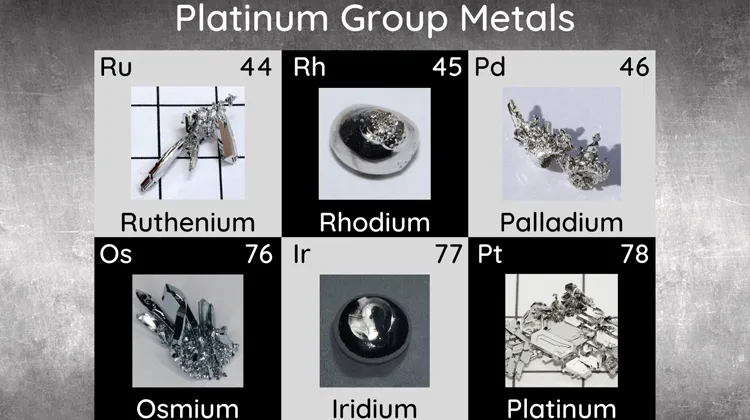
Platinum group metals are some of the rarest and most valuable materials used in modern industry. Although they exist in very small quantities in the Earth’s crust, these metals play an essential role in automotive catalysts, hydrogen energy systems, aerospace engineering, electronics manufacturing, medical technology, and high-temperature industrial equipment.
The platinum group metals (PGMs) include:
- Platinum (Pt)
- Palladium (Pd)
- Rhodium (Rh)
- Iridium (Ir)
- Ruthenium (Ru)
- Osmium (Os)
These metals are highly valued because they can remain stable under extreme temperatures, corrosive chemical environments, and continuous industrial operation. For this reason, platinum group metals are widely used in industries that require durability, precision, and long-term reliability.
Interestingly, platinum has also long been associated with luxury and royalty. King Louis XVI of France once described platinum as the “only metal fit for kings,” highlighting its rarity and prestige even centuries ago.
Today, platinum group metals are not only symbols of value, but also strategic industrial materials that support many modern technologies.
1. Platinum (Pt) — The Noble Metal of Modern Industry

What Is Platinum?
Platinum is a silver-white precious metal with atomic number 78 and a melting point of 1768.4°C. It is best known for its exceptional corrosion resistance, chemical stability, and catalytic performance.
Unlike many common metals, platinum can maintain stable physical and chemical properties even under extremely high temperatures and highly corrosive industrial environments. This makes it one of the most reliable materials used in advanced manufacturing and heavy industry.
Because platinum does not easily oxidize or react with acids, it is often used in applications where long-term durability is critical.
Why Platinum Is Important
One of platinum’s most valuable characteristics is its catalytic ability. A catalyst helps accelerate chemical reactions without being consumed during the process. This property allows platinum to play a major role in emission control systems, fuel cell technology, and chemical manufacturing.
In addition, platinum has excellent electrical conductivity and high-temperature resistance, making it suitable for precision industrial equipment and electronic systems.
Main Applications of Platinum
Automotive Catalytic Converters
A large portion of global platinum demand comes from automotive catalytic converters. Platinum helps convert harmful exhaust gases such as nitrogen oxides, hydrocarbons, and carbon monoxide into less harmful emissions.
As environmental regulations become stricter worldwide, platinum continues to play a critical role in reducing vehicle pollution.
Jewelry Industry
Platinum is widely used in high-end jewelry because of its rarity, durability, and natural white appearance. It is especially popular in engagement rings and luxury watches.
Unlike silver, platinum does not tarnish easily, allowing jewelry to maintain its appearance for many years.
Glass Manufacturing Industry
Platinum crucibles are commonly used in high-temperature glass production because they can withstand continuous heat and chemical corrosion.
This is particularly important in precision glass manufacturing and fiberglass production lines.
Hydrogen Energy Systems
Platinum is one of the key catalyst materials used in hydrogen fuel cells. As the global clean energy industry expands, platinum demand in hydrogen technology is expected to increase significantly.
2. Palladium (Pd) — The Hydrogen Storage Metal

What Is Palladium?
Palladium is a rare silver-white metal with atomic number 46 and a melting point of 1555°C. It belongs to the platinum group metals family and is known for its strong catalytic activity and excellent hydrogen absorption capability.
Compared with platinum, palladium is lighter and has become increasingly important in automotive and clean energy industries.
Why Palladium Matters in Industry
One of palladium’s most unique properties is its ability to absorb extremely large amounts of hydrogen. Under certain conditions, palladium can absorb up to 900 times its own volume of hydrogen.
Because of this remarkable characteristic, palladium is widely used in hydrogen purification systems, fuel cell technology, and hydrogen storage research.
Its strong corrosion resistance also allows the metal to remain stable in demanding industrial environments.
Main Applications of Palladium
Automotive Emission Control
Palladium is widely used in gasoline vehicle catalytic converters. In many applications, it serves as an alternative to platinum due to its excellent catalytic efficiency.
As global vehicle production continues to grow, palladium remains an important material in emission reduction systems.
Hydrogen Purification Technology
Palladium membranes are highly effective for separating and purifying hydrogen gas. This technology is becoming increasingly important as hydrogen energy gains global attention.
Electronics Manufacturing
Palladium is used in:
- Multilayer ceramic capacitors
- Printed circuit boards
- Connectors
- Electronic components
Because of its electrical conductivity and stability, palladium is widely applied in precision electronics.
Chemical Industry
Palladium catalysts are also used in synthetic rubber production and chemical processing systems.
3. Rhodium (Rh) — The Most Expensive Precious Metal

What Is Rhodium?
Rhodium is one of the rarest precious metals in the world. It has atomic number 45 and a melting point of 1964°C.
Due to its extremely limited global supply and strong industrial demand, rhodium is often considered the most expensive precious metal on the market.
The metal has a bright silver-white appearance and exceptional resistance to oxidation and corrosion.
Why Rhodium Is Valuable
Rhodium performs exceptionally well under high-temperature industrial conditions. It is especially effective in catalytic reactions involving harmful vehicle emissions.
In addition, rhodium has extremely high reflectivity, making it useful for reflective coatings and precision optical applications.
Main Applications of Rhodium
Automotive Catalytic Converters
Rhodium is considered the most effective metal for reducing nitrogen oxide emissions from vehicle exhaust systems.
Because modern emission standards are becoming stricter worldwide, rhodium demand has increased significantly in recent years.
Reflective Coatings and Mirrors
Its high reflectivity makes rhodium suitable for:
- Industrial mirrors
- Reflectors
- Optical instruments
These applications require materials that maintain reflective performance under harsh conditions.
Glass Fiber Manufacturing
Rhodium-containing alloys are used in glass fiber production equipment because they can withstand continuous exposure to extremely high temperatures.
Jewelry Plating
Rhodium plating is commonly used to improve the brightness and corrosion resistance of jewelry surfaces.
4. Iridium (Ir) — The Most Corrosion-Resistant Metal

What Is Iridium?
Iridium is one of the most corrosion-resistant elements known in nature. It has atomic number 77 and a melting point of 2446°C.
Even under extreme heat and strong chemical exposure, iridium remains highly stable. This makes it one of the most durable metals used in advanced industrial applications.
Why Iridium Is Important
Iridium combines high hardness with outstanding chemical stability. Unlike many metals that degrade in corrosive environments, iridium can maintain long-term performance under extremely demanding conditions.
This makes it valuable in aerospace engineering, precision equipment manufacturing, and medical technology.
Main Applications of Iridium
Aerospace Industry
Iridium is used in high-temperature aerospace engine components and advanced aviation systems where material stability is critical.
Alloy Manufacturing
Iridium is often added to alloys to improve hardness and wear resistance.
Typical products include:
- Fountain pen tips
- Compass bearings
- Precision instrument components
Medical Technology
Iridium is used in:
- Cancer treatment systems
- Medical imaging equipment
- Cardiovascular devices
Its corrosion resistance and stability make it suitable for highly sensitive medical applications.
X-Ray Telescopes
Iridium coatings provide superior X-ray reflectivity compared with gold and platinum, making them useful in space observation technology.
5. Ruthenium (Ru) — The Hardening Element

What Is Ruthenium?
Ruthenium is a rare platinum group metal with atomic number 44 and a melting point of 2334°C.
Although it is less well known than platinum or palladium, ruthenium plays an important role in alloy strengthening and industrial catalysis.
Why Ruthenium Is Important
Ruthenium is often used as a hardening agent because it improves the strength, hardness, and wear resistance of other precious metal alloys.
It also performs well as a catalyst in industrial chemical reactions.
Main Applications of Ruthenium
Alloy Hardening
Adding small amounts of ruthenium can significantly improve the durability of platinum and palladium alloys.
This is important for industrial tools and precision equipment.
Chemical Catalysts
Ruthenium catalysts are widely used in:
- Ammonia production
- Acetic acid production
- Petrochemical processing
These industrial reactions require stable catalyst materials capable of operating continuously under demanding conditions.
Solar Energy Technology
Ruthenium compounds are used in certain solar cell technologies and advanced photovoltaic systems.
Electronics Industry
Ruthenium is also applied in:
- Semiconductor devices
- Electronic storage systems
- Electrical contacts
6. Osmium (Os) — The Densest Platinum Group Metal

What Is Osmium?
Osmium has atomic number 76 and a melting point of 3033°C. It is the densest metal in the periodic table and one of the hardest platinum group metals.
Because of its extreme hardness and wear resistance, osmium is mainly used in highly specialized industrial applications.
Why Osmium Is Unique
Osmium performs exceptionally well in environments that require high durability and resistance to wear.
Although it is difficult to process because of its hardness, the metal provides excellent long-term performance in precision mechanical systems.
Main Applications of Osmium
Wear-Resistant Components
Osmium is used in highly durable products such as:
- Fountain pen tips
- Electrical contacts
- Ball bearings
These applications require materials that can resist continuous friction and mechanical wear.
Chemical Catalysts
Osmium compounds are used as oxidation catalysts in chemical reactions including ammonia synthesis.
Scientific and Biological Applications
Osmium tetroxide is widely used in:
- Biological sample staining
- Fingerprint detection
- Electron microscopy research
Why Platinum Group Metals Matter in Heavy Industry
Although platinum group metals are rare and expensive, they are extremely important in modern industrial systems because they can survive conditions that would quickly damage ordinary materials.
In industries such as:
- Cement manufacturing
- Mining operations
- Petrochemical processing
- Aerospace engineering
- High-temperature production lines
these metals help improve equipment reliability, corrosion resistance, and operational efficiency.
Some platinum group metals are also used in:
- Industrial sensors
- High-temperature catalysts
- Precision electrical systems
- Corrosion-resistant equipment components
For heavy industrial equipment manufacturers, material stability and long-term durability are essential for reducing maintenance costs and improving production efficiency.
Conclusion
Platinum, palladium, rhodium, iridium, ruthenium, and osmium are six rare and highly valuable platinum group metals that support many of today’s most advanced industries.
From automotive catalytic converters and hydrogen fuel cells to aerospace systems and heavy industrial equipment, these metals provide exceptional performance in environments that require high-temperature resistance, corrosion protection, and long-term reliability.
As clean energy technology, advanced manufacturing, and industrial automation continue to develop, platinum group metals will remain some of the most strategically important materials in the global industrial market.
FAQ
1. What are platinum group metals?
Platinum group metals are six rare precious metals including platinum, palladium, rhodium, iridium, ruthenium, and osmium.
2. Why are platinum group metals important?
These metals are widely used because they offer excellent corrosion resistance, catalytic performance, and high-temperature stability in industrial applications.
3. Which platinum group metal is the most expensive?
Rhodium is often considered the most expensive platinum group metal because of its rarity and strong demand in automotive catalytic converters.


 English
 Russian
 Arabic
 Vietnamese
 Spanish
 French
 Portuguese
 Japanese
 Chinese