


With the rapid growth of electric vehicles, energy storage systems and lithium-ion batteries, lithium has become one of the most important minerals in the global new energy industry. Lithium is used not only in batteries, but also in glass ceramics, industrial enamel, heat-resistant materials and specialty chemicals.
Among different lithium resources, spodumene is one of the most common solid lithium ores. Unlike lithium extraction from brine, spodumene is a hard rock lithium mineral. It must be processed through crushing, grinding, beneficiation, drying, calcination, acid roasting, leaching and purification before it can be converted into lithium carbonate or lithium hydroxide.
For cement equipment and mining equipment manufacturers, spodumene processing is a promising application field. A spodumene processing plant requires crushers, ball mills, flotation machines, magnetic separators, thickeners, rotary dryers, rotary kilns, coolers and dust collection systems. These machines are closely related to equipment used in cement, lime, mineral powder and metallurgical projects.
What Is Spodumene?

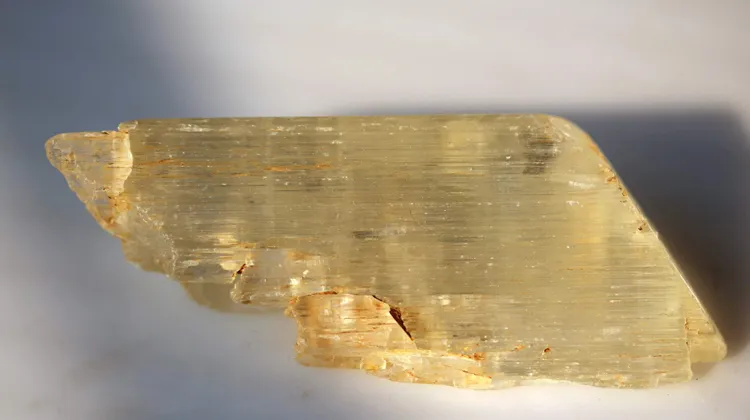
Spodumene is a lithium aluminum silicate mineral with the chemical formula LiAlSi₂O₆. It is commonly found in lithium-rich pegmatite deposits. Spodumene usually has a Mohs hardness of 6.5–7, a specific gravity of about 3.1–3.2, and a monoclinic crystal system.
Spodumene can appear in white, gray, yellow, green, pink or violet colors. Common varieties include:
- Kunzite: pink or violet spodumene;
- Hiddenite: green spodumene;
- Triphane: yellow spodumene.
From an industrial perspective, the main value of spodumene is its lithium content. After beneficiation, it can be upgraded into spodumene concentrate. After further processing, it can be used to produce lithium carbonate, lithium hydroxide and other lithium compounds.
Major spodumene resources are found in Australia, China, Canada, the United States and Brazil.
Why Is Spodumene Mined?
Lithium is often called a new energy metal of the 21st century. As electric vehicles and energy storage systems continue to develop, demand for lithium carbonate and lithium hydroxide remains strong. Spodumene is one of the key raw materials for stable lithium supply.
Spodumene is also used in glass ceramics, industrial enamel and heat-resistant materials because of its good thermal stability. It can improve thermal expansion performance and sintering behavior in industrial products.
The value of spodumene mining lies in turning hard rock ore into high-value lithium products. Through proper beneficiation and chemical processing, spodumene ore can be converted into lithium concentrate and then into lithium carbonate for battery and industrial applications.
How to Process Spodumene Ore?
The main purpose of spodumene beneficiation is to separate spodumene from quartz, feldspar, mica and iron-bearing minerals, increase Li₂O grade and produce concentrate suitable for lithium extraction.
A typical spodumene processing flow includes:
Crushing → grinding → classification and desliming → flotation → magnetic separation → dewatering → drying → tailings treatment
1. Spodumene Crushing Operation

Spodumene ore is usually processed by a three-stage closed-circuit crushing system. The principle is “more crushing and less grinding”, which helps reduce grinding energy consumption.
El equipamiento común incluye:
- trituradora de mandíbulas for primary crushing;
- trituradora de cono for secondary and fine crushing;
- circular vibrating screen for particle size control;
- belt conveyor for material transportation.
2. Spodumene Grinding Operation
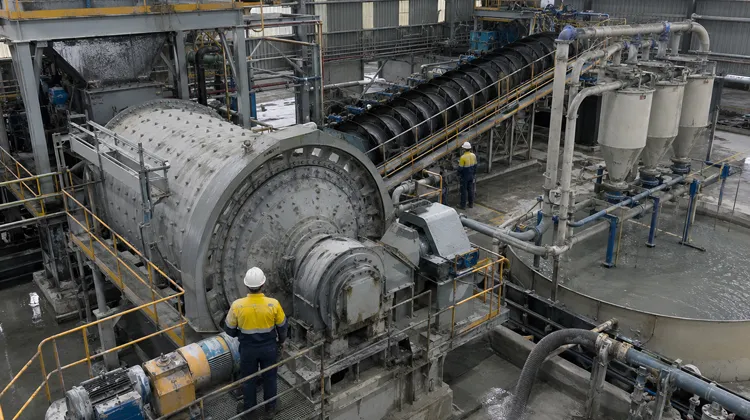
After crushing, the ore enters the grinding system. The purpose of grinding is to liberate spodumene from gangue minerals before flotation.
In many plants, spodumene ore is ground to below 0,15 mm. However, over-grinding should be avoided because it creates slime and reduces flotation efficiency.
El equipamiento común incluye:
- molino de bolas húmedo;
- spiral classifier;
- hydrocyclone.
Hydrocyclones are often used for desliming to reduce slime contamination before flotation.
3. Spodumene Separating Operation
Spodumene separation commonly uses a combined flotation and magnetic separation process. Flotation recovers spodumene, while magnetic separation removes iron impurities.
A common flotation flow includes one roughing stage and two cleaning stages. This helps improve concentrate grade and reduce impurities such as quartz, feldspar and mica.
El equipamiento común incluye:
- agitation tank;
- flotation machine;
- magnetic separator;
- shaking table or jig as auxiliary equipment.
4. Spodumene Drying Operation
After flotation and magnetic separation, spodumene concentrate contains moisture. It must be thickened, dewatered and dried before roasting or storage.
El equipamiento común incluye:
- thickener;
- filter;
- rotary dryer.
Good moisture control can reduce heat consumption in the rotary kiln and improve calcination efficiency.
5. Spodumene Tailings Treatment
Spodumene tailings may still contain feldspar, quartz and other useful minerals. Proper tailings treatment can recover feldspar concentrate and improve resource utilization.
A high-frequency screen can be added before magnetic separation to prevent blockage and improve tailings treatment efficiency.
How Is Lithium Carbonate Produced?
Spodumene concentrate cannot be directly used as lithium carbonate. It must be converted through thermal and chemical processes. The sulfuric acid method is one of the most mature industrial routes.
1. High-Temperature Calcination
Spodumene concentrate is first calcined in a rotary kiln at 1050–1100°C. This converts alpha spodumene into more reactive beta spodumene.
This step is very important. If the crystal conversion is incomplete, the later leaching efficiency will be reduced.
2. Acid Roasting
The calcined beta spodumene is mixed with concentrated sulfuric acid and roasted at about 250°C. Lithium reacts with sulfuric acid to form water-soluble lithium sulfate.
This stage requires sealed, corrosion-resistant equipment and proper tail gas treatment.
3. Water Leaching and Impurity Removal
The roasted material is leached with water. Lithium sulfate dissolves into the liquid phase. Limestone is then added to adjust the pH to about 5, removing part of the iron and aluminum impurities.
4. Deep Purification
The crude lithium solution is further purified by adjusting pH to about 11 with lime and adding sodium carbonate. This removes calcium, magnesium, iron, aluminum and other impurities.
5. Evaporation and Lithium Precipitation
The purified lithium sulfate solution is concentrated to about 12%–20%. Sodium carbonate is then added to precipitate lithium carbonate.
6. Dewatering and Drying
The lithium carbonate slurry is dewatered by centrifuge and dried at about 350°C to obtain the final lithium carbonate product. Under stable process conditions, the overall recovery rate can reach a high level, sometimes close to 90%.
Key Equipment for Spodumene Processing
| Process Stage | Equipo principal |
|---|---|
| Crushing and screening | Jaw crusher, cone crusher, circular vibrating screen |
| Grinding and classification | Wet ball mill, spiral classifier, hydrocyclone |
| Flotación | Agitation tank, flotation machine |
| Eliminación de hierro | Magnetic separator |
| Deshidratación | Thickener, filter |
| El secado | Rotary dryer |
| Calcinación | horno rotatorio, cooler |
| Protección ambiental | Dust collector, scrubber, tail gas system |
Conclusión
Spodumene is an important hard rock lithium mineral and a key raw material for lithium carbonate and lithium hydroxide production. With the growth of the new energy industry, spodumene processing is becoming a new opportunity for mining equipment, cement equipment and thermal processing equipment suppliers.
From ore to lithium carbonate, spodumene must go through crushing, grinding, beneficiation, drying, calcination, acid roasting, leaching, purification and precipitation. Choosing the right process and equipment can improve lithium recovery, reduce energy consumption and increase project value.
A stable, efficient and environmentally friendly spodumene processing plant is essential for turning lithium ore into high-value battery mineral products.
Preguntas frecuentes
1. What is spodumene?
Spodumene is a lithium aluminum silicate mineral with the chemical formula LiAlSi₂O₆. It is one of the most important hard rock lithium ores.
2. How is spodumene processed?
Spodumene ore is usually processed through crushing, grinding, flotation, magnetic separation, drying, calcination, acid roasting, leaching and purification.
3. What equipment is used in spodumene beneficiation?
Common equipment includes jaw crushers, cone crushers, ball mills, classifiers, flotation machines, magnetic separators, thickeners and rotary dryers.
4. How is lithium carbonate produced from spodumene?
Lithium carbonate is produced by calcining spodumene concentrate, roasting it with sulfuric acid, leaching lithium into solution, removing impurities, concentrating the solution and precipitating lithium carbonate with sodium carbonate.
5. Why is spodumene important for batteries?
Spodumene can be processed into lithium carbonate and lithium hydroxide, which are important raw materials for lithium-ion batteries.


 Spanish
  English
  Russian
  Arabic
  Vietnamese
  French
  Portuguese
  Japanese
  Chinese